Table of Contents
- What Is Peptide Therapy?
- Who Is a Good Candidate?
- Benefits for Muscle Growth & Metabolic Health
- Is Peptide Therapy FDA Approved?
- How Peptide Programs Work (Step by Step)
- Types of Peptides We Use
- Safety, Side Effects & Medical Oversight
- Peptide Therapy vs. Other Options
- Why Choose Our North Andover Peptide Program
- Frequently Asked Questions
- How to Get Started Near North Andover, MA
Peptide Therapy Near Me: Quick Answer for North Andover & Merrimack Valley
If you’re searching for peptide therapy near me from anywhere in the Merrimack Valley, there are clinician-supervised programs available within a 10 to 20 minute drive of downtown North Andover, MA. Peptide therapy in this context means medically directed, prescription-only protocols designed to support muscle growth, muscle recovery, metabolic health, body composition, cellular energy, and healthy aging. These are not generic “research” peptides purchased from an unregulated website.
Local clients typically travel from Andover, Lawrence, Haverhill, Methuen, Salem, NH, and surrounding communities for in-person evaluation. After evaluation, most patients administer peptides at home on a schedule set by their clinician.
The process starts with a wellness consultation where your health goals (fat loss, lean muscle mass, better sleep, recovery, or longevity) are reviewed against your health history and current lab work. From there, you receive a personalized treatment plan rather than a one-size-fits-all peptide stack. The rest of this article walks through what peptides are, how they work, safety and FDA considerations, and how to decide if a local peptide therapy program is the right next step.
What Is Peptide Therapy and How Does It Work?
Peptides are short chains of amino acids, typically 2 to 50 amino acids long. Your body already produces hundreds of them. They act as signaling molecules; essentially, they deliver instructions between cells, telling your body to repair tissue, release growth hormone, burn fat, or mount an immune response. Peptide therapy uses specific amino acid chains to target these physiological processes with precision.
Peptide therapy introduces targeted synthetic or bio-identical peptides to encourage healing and regeneration. Rather than forcing unnatural changes (like injecting human growth hormone directly), therapeutic peptides nudge your own growth hormone release, tissue repair pathways, and mitochondrial function into more youthful operating ranges. Growth hormone secretion declines roughly 14% per decade after age 30, and peptides can help counteract that slide.
Most therapeutic peptides are delivered as tiny subcutaneous injections (similar to insulin needles), though some come as oral capsules, nasal sprays, or topical creams. The delivery route depends on the specific peptide and clinical goals.
How the “signal layer” works in practice:
- Growth hormone secretagogues like CJC-1295 with ipamorelin bind to pituitary receptors and trigger your own growth hormone pulses, supporting muscle building and fat metabolism
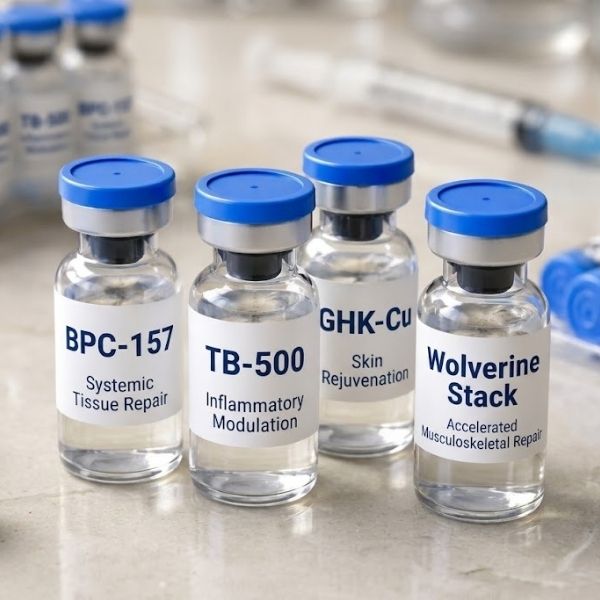
- BPC-157 promotes healing of muscles, joints, and tendons by activating angiogenesis and growth factor pathways in damaged tissue
- GHK-Cu supports collagen production and skin elasticity through fibroblast activation
- Nootropic peptides have been studied for their potential to support mental focus and memory through nervous system receptor activity
Who Is a Good Candidate for Peptide Therapy?
Peptide therapy works best for adults who have already addressed foundational habits (sleep, nutrition, resistance training) but still struggle with specific goals. If you’ve plateaued despite doing “everything right,” peptides may offer a targeted boost.
Strong candidate profiles include:
- Active adults aged 30 to 60 who want faster muscle recovery from training or weekend sports
- People noticing age-related declines in muscle mass or strength despite consistent workouts
- Individuals carrying central weight gain or experiencing plateaued weight loss who also want to preserve lean muscle
- Professionals dealing with brain fog, poor sleep quality, or low stamina after lifestyle improvements
- Adults recovering from soft-tissue or overuse injuries who want additional support for tissue healing
- Those pursuing health optimization and longevity through non-surgical, non-opioid approaches
Peptide therapy is typically not appropriate for people with active cancer or unscreened tumors (because growth hormone and IGF-1 pathways can promote tumor cell growth), uncontrolled diabetes, pregnancy, or those unwilling to complete baseline lab work and medical screening. Selecting a peptide therapy provider should focus on medical safety and clinical oversight, and that starts with honest screening.
Key Benefits of Peptide Therapy for Muscle Growth, Recovery & Metabolic Health
Peptide therapy is not a magic shortcut. Outcomes depend on training consistency, adequate protein intake, sleep quality, and adherence to an anti-inflammatory lifestyle. With those foundations in place, peptide protocols can accelerate progress that has stalled.


Here’s what the evidence and clinical experience point to:
- Muscle growth and lean muscle: Peptides can increase lean muscle mass and strength by stimulating muscle protein synthesis through the GH/IGF-1 axis. Growth hormone secretagogues are particularly relevant for adults over 35 experiencing somatopause.
- Muscle recovery and injury support: BPC-157 promotes healing of muscles and tendons, and clinical improvement in knee osteoarthritis has been reported after 52 weeks in early case data. These recovery peptides help active individuals bounce back from strains, tendinopathies, and heavy training blocks.
- Body composition and fat loss: Peptides can aid in weight loss by enhancing fat metabolism. Select compounds help reduce visceral fat and support weight management when combined with dietary changes and movement.
- Metabolic health: Peptides can regulate blood sugar and enhance fat metabolism through various compounds, improving insulin sensitivity and metabolic rate. This matters for people in their 40s and 50s noticing a “metabolic slowdown.”
- Cognitive function and sleep: Peptides can improve cognitive function and memory, and peptide therapy may support deeper, more restorative sleep. Better sleep architecture means better recovery, more energy, and improved mental clarity.
- Immune function: Peptide therapy can enhance immune function and reduce inflammation. Certain peptides are used to support immune function and help modulate the body’s defense mechanisms, which matters for overall health and recovery capacity.
- Skin, hair, and healthy aging: Peptides may support skin barrier function and collagen production for anti-aging effects. GHK-Cu increases collagen synthesis by 70% in fibroblast studies, translating to improved skin tone and firmness.
A realistic local example: a 45-year-old strength enthusiast from Andover uses a growth hormone secretagogue protocol alongside cryotherapy and red light therapy sessions. Within four weeks, they notice better sleep and reduced soreness. By 12 weeks, body composition scans show measurable gains in lean muscle and reduction in visceral fat, allowing them to maintain year-round physical performance.
Is Peptide Therapy FDA Approved? What Patients Should Know in 2026
Transparency matters here. FDA-approved peptide drugs have undergone clinical trials and FDA review for specific conditions. Tesamorelin, for instance, is FDA-approved for HIV-associated lipodystrophy. Peptide therapy is not FDA-approved for most uses related to general wellness, muscle building, or longevity.
The distinction breaks down into three categories:
- FDA-approved drugs: Specific peptide molecules approved for narrow, well-studied indications
- Compounded peptides: Prepared by licensed 503A U.S. compounding pharmacies for individualized prescriptions; compounded preparations are not FDA-reviewed for safety or effectiveness, but they are legal when prescribed by a licensed clinician
- Unregulated “research chemicals”: Sold online, often labeled “not for human consumption”; peptides classified as “research only” should not be used for humans
Legality of peptides varies by country and specific peptide. Some wellness peptides lack adequate human evidence compared to established treatments, and certain peptide therapies are marketed by wellness clinics without rigorous clinical validation. This is why where you get your peptides and who supervises your care matters more than marketing claims.
A reputable local clinic will:
- Disclose when a peptide is prescribed off-label versus FDA-approved for a specific indication
- Source peptides from licensed 503a U.S. compounding pharmacies with verified purity and sterility
- Provide written consent forms outlining risks, benefits, and off-label status
- Never encourage patients to buy from unregulated online vendors
How a Local Peptide Therapy Program Works: From Consultation to Results

Here is the step-by-step process when a new patient in North Andover books for peptide therapy:
- Initial consultation (60 to 90 minutes): Review of medical history, current medications, prior lab work, sleep patterns, nutrition, training habits, and health goals. This is where the clinician determines whether peptide therapy fits your situation.
- Baseline testing: Lab panels evaluating hormones (GH, IGF-1, sex hormones), metabolic markers (fasting glucose, lipids), inflammatory markers, and liver and kidney function. Credible clinics require comprehensive lab tests before initiating peptide therapy protocols.
- Protocol design: Selection of one to three peptides aligned with your muscle, metabolic, recovery, or longevity goals. Dose, timing, delivery route, and cycle length are all specified.
- Education and administration training: Hands-on guidance for subcutaneous injections, peptide storage (most require refrigeration), and schedule management. Most patients self-administer at home after training.
- Active phase (typically 8 to 12 weeks): Consistent peptide use with follow-up visits or telehealth check-ins to adjust dosing, track side effects, and support adherence. Many patients combine peptides with complementary services like IV therapy, cryotherapy, infrared sauna, red light therapy, and compression therapy.
- Re-evaluation and cycling: Repeat key labs, review progress, and decide whether to pause, continue, or adjust. Ongoing monitoring and follow-up are essential components of satisfactory peptide therapy.
Timeline expectations: some patients notice better sleep and recovery within a few weeks. Shifts in body composition, muscle mass, and deeper metabolic health typically unfold over three to six months.
Common Peptides Used for Muscle, Fat Loss, Recovery & Longevity
Exact peptide choices are individualized and must be prescribed after evaluation. This list is educational, not a shopping menu.
- Growth hormone secretagogues (CJC-1295/Ipamorelin protocols): CJC-1295 with ipamorelin stimulates growth hormone release in pulses, mimicking your body’s natural rhythm. These support muscle building, fat oxidation, and recovery, and are especially relevant for midlife adults whose own growth hormone production has declined.
- Sermorelin: Sermorelin stimulates natural growth hormone release during sleep, making it a common choice for patients whose primary complaint is poor sleep quality, slow recovery, or loss of lean muscle.
- Tesamorelin: Tesamorelin reduces visceral fat and improves body composition. Originally studied for specific indications in HIV-associated lipodystrophy, it is now used in broader metabolic health contexts.
- Repair and recovery peptides (BPC-157 protocols): BPC-157 promotes healing of muscles, joints, and tendons, making it popular among weekend athletes, runners, and anyone dealing with nagging overuse injuries or gut health concerns like leaky gut and ulcerative colitis symptoms.
- Immune-modulating peptides (Thymosin alpha-1): Thymosin alpha-1 modulates innate immunity and fights infections. It aids recovery and supports the immune system in select cases where immune resilience is a priority.
- Neurologic, mood, and sleep-support peptides (delta sleep inducing peptide, Semax, Selank protocols): Used for sleep architecture, focus, stress management, and to enhance cognitive function as part of a broader plan. These can support overall well-being when combined with lifestyle adjustments.
- Skin and hair peptides (GHK-Cu): GHK-Cu supports collagen synthesis, skin elasticity, and visible signs of aging. It can be used topically or systemically depending on goals, and is often combined with facials or red light therapy for anti-aging effects.
Peptide therapy can be utilized for hormone optimization, immune modulation, and tissue repair. Many protocols involve cycling (for example, three months on, one month off) to prevent receptor desensitization and maintain long-term benefits.
Safety, Side Effects, and How to Avoid Common Mistakes
While many peptides show favorable safety profiles in early research, peptides act as active biologic signals. They are not supplements and must be treated like medications.
- Typical mild side effects include injection-site redness, transient water retention, vivid dreams, and appetite shifts. Report these to your clinician promptly so doses can be adjusted.
- Rare but serious risks include potential worsening of undiagnosed cancers (because GH/IGF-1 pathways can promote tumor growth), interactions with existing hormone therapy, and complications in people with uncontrolled autoimmune or cardiovascular disease.
- DIY sourcing is dangerous. Peptides from “research chemical” websites carry risks of contamination, incorrect dosing, mislabeled vials, lack of sterility, and zero medical oversight. Peptides should be sourced from licensed 503a U.S. compounding pharmacies.
- Baseline and follow-up labs catch changes in glucose, lipids, IGF-1, liver enzymes, or other markers early. Without lab work, you’re guessing.
- Over-stacking peptides (using too many at once) obscures what is working, increases side-effect risk, and wastes money.
- Cycling off is necessary for many peptides to avoid desensitization of receptors and maintain efficacy over time.
- Peptides complement, not replace, resistance training, adequate protein intake, sleep, and an anti-inflammatory lifestyle. Without those, is peptide therapy safe to rely on alone? No; results will be minimal and risks unnecessary.
Peptide Therapy vs. Other Options for Muscle, Recovery & Body Composition
Peptides are one tool among many. Where they fit depends on your starting point and goals.
- Peptide therapy vs. traditional hormone replacement: Peptides stimulate your own growth hormone pathways; direct hormone therapy (testosterone, HGH) adds exogenous hormones. Peptides aim to work within physiologic ranges.
- Peptide therapy vs. anabolic steroids: Steroids push levels to supraphysiologic extremes and carry well-documented cardiovascular and liver risks. Peptides carry a different risk profile and are legal when prescribed.
- Peptide therapy vs. standalone training and diet: Peptides may unlock stalled progress when basics are already dialed in. They cannot compensate for poor nutrition, inadequate sleep, or inconsistent training.
- Peptide therapy vs. surgery or long-term pain medication: For joint health issues, peptides offer a potential intermediate step for tissue support, but they do not replace surgery when it is clearly indicated.
- Peptides combined with recovery services: Combining peptide protocols with cryotherapy, infrared sauna, IV therapy, red light therapy, and compression therapy can reduce inflammation and accelerate muscle recovery. Peptide therapy can accelerate recovery from exercise or injury, and pairing it with these modalities may amplify that effect.
Why Choose Our Local Peptide Therapy Program in North Andover
Our North Andover wellness center offers peptide therapy built on clinical rigor and integrated recovery, not marketing buzzwords.
- Clinician-directed protocols with full medical history review, medication check, and wellness assessment before any peptide is prescribed
- All peptides sourced from U.S.-based, licensed compounding pharmacies with third-party testing and documented storage protocols
- Programs designed around specific health goals: muscle growth, improved muscle recovery, metabolic health, body composition, energy production, joint health, and optimal health over time
- In-house recovery services including IV vitamin therapy, whole-body cryotherapy, infrared halo sauna, red light therapy, compression therapy, and facials to support cellular repair and overall recovery
- Flexible membership and package options for patients who want ongoing health optimization rather than a one-time quick fix
- Convenient location for residents across the Merrimack Valley with easy parking and scheduling built for busy professionals
- Education-first culture: we spend time explaining peptide protocols, reviewing lab data, and teaching self-injection techniques so every patient feels confident and informed
A typical client journey: a 55-year-old woman from Methuen arrives with stubborn central weight gain, declining energy, and loss of lean muscle despite regular exercise. After baseline labs reveal low IGF-1 and elevated inflammatory markers, she begins a tailored protocol combining a growth hormone secretagogue with a metabolic peptide. Over four months, she reports more energy, measurable fat loss around her midsection, and improved lab values across the board.
Frequently Asked Questions About Peptide Therapy Near Me
How much does peptide therapy typically cost in the North Andover area?
Pricing varies by peptide type, dose, and cycle length. Monthly medication costs generally range from $200 to $600 or more, plus consultation and lab fees. Bundled programs that include consultation, lab work, and follow-up visits can offer better value. Patients receive a detailed quote before starting any protocol.
How long before I notice results from peptide therapy?
Sleep improvements and more energy often appear within three to four weeks. Muscle growth, strength gains, and body composition changes typically take 8 to 12 weeks with consistent training and nutrition. Deeper metabolic health and longevity benefits are measured over months through lab retesting and functional improvements.
Do I have to do injections, or are there non-injection options?
Many of the most researched peptides for muscle growth and metabolic health are delivered as tiny subcutaneous injections using very small insulin-type needles. Some peptides are available in oral, nasal, or topical forms, but bioavailability varies. Staff provide hands-on injection training, and most patients find the process virtually painless after the first few tries.
Is peptide therapy legal and safe when done locally vs. buying online?
Physician-prescribed peptide therapy using licensed U.S. compounding pharmacies is legal and medically supervised. Unregulated online “research chemicals” are often mislabeled, potentially contaminated, and used without lab monitoring. Peptides can enhance tissue repair and reduce inflammation when properly dosed; without oversight, they become unpredictable.
Can peptide therapy help me build lean muscle while losing fat?
Yes, in many cases. Peptides support recomposition by preserving or enhancing lean muscle mass, improving fat metabolism, and supporting better workout recovery. Results depend on resistance training, protein intake, sleep, and program adherence. Peptides are amplifiers, not replacements for the work itself.
Will peptide therapy interfere with my current medications or hormone therapy?
Interactions are possible. Some peptides influence hormones, blood sugar, or immune activity. A full medication list and medical history are reviewed before starting, and coordination with primary care or specialists happens when appropriate to keep care integrated and safe.
How long do people usually stay on peptide therapy?
Common patterns include short-term cycles (8 to 12 weeks) for injury recovery, medium-term use (3 to 6 months) for body composition and metabolic reset, and long-term intermittent cycling for longevity and cellular health. Duration depends on health goals, lab results, response, and safety. There is no one-size schedule.
How to Get Started with Peptide Therapy Near North Andover, MA
Ready to find out whether peptide therapy fits your health goals? Here are the steps:
- Schedule a consultation (in-person or virtual) focused on peptide therapy and your wellness goals
- Complete intake forms and gather any prior lab work or imaging to bring to your appointment
- Attend your evaluation to review your health history, training habits, diet, sleep, and long-term goals
- Move forward with baseline labs and protocol design if appropriate, including discussion of peptide choices, expected benefits, potential risks, and FDA/off-label context
- Begin your customized program with clear written instructions, follow-up appointments, and access to complementary recovery services
The goal is long-term, sustainable improvements in strength, energy, and cellular health. Book your consultation online or call our North Andover center to discuss whether a peptide program matches your specific situation. Residents across the Merrimack Valley, from Andover to Salem, NH, are welcome.