You eat well. You exercise. But certain areas – your lower abdomen, flanks, the spot under your chin – refuse to cooperate. Noninvasive body sculpting exists for exactly this scenario. It uses energy-based devices and muscle stimulation to reduce localized fat deposits, tighten skin, and improve muscle definition without incisions, anesthesia, or significant downtime. The focus is on localized areas rather than overall weight loss, and non-invasive body sculpting is designed for people near their target weight who want to refine their silhouette, not drop several clothing sizes.
It helps to understand the difference between three commonly confused terms. Fat reduction refers to shrinking or eliminating fat cells in a specific treatment area. Body contouring is broader – it includes fat reduction plus skin tightening, cellulite smoothing, and overall shape improvement. Traditional weight loss reduces your overall body mass through diet, exercise, or medical intervention. Non-invasive body sculpting is not a weight loss solution; it is a finishing tool for common concern areas like the abdomen, flanks, inner and outer thighs, upper arms, back, and double chin. This article walks you through the available treatment options, safety considerations, expected results, costs, and how to choose the right local provider.
Table of Contents
- How Non-Invasive Body Sculpting Works
- Non-Invasive vs Minimally Invasive vs Surgical Body Contouring
- Main Types of Non-Invasive Body Sculpting Treatments
- Fat Reduction Technologies: Freezing, Heat, Sound, and Light
- Muscle Stimulation and Dual-Action Body Sculpting
- Candidacy: Who Is (and Isn’t) a Good Fit
- Safety, Side Effects, and How to Avoid Uneven Results
- What to Expect: Process, Pain Level, and Recovery
- Results, Longevity, and the Role of a Healthy Lifestyle
- Costs, Number of Sessions, and How to Plan
- FAQs About Non-Invasive Body Sculpting
- Why Choose a Local Integrative Wellness Center
- Taking the Next Step
How Non-Invasive Body Sculpting Works
Modern body sculpting treatments use external energy – cold, heat, electromagnetic fields, light, or focused sound – to alter body fat, muscle, and connective tissue from outside the skin surface. No scalpel, no stitches, no general anesthesia.
There are four distinct goals these treatments address, and understanding the difference matters when you are choosing a plan:
- Fat reduction – damaging or shrinking subcutaneous fat cells so the body metabolizes and clears them naturally.
- Body contouring – reshaping an area’s silhouette by combining fat reduction with improvements to surrounding tissues.
- Muscle toning – strengthening and building muscle fibers through involuntary muscle contractions triggered by electromagnetic energy.
- Skin tightening – heating deeper tissues beneath the skin surface to stimulate collagen production and improve skin elasticity.
When fat cells are targeted by controlled cooling or heat, they undergo apoptosis – a programmed cell death. Your immune system then clears the debris over weeks. Gradual results are typical as the body metabolizes treated fat cells over weeks or months. These treatments target subcutaneous fat (the pinchable layer just under your skin), not visceral fat deep inside the abdominal cavity, and they are not designed to treat obesity or reduce overall body mass.
Non-Invasive vs Minimally Invasive vs Surgical Body Contouring
Choosing between non-invasive, minimally invasive, and surgical body contouring comes down to how much change you want, how much downtime you can handle, and your risk tolerance.
| Non Invasive | Minimally Invasive | Surgical | |
|---|---|---|---|
| Incisions | None | Small punctures or injections | Full incisions |
| Anesthesia | None | Local or topical | General or regional |
| Scarring | None | Minimal or none | Visible scars |
| Downtime | Little to none | Days to a week | Weeks |
| Typical fat reduction | 15–25% per area | Moderate | Large volume removal |
| Risk level | Low | Moderate | Higher |
Noninvasive body contouring includes fat freezing, radiofrequency energy treatments, red light therapy, ultrasound, and electromagnetic muscle stimulation. None of these break the skin.
Minimally invasive treatments involve tiny incisions or injections. Kybella is FDA-approved for reducing double chins through deoxycholic acid injections, and laser-assisted lipolysis uses a small cannula plus laser energy. These sit between non-surgical and surgical options in terms of results and recovery.
Invasive body contouring – liposuction, abdominoplasty, body lifts – involves a full surgical procedure. Plastic surgeons perform these under anesthesia, and they can remove large volumes of excess fat and excess skin. Unlike traditional liposuction or cosmetic surgery, noninvasive body sculpting carries lower risks than surgical procedures because there are no incisions or anesthesia. Aesthetic plastic surgery and dermatologic surgery remain better suited for people who need significant weight loss correction or have very loose skin that requires excision.
Main Types of Noninvasive Body Sculpting Treatments
Most nonsurgical body sculpting devices fall into a handful of technology categories. Common technologies include cryolipolysis, radiofrequency, and laser lipolysis. Each has strengths depending on the body area, your skin quality, pain tolerance, and goals.
- Fat freezing (cryolipolysis) – best for pinchable subcutaneous fat on the abdomen, flanks, and outer thighs.
- Laser and radiofrequency lipolysis – heat-based fat reduction that can also tighten skin.
- Ultrasound fat reduction treatments – focused sound waves that break down fat cell walls.
- Red light therapy – low-level light that shrinks fat cells without destroying them.
- Electromagnetic muscle stimulation – triggers involuntary muscle contractions to tone muscles and reduce fat simultaneously.
No single method is universally “best.” Combination plans – pairing fat reduction with muscle stimulation, for example – often produce more dramatic body sculpting results because they address both body fat and muscle definition at once. The technology used in body sculpting should be FDA-authorized for the intended purpose, so always confirm that your provider is using cleared devices for the specific area being treated.
Fat Reduction Technologies: Freezing, Heat, Sound, and Light
This section covers methods focused primarily on understanding fat reduction – how each technology targets and reduces stubborn fat pockets in specific areas.
Cryolipolysis (fat freezing) works by applying extreme cold through controlled cooling to freeze subcutaneous fat cells. The very cold temperatures cause fat cells to crystallize and die while leaving surrounding tissues unharmed. Cryolipolysis freezes fat cells to reduce fat pockets in the abdomen, flanks, inner and outer thighs, and upper arms. Cryolipolysis can reduce fat by 20 to 25 percent per treatment, with most visible change appearing between 8 and 12 weeks. Average fat reduction from these treatments is about 20 to 25 percent per treated area. Sessions typically last 35 to 60 minutes per zone.
Laser fat reduction uses specific wavelengths of light energy to heat subcutaneous fat, causing fat cells to break down. Laser treatments like SculpSure take about 25 minutes per session, making them one of the faster options. Laser treatment uses heat to dismantle subcutaneous fat. Final results from laser fat removal appear in 12 weeks, and laser fat removal results are permanent barring significant weight gain. Radiofrequency energy uses controlled heat delivered into deeper tissues beneath the skin to dissolve fat and simultaneously stimulate collagen production, offering a degree of skin tightening alongside non-surgical fat reduction. Morpheus Body results, which combine RF with microneedling, develop over 3 to 6 months.
Ultrasound fat reduction relies on focused sonic waves to mechanically disrupt fat cell walls. Ultrasound fat reduction breaks down fat cell walls with sonic waves and can achieve a 15 to 20 percent fat reduction. It works best on flatter areas with thicker fat layers like the abdomen and flanks.
Red light therapy operates differently from the technologies above. Instead of destroying fat cells, red light therapy triggers fat cells to release their contents – lipids pass through temporarily opened pores in the cell membrane. Red light therapy can shrink fat cells without destroying them, which means multiple sessions are needed, and maintaining a healthy lifestyle is crucial to prevent those cells from refilling. This approach to non-surgical treatment appeals to people who want gentler sessions and are willing to commit to a series.
All of these are non-invasive or minimally invasive treatments. Each carries its own side-effect profile – numbness and tingling from freezing fat cells, warmth or mild tenderness from heat-based methods, temporary swelling from ultrasound. Reputable providers explain exactly which device they use, confirm it is FDA-cleared for the target area, and walk you through what to expect.

Muscle Stimulation and Dual-Action Body Sculpting
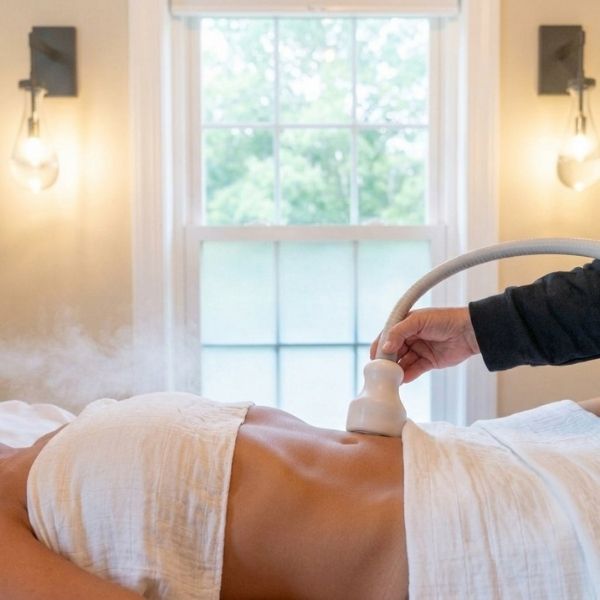
Some of the most compelling nonsurgical body contouring results come from treatments that go beyond fat – they build muscle at the same time. Electromagnetic muscle stimulation uses high-intensity focused electromagnetic energy to trigger supramaximal involuntary muscle contractions, the kind your body cannot produce on its own during a normal workout. A typical session delivers the equivalent of roughly 20,000 crunch-like contractions in about 30 minutes, targeting the abdomen, buttocks, thighs, or arms.
The benefits extend past aesthetics. Patients report improved core strength, better posture support, firmer glutes, and more defined abs. For active adults and athletes, muscle stimulation can complement training by engaging muscle groups in ways that are difficult to replicate voluntarily.
Combination technologies that pair muscle stimulation with radiofrequency heat can simultaneously reduce fat, tighten skin, and build muscle in one session. Clinical data on these dual-action devices show fat thickness reductions around 5.5 mm and muscle thickness gains around 2 mm after a typical series of four treatments. Peak results generally appear 2 to 3 months after completing the initial series. Maintenance sessions every one to three months help preserve muscle tone and definition.
Candidacy: Who Is (and Isn’t) a Good Fit for Non-invasive Body Sculpting?
Body sculpting treatments are designed for shaping, not for achieving significant weight loss. Setting the right expectations from the start determines satisfaction.
Good candidates typically share these characteristics:
- Within about 10 to 30 pounds of their ideal weight, with a BMI often under 30.
- Stubborn fat pockets or mild to moderate laxity that has not responded to consistent diet and exercise.
- Stable weight for at least 3 to 6 months and commitment to a healthy diet and active lifestyle after treatment.
- Good skin elasticity – younger, more elastic skin tends to contour better after fat reduction, while older or sun-damaged skin with poor skin texture may need additional tightening.
Who should wait or consider alternatives:
- People seeking rapid, large-volume fat removal or a solution for obesity should explore medical weight loss programs or consult plastic surgeons about surgical body contouring.
- Those with certain medical devices such as pacemakers, or conditions that conflict with radiofrequency energy or electromagnetic fields, should obtain medical clearance first.
- If you have very loose skin or significant excess skin, a surgical procedure may deliver better contouring than non-invasive options alone.
A thorough consultation helps confirm whether a non-surgical body contouring approach, a minimally invasive option, or a referral for surgery makes the most sense for your anatomy and goals.
Safety, Side Effects, and How to Avoid Uneven Results
Noninvasive body sculpting has a strong safety profile when performed with FDA-cleared devices by trained providers. Noninvasive body sculpting is safer due to no incisions or anesthesia, and it has lower risks than surgical procedures overall.
Common, temporary side effects include:
- Redness, swelling, and bruising in the treatment area.
- Numbness, tingling, or soreness – especially after suction-based fat freezing.
- Mild tenderness that resolves within days.
Less common but important risks:
- Paradoxical adipose hyperplasia (PAH) is a rare side effect of cryolipolysis where the treated area enlarges instead of shrinking. It is uncommon but should be disclosed by any honest provider.
- Burns or pigment changes from improper use of heat-based devices, particularly on darker skin tones.
- Uneven contouring or asymmetry, which careful mapping and experienced technique help prevent.
How to choose a safe provider:
- Verify training and hands-on experience with the specific device being used.
- Ask to see before-and-after photos of patients with a similar body type.
- Confirm devices are FDA-cleared for the area being treated.
- Expect your provider to review contraindications, obtain informed consent, and explain what to watch for after your session.
What to Expect: Process, Pain Level, and Recovery
Here is what a typical non-invasive body sculpting experience looks like from start to finish.
Consultation: Your provider assesses your goals, reviews medical history, takes photos and measurements, and builds a personalized treatment plan. This is where you learn which technology fits your body and what results are realistic.
Treatment day: You change into comfortable clothing or a gown. The provider marks the treatment area, positions you on the table or chair, and applies the device. Sessions range from 25 minutes (for some laser treatments) to 60 minutes (for cryolipolysis), depending on technology and area size.
How it feels:
- Fat freezing: intense cold and suction pressure that typically numbs out after a few minutes.
- Heat-based treatments (RF, laser): deep warmth with occasional hot spots; active cooling is built into most devices.
- Electromagnetic muscle stimulation: rapid, strong contractions that feel strange at first but are usually well tolerated. Intensity can be adjusted.
Recovery: Non-invasive treatments typically require little to no recovery time. Most patients return to work or errands immediately. Soreness similar to a hard workout, or transient numbness, may last a few days to a couple of weeks depending on the technology. Most patients see improvement within 6 to 12 weeks. First subtle changes may appear around 3 to 4 weeks. Fat reduction peaks between 8 and 12 weeks as fat cells begin to be cleared by the body. Muscle definition typically increases over 4 to 8 weeks with a full series of sessions.
Results, Longevity, and the Role of a Healthy Lifestyle
Results from non-invasive body sculpting are real, measurable, and – when paired with good habits – long-lasting.
When treatments destroy fat cells or eliminate fat cells, those cells do not regenerate. Results can last indefinitely with a stable weight. However, remaining subcutaneous fat cells can enlarge if you gain significant weight, which is why maintaining your results requires effort. Muscle tone from stimulation fades over months without continued exercise or maintenance treatments, similar to how gym gains diminish if you stop training.
A healthy lifestyle is not optional if you want to keep what you achieved. Consistent strength training, regular walking, balanced nutrition, adequate hydration, and quality sleep all support body contouring outcomes. Anti-inflammatory habits – reducing ultra-processed foods, eating more whole foods – can improve recovery and help reduce fat accumulation over time.
Think of non-surgical body contouring as a finishing tool, not a substitute for the fundamentals. Periodic check-ins or touch-up sessions help maintain peak definition over years, especially for muscle stimulation results.
Costs, Number of Sessions, and How to Plan Your Treatment Series
Pricing for body sculpting treatments in 2026 varies by technology, region, and clinic. Here are approximate U.S. ranges to help you budget:
| Technology | Approximate Cost Per Session |
|---|---|
| Cryolipolysis (fat freezing) | Avg. $1,723 per treatment |
| Laser (e.g., SculpSure) | $300–$1,500 |
| Ultrasound fat reduction | $1,500–$3,000 |
| Red light therapy series | $1,500–$3,000 |
| Kybella injections | $492–$1,150 per vial |
Factors that affect total cost include the number and size of treatment areas (lower abdomen versus full abdomen plus flanks), the number of sessions recommended, and whether treatments are bundled with complementary wellness services.
Multiple sessions are often needed to achieve desired results. Here is what most people can expect:
- Fat freezing: 1 to 3 sessions per area, spaced several weeks apart.
- Heat-based or ultrasound: often 2 to 3 sessions per area.
- Electromagnetic muscle stimulation: usually 4 to 6 initial sessions over 2 to 3 weeks, plus maintenance every 1 to 3 months.
Planning advice: Start your treatment plan at least 3 months before a major event – a wedding, vacation, or sports season – to allow enough time for full results to develop. Ask about package pricing, memberships, or seasonal promotions to make a series more affordable. A transparent provider will give you a written plan with recommended sessions, expected changes, and total estimated cost before you commit.
FAQs About Non-Invasive Body Sculpting
Below are answers to the questions clients ask most often.
Does non-invasive body sculpting really work?
Multiple FDA-cleared technologies have clinical data showing measurable fat reduction and muscle gain in properly selected patients. “Work” means visible contour improvement – smoother flanks, a flatter abdomen, more defined arms – not dramatic weight loss. Results vary based on the device, area treated, number of sessions, your lifestyle, and your provider’s expertise.
Is non-invasive body contouring painful?
Most clients tolerate treatments well. Fat freezing involves intense cold that numbs after a few minutes. Heat-based treatments produce deep warmth. Muscle stimulation causes strong involuntary muscle contractions that feel unusual but are adjustable. No general anesthesia is needed for any non invasive body treatment, and post-treatment soreness is usually mild and short-lived.
How soon will I see results from fat reduction or muscle stimulation?
Some people notice subtle change after 3 to 4 weeks. Most fat reduction peaks between 8 and 12 weeks as the body clears destroyed fat. Muscle tone and strength often improve over 4 to 8 weeks with a full series. Individual metabolism and adherence to a healthy lifestyle influence how quickly and visibly results appear.
How many non-invasive body sculpting sessions will I need?
Fat freezing typically requires 1 to 3 sessions per area. Heat-based or ultrasound fat reduction often needs 2 to 3 sessions. Electromagnetic muscle stimulation usually involves 4 to 6 initial sessions, then maintenance every 1 to 3 months. Providers tailor session counts to your starting point, skin quality, and desired changes.
Is non-invasive body sculpting a substitute for diet and exercise?
No. It is not a replacement for a healthy lifestyle or a treatment for obesity. Nonsurgical body sculpting is a contouring tool for specific localized fat deposits that do not respond well to consistent diet and exercise. Maintaining results depends on staying active and keeping weight stable.
Are the results from non-invasive body sculpting permanent?
When fat cells are destroyed, they do not regenerate. However, remaining fat cells can enlarge if you gain significant weight. Muscle tone requires ongoing use or maintenance sessions, just like a gym routine. Stable weight and healthy habits can keep results looking good for years.
Why Choose a Local Integrative Wellness Center for Body Sculpting
Getting body sculpting done in a wellness-focused environment – rather than a purely cosmetic clinic – changes the experience. At Bonfire Wellness in North Andover, body contouring procedures sit alongside services like cryotherapy, infrared sauna, red light therapy, compression therapy, IV therapy, and anti-inflammatory lifestyle programs. This means your provider can take a holistic view: pairing compression therapy after a fat reduction session to support circulation, scheduling red light therapy to encourage collagen production and skin healing, or building an anti-inflammatory nutrition framework that protects your results.
A brick-and-mortar wellness center with consistent staff makes it easy to build a long-term relationship. Your provider knows your history, tracks your progress, and adjusts your treatment plan as your body changes. For athletes and active adults in the Merrimack Valley, that means sessions can be coordinated around training schedules, recovery needs, and broader longevity goals – not just aesthetics.
Taking the Next Step: Consultation and How to Get Started
If stubborn areas have resisted everything you have tried, a consultation is the smartest first move. A high-quality consult should include a detailed discussion of your goals and trouble spots, a review of your medical history and current medications, photos and measurements, and a realistic explanation of what non-invasive body sculpting can and cannot achieve for your body.
Come prepared with questions: Which technology will you use and why? How many sessions do you recommend for my body type? What results do you typically see in people like me?
If you are in the North Andover or Merrimack Valley area, schedule an in-person body sculpting consultation at Bonfire Wellness. Explore package and membership options, and ask about bundling body sculpting with other recovery and wellness services to support your energy, healing, and long-term health.