Table of Contents
- What Is Red Light Therapy?
- How Light Shapes Your Circadian Rhythm and Sleep–Wake Cycle
- Red Light Therapy for Sleep: What the Research Actually Shows
- Red vs. Blue and White Light at Night
- Can Red Light Therapy Help with Insomnia and Circadian Rhythm Sleep Disorders?
- Key Sleep Benefits People Seek from Red Light Therapy
- Who Should Be Cautious: Risk Factors, Contraindications, and When to Talk to Your Doctor
- What to Expect During a Red Light Therapy Session Aimed at Sleep Support
- Home Red Light Devices vs. In-Center Treatments for Better Sleep
- How to Integrate Red Light into a Complete “Better Sleep” Plan
- Frequently Asked Questions About Red Light Therapy for Sleep
- How to Choose a Local Red Light Therapy Provider for Sleep Support
- Why Choose Our Wellness Center for Red Light Therapy and Better Sleep
- When It’s Time to See a Sleep Specialist
- Next Steps: Building a Light-Friendly Evening Routine and Booking a Session
Introduction: Can Red Light Therapy Really Improve Sleep?
It is 2 a.m. You have been staring at the ceiling for forty-five minutes. Your phone sits on the nightstand, tempting you with its blue-white glow, and even though you are exhausted, your brain will not stop cycling through tomorrow’s to-do list. You know the drill: toss, turn, check the clock, repeat. By morning, you feel like you barely slept at all.
If this sounds familiar, you are far from alone. Insufficient sleep and chronic sleep deprivation affect millions of adults, contributing to elevated stress levels, mood disorders, impaired cognitive function, and even higher cardiovascular risk. Restorative sleep boosts immune function and fights infections. Quality sleep reduces the risk of cardiovascular diseases. Deep sleep enhances memory consolidation and cognitive restoration. When sleep falls apart, nearly everything else follows.
That is why so many health-conscious adults dealing with insomnia, restless sleep, or circadian rhythm disruption are asking the same question in 2026: can red light therapy actually help them fall asleep faster and stay asleep longer without relying on medication? Red light therapy-sometimes called photobiomodulation-uses specific light wavelengths in the red and near-infrared spectrum to influence cellular function and support the body’s natural sleep-wake cycle. The core idea is straightforward: different colors of light signal different things to the brain. Blue light exposure keeps you feeling alert and suppresses melatonin production, while warm red wavelengths used in the evening may help encourage melatonin production and signal your body clock to wind down.
This article explains the science of light and circadian rhythm, what current research says about insomnia disorder and circadian rhythm sleep disorders, what a red light session looks like, how home devices compare with in-center treatments, who it may help, who should be cautious, and how to build it into a realistic sleep routine or get started with a local provider. We write from the perspective of a wellness center that provides in-person red light therapy and other recovery services, with a focus on safe, realistic expectations rather than miracle claims.
What Is Red Light Therapy (and How Is It Different from “Just” Dim Light)?
Red light therapy (also called photobiomodulation) uses specific low-level wavelengths of red and near-infrared light- roughly 600 to 1,000 nm-at controlled intensities to stimulate cellular function. It is non-invasive and increasingly used for various health and wellness benefits, from skin health to recovery and longevity.
Here is what happens at the cellular level and why wavelength matters:
- Red light (around 620–700 nm, including the commonly studied 670nm wavelength) primarily affects surface and shallow tissues-skin, superficial circulation, and nerves close to the surface. Red light therapy uses 670nm near-infrared light wavelengths in many clinical protocols.
- Near-infrared light (around 800–900+ nm) penetrates more deeply into muscles, joints, and even bone tissue, which is why it appears in pain-management and transcranial applications.
When these wavelengths reach your cells, they are absorbed by a mitochondrial enzyme called cytochrome c oxidase. This triggers a cascade: red light therapy enhances cellular energy by increasing ATP production, modulates reactive oxygen species, and red light therapy stimulates mitochondrial energy production and reduces inflammation. In plain language, your cells get a mild energy boost and an anti-inflammatory signal.
The critical distinction for sleep is between a medical-grade or spa-grade red light panel with consistent, measurable output and a dim red bulb or novelty “night light” that changes ambiance but delivers nowhere near therapeutic doses. Both can help you avoid blue light at night, but only properly calibrated devices deliver the energy densities that research has actually studied. For sleep, the goal is twofold: avoid melatonin-suppressing artificial light in the evening and potentially use targeted red or near-infrared exposure to calm the nervous system and support your circadian rhythm.
How Light Shapes Your Circadian Rhythm and Sleep–Wake Cycle
Your circadian rhythm is roughly a 24-hour internal clock governed by the suprachiasmatic nucleus (SCN) in the brain, and it is heavily influenced by the light entering your eyes. Think of it as your body clock-a biological timer that decides when you feel alert and when you feel sleepy.
The key players are specialized retinal cells called intrinsically photosensitive retinal ganglion cells (ipRGCs), which contain a photopigment called melanopsin. Melanopsin responds most powerfully to blue-rich light around 480 nm, sending “daytime” signals that suppress melatonin production, increase cortisol and alertness, and shift your circadian timing forward or backward. Red light wavelengths have a minimal impact on these intrinsically photosensitive retinal ganglion cells, which is precisely why red light is less disruptive at night.
When you spend the evening bathed in bright white or blue light from LEDs, phones, and electronic devices, you essentially tell your brain that the sun is still up. The result: delayed melatonin secretion, difficulty falling asleep, and disrupted sleep patterns that can spiral into circadian rhythm sleep disorders like delayed sleep phase or shift work disorder. Sleep deprivation increases stress levels and mood disorders, compounding the problem over time.
Red light sits at the opposite end of the visible spectrum, with a much weaker effect on melanopsin. Using dim red light in the evening helps cue the internal clock for winding down. Consider the difference: someone who leaves a bright overhead LED on until 11:30 p.m. versus someone who switches to low-intensity red light after 9:30 p.m. The second person gives melatonin levels a chance to rise naturally, which can mean the difference between lying awake until midnight and drifting off by 10:30.
Red Light Therapy for Sleep: What the Research Actually Shows
The scientific literature on red light therapy for sleep is growing, but findings are mixed-and honesty about that matters more than hype.
On the promising side, a 2025 systematic review and meta-analysis of five randomized controlled trials involving approximately 240 participants found that photobiomodulation significantly improved subjective sleep quality on the Pittsburgh Sleep Quality Index (PSQI) compared to sham controls. A separate randomized controlled trial on chronic insomnia used 810 nm transcranial photobiomodulation over three consecutive days (250 mW/cm² irradiance, roughly 60 J/cm² energy density). Participants reported PSQI improvements of about 4.6 points and reductions in daytime sleepiness of about 4.1 points on the Epworth Sleepiness Scale, with increased delta brainwave power during sleep-a marker of deeper rest. No serious adverse events were reported. Participants exposed to red light reported better sleep efficiency across several of these trials.
However, not every study paints a rosy picture. Some protocols that used high-intensity red light exposure right before bed actually increased alertness and triggered negative emotions rather than relaxation. Exposure to red light can improve sleep quality and duration, but timing, brightness, and distance from the eyes all play critical roles. When 670nm red light exposure is applied with appropriate dosing, studies show improvements in sleep quality and duration.
Where does the scientific consensus stand in 2026?
- Blue and bright white light at night are clearly disruptive to sleep.
- Warm, low-intensity light treatment is gentler on circadian rhythms than standard LEDs.
- Evening exposure to red light can help reduce sleep onset latency, especially when combined with good sleep habits and appropriate timing.
- More large, long-term clinical trials published in the international journal literature are needed to define ideal wavelengths, light intensity, and timing for different sleep problems.
Red light therapy reduces stress and anxiety, aiding sleep quality-but the effect is strongest when sessions are part of a broader routine, not used in isolation.
Red vs. Blue and White Light at Night: Why Color and Brightness Matter
Understanding how different light sources affect sleep is simpler than it sounds. Here is a practical breakdown:
Blue and white LED light (phones, tablets, overhead fixtures): Strongly suppresses melatonin and keeps the brain in “daytime mode.” Even moderate blue light exposure in the two hours before bed can delay sleep onset by 30 minutes or more.
Warm incandescent-style light (yellow-orange bulbs, candles): Moderate effect on melanopsin. Better than blue/white, but still contains enough short-wavelength energy to partially suppress melatonin production at higher brightness.
Purpose-built red light or red night lighting: Minimal impact on melanopsin receptors. Allows melatonin levels to rise more naturally when used at low to moderate intensity.
A common misconception is that any red light before bed is automatically helpful. That is not true. Very bright red light shining directly into your eyes can still feel alerting, because light intensity and direction matter just as much as color. A red LED panel at full power two feet from your face is a very different stimulus than a dim red lamp across the room.
Practical adjustments you can make right now:
- Replace bedside and nursery lamps with dimmable warm or red-tinted options.
- Enable night shift or red filter modes on screens two to three hours before bed. Dimming bright lights and turning off electronic devices can enhance the effects of red light therapy.
- Reserve a bright light therapy box or bright light therapy sessions for morning use, especially if you are managing circadian rhythm sleep disorders. White light in the morning helps phase-advance your clock; bright light at night does the opposite.
- Keep other lights in the bedroom as low as possible-expert consensus recommends keeping melanopic illuminance below 1 lux in the sleeping environment.
Can Red Light Therapy Help with Insomnia and Circadian Rhythm Sleep Disorders?
Insomnia disorder is defined as difficulty falling asleep, staying asleep, or experiencing non-restorative sleep at least three nights per week for three or more months, with noticeable daytime impairment. It is one of the most common sleep issues adults face.
Circadian rhythm sleep disorders include several patterns:
- Delayed sleep–wake phase: the classic “night owl” whose body clock runs late.
- Advanced phase: very early sleepiness and waking, common in older adults.
- Shift work sleep problems: irregular sleep schedules forced by rotating or overnight shifts across time zones of alertness.
- Jet lag: temporary misalignment after crossing time zones.
Red light therapy may help in different scenarios. For chronic insomnia, it can serve as part of an evening wind-down ritual-paired with relaxation techniques and cognitive-behavioral strategies-to signal the brain that sleep is approaching. For circadian rhythm realignment, combining morning bright light therapy with gentle red light exposure in the evening can minimize further melatonin suppression while anchoring the wake side of the cycle with white light.
Red light therapy can help regulate circadian rhythms effectively, but it is not a stand-alone cure for serious insomnia or complex circadian rhythm sleep disorders. It works best as a complement to first-line treatments like CBT-I, consistent wake times, and morning outdoor light. If you have persistent insomnia lasting more than three months, loud snoring, gasping, or severe daytime sleepiness, consult a sleep specialist for conditions such as sleep apnea rather than relying solely on light therapy products or at-home gadgets.
Key Sleep Benefits People Seek from Red Light Therapy
Many clients book red light therapy sessions specifically for sleep, and their goals tend to cluster around three outcomes:
Fall asleep faster. By replacing evening blue light exposure with a calming red light session and building a predictable bedtime routine around it, many people find their sleep onset improves. Red light therapy stimulates melatonin production for better sleep, and the ritualistic quality of a session-lying still, breathing slowly in a quiet room-helps the nervous system shift gears. Red light therapy promotes melatonin production for better sleep by reducing the spectral signals that suppress it.
Stay asleep longer. Red light therapy promotes a relaxed physical state conducive to rest. For people whose sleep disturbances stem from chronic pain or muscle tension, the anti-inflammatory and recovery benefits of near-infrared light can mean fewer middle-of-the-night awakenings. Red light therapy can support natural sleep architecture by reducing the physical discomfort that fragments it.
Wake up feeling restored. Deeper, more restorative sleep connects to better sleep efficiency-the percentage of time in bed actually spent asleep. Some clients report that sessions help them achieve quality sleep without the grogginess that sleep medications sometimes cause.
Real-world examples help illustrate the range of responses:
- A nurse on rotating shifts uses evening red light sessions during her off-weeks to help reset her body clock and fall asleep faster during normal hours.
- A recreational runner with nighttime muscle soreness books near-infrared sessions twice a week and notices fewer 3 a.m. wake-ups from stiff calves.
- A stressed parent uses a 15-minute red light session after the kids are in bed as a transition ritual from “work mode” to “sleep mode,” finding that the routine itself reduces anxiety levels enough to improve sleep.
Not everyone notices dramatic changes. Some report calmer mood or reduced muscle tension without obvious shifts in sleep patterns. A subset may not notice clear sleep benefits at all. Honest expectations matter.
Who Should Be Cautious: Risk Factors, Contraindications, and When to Talk to Your Doctor
Red and near-infrared light therapy is generally considered low-risk when used properly, but it is not appropriate for everyone. Chronic sleep deprivation can impair cognitive function and decision-making, so if poor sleep quality is severe, the priority should be proper medical evaluation-not just a new gadget.
Key risk factors and situations where medical input is important:
- Photosensitive conditions such as lupus, porphyria, or certain rare genetic skin disorders.
- Photosensitizing medications including some antibiotics, retinoids, and anti-seizure drugs. Check labels and confirm with a clinician before starting light treatment.
- Eye health concerns: recent eye surgery, retinal disease, or active eye conditions-especially relevant for facial panels or devices positioned near the eyes.
- Active skin cancer in the treatment area or suspicious, undiagnosed lesions.
- Pregnancy: research is limited. Discuss with your OB/GYN before beginning sessions.
- Bipolar disorder or history of light-triggered mania: coordinate any light therapy (including red) with your psychiatrist, even if the primary goal is sleep.
If you experience new or worsening headaches, dizziness, agitation, or your insomnia gets worse after starting red light therapy, pause treatment and discuss the situation with a qualified provider. And for individuals with severe or long-standing sleep disorder symptoms, suspected sleep apnea, or restless legs, red light therapy should be an adjunct-never a replacement-for formal evaluation from a sleep medicine professional.
What to Expect During a Red Light Therapy Session Aimed at Sleep Support
Here is what a first-time client typically experiences at our center when booking a session focused on sleep:
Intake. A brief conversation about your sleep patterns, health conditions, medications, and goals-whether that is falling asleep faster, reducing nighttime pain, or managing irregular sleep schedules. This helps us tailor session parameters to your situation.
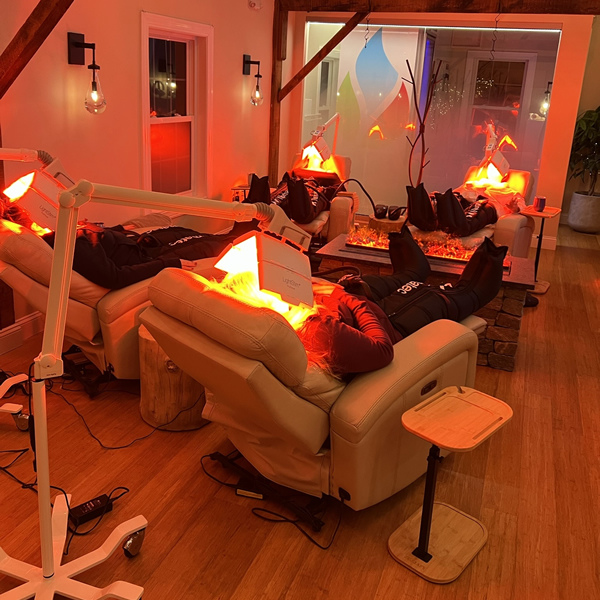
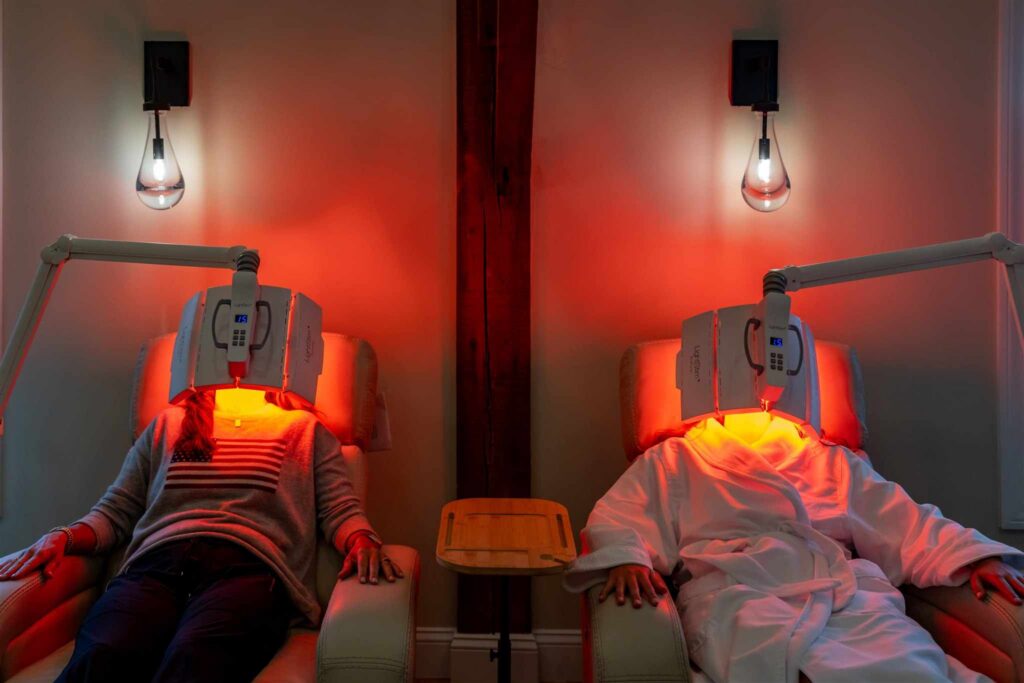
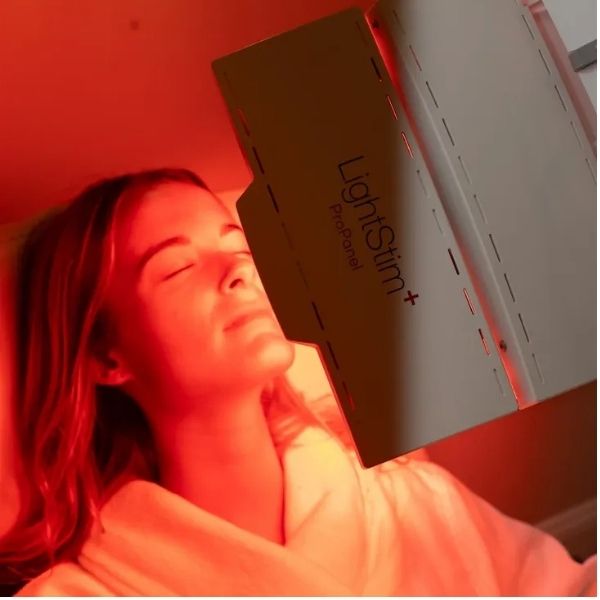
The session itself. You lie comfortably on a treatment table or recline in front of a full-body panel. The room is quiet and dim, illuminated almost entirely by the warm red glow of the device. You may feel gentle warmth on your skin, but it is not hot. Eye protection is offered depending on device intensity and proximity. Many clients choose to listen to calming music or follow a guided breathing exercise.
Typical parameters for sleep support:
- Duration: 10 to 20 minutes under a full-body panel, or 20 to 30 minutes in a combined IR halo sauna with integrated red light.
- Timing: late afternoon or early evening, ideally at least 60 to 90 minutes before your target bedtime, to avoid potential overstimulation.
- Frequency: most protocols suggest two to three light therapy sessions per week for several weeks to build consistency.
Afterward, most people report mild warmth, loosened muscles, and a relaxed “heavy-limb” sensation. Occasionally, a short-term energizing effect occurs if sessions happen too close to bedtime-this is easily corrected by shifting the appointment earlier.
Improvements in sleep often come from repeated sessions combined with parallel lifestyle adjustments, not a single treatment. Expect a gradual shift rather than an overnight transformation.

Home Red Light Devices vs. In-Center Treatments for Better Sleep
Choosing between a home device and professional sessions (or combining both) depends on your goals, budget, and how much guidance you need.
In-center strengths:
- Medical- or spa-grade panels with measured power output and consistent wavelength accuracy.
- Professional guidance on dose, distance, and timing for specific concerns like insomnia disorder, jet lag, or shift work recovery.
- Ability to combine red light with complementary services-infrared sauna, compression therapy, cryotherapy, IV hydration-to address underlying chronic pain, inflammation, or stress that affect sleep.
Home device considerations:
- Convenience of nightly use without travel, helpful for maintaining a circadian-friendly evening routine.
- Quality ranges wildly: from low-power novelty lamps marketed as light therapy products to legitimate high-power panels. Some shoppers compare a panel with a light box, but the right pick for sleep-related use depends on the device’s specs and intended purpose. Look for clear specifications on wavelength (nm), irradiance (mW/cm²), and safety certifications.
- Risk of overuse or improper timing without professional input.
A practical hybrid approach: Use in-center treatments to find the timing, brightness, and session length that works best for you. Then replicate that setup at home with a quality device. Schedule periodic professional check-ins to adjust your protocol as your life changes-new work shifts, training cycles, major stressors.
How to Integrate Red Light into a Complete “Better Sleep” Plan
Red light therapy is one piece of a larger sleep strategy, not a stand-alone solution. Here is a sample evening routine that weaves in red light to support circadian rhythm and improve sleep:
Two to three hours before bed: Lower household lights. Switch screens to night mode. Avoid bright overhead fixtures.
Sixty to ninety minutes before bed: Complete a short red light session (in-center or at home). Avoid bright white light afterward.
After the session: Engage in relaxing activities under dim red or warm light-stretching, reading on paper, breathwork, or meditation. Red light therapy helps regulate circadian rhythms for improved sleep when consistently paired with these calming habits.
Complementary tactics that make a measurable difference:
- Consistent wake time, even on weekends, to anchor your body clock.
- Caffeine cut-off by 2 p.m. for most adults.
- Limit alcohol and heavy meals in the three hours before bed.
- Regular daytime movement and some outdoor morning light exposure-bright light in the morning is the other half of the circadian equation.
Additional therapies like infrared sauna, cryotherapy, or anti-inflammatory lifestyle coaching can reduce the chronic pain and stress that often underlie poor sleep quality. If you are adding red light therapy, consider tracking your sleep with a simple journal or app. Note how long it takes to fall asleep, how often you wake, and how restored you feel in the morning.
Frequently Asked Questions About Red Light Therapy for Sleep
Below are answers to the questions our clients ask most often about using red light for better sleep.
How soon will I notice better sleep from red light therapy?
Some people report falling asleep faster or waking less often within the first week, especially when sessions are paired with improved sleep hygiene-consistent bedtimes, reduced screen time, and dimmer evening lighting. Others need three to four weeks of regular use before their circadian rhythm and evening routines stabilize enough for noticeable changes. If you see no improvement after a month, it is worth examining other factors: stress, medications, unrecognized sleep apnea, or health conditions that may need clinical attention.
Is red light therapy safe to use every night?
For most healthy adults, low- to moderate-intensity red and near infrared light exposure used as directed is considered safe, including near-daily sessions. A 2025 expert consensus published in the Journal of the American Academy of Dermatology confirmed that red and near infrared photobiomodulation is safe in adults when used properly, with no evidence of induced DNA damage at therapeutic doses. Follow professional guidance on session length and distance, and respect device manufacturer limits. People with photosensitive conditions, complex medical histories, or eye disease should obtain individualized clearance.
Will red light therapy make me feel more awake instead of sleepy?
It can happen. Some studies found that bright red light at high light intensity increased alertness and negative emotions when used right before bed. In practice, a wellness provider can adjust timing (moving sessions earlier in the evening), reduce brightness, or change exposure patterns to emphasize relaxation. If you consistently feel wired after sessions, shift them earlier or reduce frequency and discuss adjustments with your provider.
Can red light therapy replace my sleep medications?
Red light therapy is not a substitute for prescription medications without medical supervision. Some individuals, under guidance from their physician, may gradually reduce reliance on certain sleep aids as behavioral strategies and circadian routines-including red light-begin to work. Changes to any medication regimen should always be coordinated with the prescribing clinician. A sleep specialist can help determine what role light treatment plays alongside or instead of pharmacotherapy.
Is near infrared necessary for sleep benefits, or is red light alone enough?
Both red and near infrared light have been used in sleep-related research, but the evidence is not yet strong enough to declare one clearly superior. Red wavelengths may be more relevant for circadian signaling and mood effects at the ocular and skin level, while near infrared light may help indirectly by easing muscle and joint discomfort that disrupts sleep. Red light therapy can stimulate cellular function at both wavelength ranges. Prioritize well-designed, safe devices and professional guidance over chasing a specific nanometer number.
Can children or teens use red light therapy for sleep problems?
Any light therapy in minors should be supervised by a pediatrician or pediatric sleep specialist, since developing brains and eyes require extra caution. Simple measures-consistent bedtimes, reducing evening screen time, dimming household lights-are first-line strategies for sleep disturbances in young people. If a provider does use red light for a teenager (for example, an athlete with soreness and sleep issues), sessions are usually shorter, carefully dosed, and aligned with medical recommendations.
How to Choose a Local Red Light Therapy Provider for Sleep Support
Not all red light offerings are created equal. When evaluating providers, look for wellness centers, integrative clinics, or recovery-focused facilities-not just cosmetic light operations making vague well-being claims.
Practical selection criteria:
- Staff who can explain how red light therapy interacts with circadian rhythm and sleep, not just skin or fat-loss marketing.
- Transparent information on device type, wavelengths used (in nm), power output (mW/cm²), and safety protocols including eye protection, cleaning procedures, and screening for risk factors.
- Willingness to coordinate with your physician or sleep specialist when needed, especially if you have an existing sleep disorder diagnosis.
If you live in a suburban or small-city area, search within a realistic driving radius and consider centers that also offer complementary services-infrared sauna, compression, IV hydration-if pain or recovery issues are part of your sleep problem. Ask for a short consultation before committing to a package so that timing and expectations for improving sleep can be personalized.
Why Choose Our Wellness Center for Red Light Therapy and Better Sleep
We are a brick-and-mortar wellness center serving the Merrimack Valley and North Andover, Massachusetts area, and we approach red light therapy the way sleep medicine approaches insomnia: with individualized assessment, measurable protocols, and honest expectations.
What sets us apart:
- Science-based protocols tailored to specific goals-whether that is insomnia relief, jet lag recovery, shift work adjustment, or general circadian rhythm support.
- Integrated services including infrared sauna, cryotherapy, IV vitamin therapy, oxygen therapy, and compression therapy. Because poor sleep quality often stems from chronic pain, inflammation, or high stress, we address root causes rather than treating symptoms in isolation.
- Membership and package options designed to make multiple sessions per week feasible during the critical first month, when habit-building and circadian resetting matter most.
- Consultative intake that covers bedtime, wake time, caffeine use, screen habits, and existing diagnoses like insomnia disorder or sleep apnea-so your plan respects and complements your current medical care.
- Practical logistics that matter for real life: convenient parking, evening hours for commuters, and the ability to stack services in a single visit-an after-work IR sauna with integrated red light followed by a short compression session-so you head home already in wind-down mode.
We understand the real-world barriers to better sleep: shift work, parenting, long commutes, and stress that does not turn off at 9 p.m. Our protocols are designed with those realities in mind.
When It’s Time to See a Sleep Specialist (Not Just Adjust Your Lighting)
Red light can support your sleep, but some symptoms require a medical sleep evaluation before any wellness intervention:
- Loud snoring, choking, gasping, or pauses in breathing observed by a bed partner.
- Waking with headaches, severe dry mouth, or unrefreshing sleep despite spending plenty of time in bed.
- Extreme daytime sleepiness, near-miss car incidents, or falling asleep unintentionally during the day.
- Insomnia lasting longer than three months, especially with a history of depression, anxiety, or bipolar disorder.
If any of these apply, talk to your primary care physician about a possible referral for a home sleep study or in-lab polysomnography. Use red light therapy only as an adjunct while diagnostic work-up is ongoing. Resources like the Cleveland Clinic’s sleep center guidelines can help you understand what to expect from a formal evaluation.
A comprehensive approach-medical diagnosis when needed plus lifestyle and environmental changes like circadian-smart lighting-usually yields the best long-term sleep outcomes.
Next Steps: Building a Light-Friendly Evening Routine and Booking a Session
Here are the main takeaways worth carrying with you:
- Light is one of the strongest levers for circadian rhythm. Blue light at night disrupts sleep; thoughtfully used red light may support it. Red light helps signal the brain that nighttime is approaching when blue light sources are removed.
- Red light therapy can help some people fall asleep faster and enjoy better sleep quality, especially when combined with consistent sleep habits and stress management.
- Safety, timing, and individualized planning matter more than chasing trends or gadgets.
A simple 7-day experiment you can start tonight:
- Replace bright evening lighting with dim red or warm-toned bulbs.
- Avoid screens or use strong night-mode filters after a set time each evening.
- Add two to three professionally guided red light sessions during the week if accessible, noting changes in how long it takes to fall asleep and how rested you feel each morning.
If you are in the North Andover or Merrimack Valley area and want to explore whether red light therapy fits your sleep goals, we invite you to schedule a consultation. You can call, book online, or visit our center to tour the space and see the equipment before committing to anything.
Bring any existing sleep diagnoses, medication lists, or notes from your physician so we can build a plan that complements-not competes with-your current care. Better sleep is not about a single gadget or a single night. It is about building a routine your body can trust.