
Table of Contents
- Infrared sauna vs. red light therapy: quick answer
- What is an infrared sauna?
- What is red and near-infrared light therapy?
- Key differences between infrared saunas and red light therapy
- Health benefits: circulation, pain relief, and improved skin health
- Combining infrared heat and light therapy for faster recovery
- What to expect in a session at a local wellness center
- FAQs about infrared sauna and red light therapy
- Why choose a professional wellness center for infrared therapy
- How to get started with infrared sauna and red light therapy
Infrared Sauna vs. Red Light Therapy: Quick Answer
If you are comparing infrared sauna and red light therapy, the core difference comes down to heat versus light energy. An infrared sauna uses infrared heat to warm the body directly from the inside out, raising your core body temperature, triggering deep sweating, and creating a cardiovascular response. Red light therapy, including near-infrared light, uses specific wavelengths of light (roughly 600–900 nm) that do not significantly generate heat but instead trigger cellular processes like energy production and tissue repair through photobiomodulation.
Here is who typically benefits most from each:
- Infrared sauna therapy: whole-body relaxation, detoxification through sweating, stress reduction, muscle and joint comfort
- Red light therapy: improved skin health, faster recovery in targeted areas, support for joint and tendon issues, collagen stimulation
- Many wellness enthusiasts use both light therapy and infrared sauna therapy in the same routine to stack benefits – sauna for systemic relaxation and red light for targeted cellular repair
The rest of this article breaks down health benefits, key differences, session expectations, and how to combine these therapies at a wellness center like Bonfire Wellness.
What Is an Infrared Sauna?
An infrared sauna is an enclosed cabin that uses radiant heat panels to warm the body directly rather than superheating the air around you. Unlike traditional steam saunas that push air temperatures above 180°F, infrared saunas operate at temperatures of 120°F to 150°F, making the experience more tolerable while still producing a deep, productive sweat. High-quality infrared saunas utilize far infrared technology for effective heating, and full-spectrum infrared saunas offer near, mid, and far-infrared heat for broader coverage across different infrared wavelengths.
During an infrared sauna session, you will feel gradual warming over the first 10–20 minutes before sweating intensifies. Breathing stays comfortable because the air itself is not extreme. Sessions typically run 20–45 minutes.
Practical health benefits of infrared sauna therapy include:
- Cardiovascular support through increased heart rate similar to light exercise – research shows heart rate can rise from roughly 74 bpm to over 150 bpm during a 45-minute session at 65°C
- Muscle relaxation and relief of tension after workouts or long workdays, since infrared heat helps relieve muscle pain and stiffness
- Support for joint stiffness in knees, lower back, and shoulders
- Detoxification through increased perspiration – infrared saunas promote sweating and detoxification, with sweat rates reaching approximately 1.4 liters per hour
- Stress reduction and improved sleep quality for regular users
- Potential immune support, as infrared sauna sessions can boost immune function by increasing white blood cell production
- Infrared saunas may aid in cardiovascular health by boosting circulation, and regular infrared sauna use can enhance skin health and collagen production
Infrared saunas provide a whole-body, systemic response. Infrared therapy penetrates deeper than red light therapy, reaching below the skin’s surface into muscle tissue. If you are pregnant, have uncontrolled high blood pressure, or have certain heart conditions, check with a clinician before using infrared heat. Healthy adults generally tolerate it well when properly hydrated.
What Is Red and Near-Infrared Light Therapy?
Red light therapy is a form of low-level light therapy – also called photobiomodulation – that uses specific visible red and near-infrared light wavelengths to stimulate cellular energy production. This is not tanning, not UV, and not a warming treatment in the traditional sense.
Red light therapy devices should use wavelengths around 630–660 nm for visible red light and roughly 800–850 nm for near-infrared. This light energy penetrates into the skin and underlying tissue without significantly raising your body’s core temperature. RLT stimulates cellular repair through light absorption in the mitochondria, where red light therapy enhances cellular energy by increasing ATP levels. Red light therapy stimulates ATP production in cells, powering repair and regeneration at the cellular level.
Common equipment at wellness centers includes wall-mounted or free-standing LED panels for full-body treatment, standalone red light devices that allow targeted treatment on specific body areas, and handheld panels for localized joints, neck, or face work. Red light therapy can target specific joints or areas for treatment with precision.
Core benefits tied to real-world goals:
- Improved skin health: red light therapy enhances collagen production in the skin and stimulates collagen and elastin production, supporting smoother skin tone and texture
- Faster recovery from workouts – it promotes faster recovery from muscle soreness and stiffness by supporting local circulation and tissue repair
- Red light therapy can improve skin health and reduce inflammation, and has shown potential for pain reduction and inflammation relief
- Regular sessions reduce fine lines and even out skin tone, with clinical trials showing up to 36% wrinkle reduction and 19% elasticity improvement over several weeks
- Supportive therapy for chronic neck and upper back tension from desk work
Sessions often last 10–20 minutes per area. Most people feel only gentle warmth or no temperature change at all during red light exposure. Light therapy focuses on cellular signaling and regeneration, while infrared sauna focuses on whole-body heating – making them complementary, not competing, therapies.
Key Differences Between Infrared Sauna and Red Light Therapy
The fundamental difference between these two therapies is mechanism: an infrared sauna heats your body directly to raise core temperature and activate your sweat glands, cardiovascular system, and relaxation response. Red light therapy delivers low-level wavelengths of red and infrared light that influence cells and mitochondria without major temperature change.
Here are the key differences side by side:
- Primary mechanism: infrared sauna uses infrared heat to raise core temperature and trigger sweating; red light therapy uses red light wavelengths to promote circulation and cellular repair at different depths
- Treatment area: infrared saunas provide whole-body exposure inside an enclosed cabin; red light therapy can be localized to face, joints, or back, or full-body depending on device size
- Sensation: infrared sauna produces noticeable warming, sweat, and post-session calm; red light therapy offers a gentle glow of visible red light with minimal or no sweating
- Session length: sauna sessions run 20–45 minutes with progressive sweating; light therapy sessions are shorter per area (10–20 minutes) with no cool-down needed
- Clothing: sauna requires light or minimal clothing with a towel; light therapy can be done clothed or partially unclothed depending on the treatment area
- Equipment cost for home use: infrared saunas are larger and more expensive; LED panels for red light are more compact and lower energy
Health Benefits: Circulation, Pain Relief, and Improved Skin Health
Both infrared therapy and light therapy support health through distinct mechanisms. Evidence is strongest for specific benefits rather than cure-all claims. Both therapies can support overall wellness and relaxation when used consistently.
- Circulation and cardiovascular support: infrared sauna sessions create a mild cardiovascular conditioning effect, with meta-analyses showing diastolic blood pressure lowered by 2–3 mm Hg after sessions. Infrared heat promotes detoxification and circulation. Red and near-infrared light supports local microcirculation in treated areas, helping tight muscles and stiff joints.
- Pain relief and muscle recovery: infrared sauna delivers whole-body muscle relaxation after workouts and chronic stiffness. Red light therapy provides targeted relief for overworked muscles, tendons, and joints – runners’ knees, rotator cuffs, lower back.
- Improved skin health and anti-aging: red light therapy drives elastin production and collagen synthesis. Infrared sauna enhances blood flow and sweating, leaving skin looking more vibrant post-session.
- Stress, mood, and sleep: infrared sauna produces a calming parasympathetic effect and supports deeper sleep. Light therapy sessions offer a sense of relaxation during treatment.
Realistic timelines:
- Relaxation and loosened muscles often appear after the first session
- Visible skin changes and joint comfort typically require 2–3 sessions per week for 4–8 weeks
- Results vary and work best as part of a broader anti-inflammatory lifestyle including nutrition, sleep, and movement
- People on photosensitizing medications or with implanted devices should discuss both therapies with a clinician
Combining Infrared Heat and Light Therapy for Faster Recovery
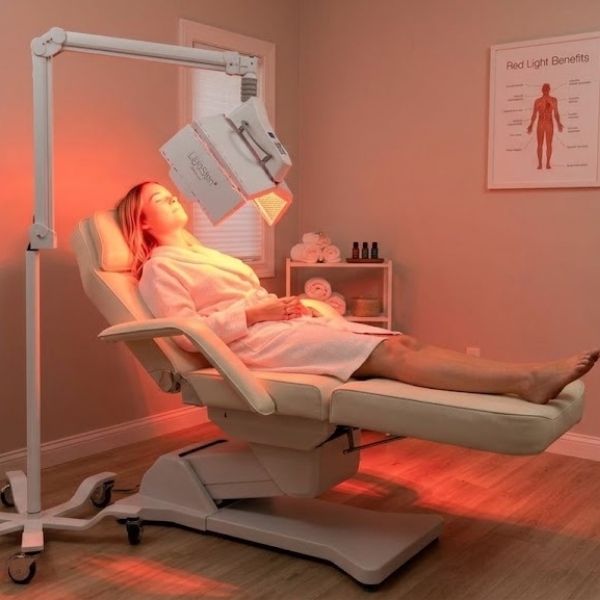
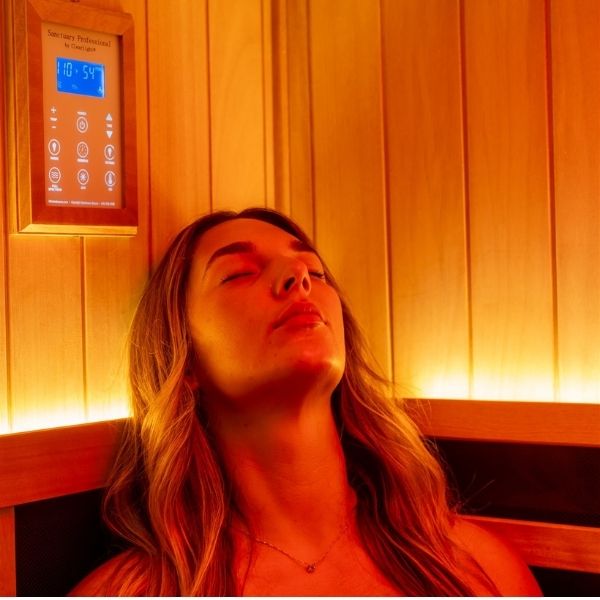
Many wellness professionals now stack infrared sauna sessions with red or near-infrared light therapy to target both systemic and local recovery. Combining infrared sauna and red light therapy enhances recovery beyond what either delivers alone.
The potential synergy works like this:
- Infrared sauna sessions increase circulation and warm tissues, preparing muscles and joints for focused light therapy afterward
- Red light therapy then supports cellular repair in exact areas stressed by training, posture, or repetitive strain
- The combination supports muscle relaxation and pain relief across the entire body
- Using both therapies can improve skin health and collagen production simultaneously – addressing overall wellness from two complementary angles
- People with desk-based jobs benefit from sauna-induced relaxation plus targeted red light on the neck and upper back
Practical sequencing at a wellness center:
- Option 1: infrared sauna first (20–30 minutes), followed by red light therapy on specific areas for 10–20 minutes
- Option 2: separate days – sauna on high-stress days, light therapy on training or recovery days
Personalization matters. Athletes might use 1–2 infrared sauna sessions plus 2–3 red light sessions per week. Adjust duration based on heat tolerance and skin sensitivity. Stay hydrated, avoid heavy meals before sauna sessions, and remember these therapies are supportive tools – not replacements for medical treatment for serious injuries.
What to Expect in a Session at a Local Wellness Center
Walking into your first session should feel straightforward. At a center like Bonfire Wellness, expect a comfortable, spa-like environment with a clear intake process tailored to your health history.
A typical infrared sauna visit includes:
- Brief consultation to review goals – stress relief, faster recovery, improved skin health
- Explanation of contraindications and signs of overheating to watch for
- Private room with infrared sauna, towels, water, and clothing recommendations
- Session structure: 5–10 minute warm-up, deeper sweat phase, cool-down in a relaxation area
- Post-session guidance on hydration, gentle stretching, and how often to return
A typical red light therapy visit includes:
- Targeted treatment planning for priority areas – face, neck, knees, back
- Positioning relative to the LED panels with safety glasses if needed
- Explanation of what you will feel (gentle warmth or nothing at all) and session length
- Emphasis on consistency: moderate sessions several times per week beat rare long sessions
Staff can help answer questions like whether to do infrared sauna or red light therapy first, adjust timing across visits, or add compression or other recovery services.
FAQs About Infrared Sauna and Red Light Therapy
Is infrared sauna the same as red light therapy?
No. An infrared sauna uses mainly far-infrared heat to raise core temperature and induce sweating and detoxification. Red light therapy uses visible red and near-infrared light at lower energy levels to influence cellular processes without intense heat. Both involve forms of infrared light but at different wavelengths, power levels, and with different goals. Most wellness centers offer them as separate services that complement each other.
How often should I use an infrared sauna for health benefits?
Many healthy adults use infrared sauna sessions 1–3 times per week for general wellness. Some athletes or high-stress professionals go up to 4 times weekly. Start with shorter sessions of 15–20 minutes and build to 30–40 minutes only if tolerated well. Drink plenty of water before and after every session.
How many red light therapy sessions do I need to see improved skin health?
Many people notice subtle improvements in glow or texture after 4–6 weeks of consistent sessions at 2–3 times per week. Deeper concerns like fine lines or uneven skin tone may require several months. Results depend on age, baseline skin condition, lifestyle factors like sleep and sun exposure, and device quality.
Can I use red light therapy and an infrared sauna on the same day?
For most healthy adults, combining them on the same day is well-tolerated when sessions stay within recommended durations and you hydrate properly between them. A common sequence is infrared sauna first to promote relaxation and circulation, then red or near-infrared light therapy for targeted recovery or skin support. Those with medical conditions or light sensitivity should consult a provider first.
Are there risks or side effects with infrared saunas or red light therapy?
Infrared saunas can cause temporary lightheadedness, dehydration, or fatigue if sessions run too long or you skip hydration. End early if dizziness or nausea occurs. Red light therapy side effects are generally mild – temporary skin redness or sensitivity in rare cases. People with photosensitive conditions or on photosensitizing medications should seek medical advice. Professional guidance and honest health-history sharing greatly reduce risk with both therapies.
Which is better for faster recovery after workouts: infrared sauna or red light therapy?
Infrared sauna helps with whole-body relaxation, circulation, and a post-training unwind through its systemic heat response. Red light therapy is better for targeting specific overused areas like quads after running or shoulders after lifting. For people training several times per week, a combined approach works best: sauna on heavy training days, red or near-infrared light therapy more frequently on the areas that take the most load.
Why Choose a Professional Wellness Center for Infrared and Light Therapy
Using a staffed wellness center instead of relying solely on home devices gives you access to commercial-grade equipment, professional screening, and personalized protocols that most consumer gadgets simply cannot match.
- Access to infrared saunas and red light therapy devices that deliver more even, calibrated output than many home gadgets
- Professional intake to screen for contraindications and tailor session plans to your specific goals
- Ability to combine services like compression therapy, IV hydration, or other recovery modalities across visits
- Clean, private spaces with proper ventilation and hygiene
- Guidance on optimal session timing, frequency, and sequencing for your schedule
- Wellness centers in suburban communities like North Andover serve busy professionals, parents, and active adults who need efficient sessions before or after work
- Consistent appointments close to home make it far easier to maintain a routine than sporadic home use
How to Get Started with Infrared Sauna and Red Light Therapy
If you have read this far, you are likely deciding whether to book your first session or layer a new therapy into your routine. Here is how to move forward:
- Clarify your primary goal: relaxation, improved skin health, faster recovery, pain relief, or overall longevity support
- If you crave deep relaxation and sweat, start with an infrared sauna session; if you want targeted skin or joint support, start with red light or near-infrared light therapy
- Schedule an initial consultation at Bonfire Wellness to review your health history, medications, and current activity level
- Begin with conservative session lengths – 15–20 minutes in the sauna, 10–15 minutes of light therapy per area – and adjust based on how your body responds
- Commit to a trial period of 4–6 weeks of consistent sessions before evaluating results and deciding on a longer-term membership or package
The best way to understand the difference between infrared heat and light therapy is to experience both firsthand. Contact Bonfire Wellness to ask questions, compare options, and book an introductory visit that fits your schedule and health goals.