If you live with chronic pain-whether it’s a stiff lower back after hours at a desk, knees that protest on every staircase, or shoulders that never quite loosen up-you’ve probably tried more than a few remedies. Red light therapy for pain has moved from niche biohacking circles into mainstream wellness for a good reason: it works on the cellular level without drugs, needles, or downtime. This guide breaks down the science, the practical details, and what you can realistically expect if you decide to try it.
Table of Contents
- Red Light Therapy for Pain: The Short Answer – A quick overview of what it is, how it helps, and who benefits most.
- How Red Light Therapy Works in the Body – How red and near infrared light affect inflammation, circulation, and cellular energy.
- Conditions and Types of Pain Red Light Therapy May Help – From arthritis and back pain to sports injuries and nerve-related discomfort.
- Red Light vs Near Infrared: What’s the Difference for Pain Relief? – Why wavelength and depth of penetration matter for your specific pain.
- Evidence and Health Benefits: What Research Suggests – Clinical findings, effect sizes, and honest limitations.
- What to Expect During an In-Studio Red Light Therapy Session for Pain – The visit flow, devices, and physical experience.
- Session Frequency, Timelines, and Realistic Results – How long it takes and what to track.
- Safety, Side Effects, and Who Should Be Cautious – Risks, contraindications, and how to stay safe.
- Comparing In-Studio Red Light Therapy and At-Home Devices – Power, coverage, and when each option makes sense.
- Combining Red Light Therapy with Other Recovery and Longevity Services – Pairing light with cryotherapy, sauna, and compression.
- Beyond Pain: Skin, Hair, and Other Health Benefits of Red Light – Collagen, hair growth, and mood.
- How to Know If It’s Time to Try Red Light Therapy for Chronic Pain – Signs you’re ready and red flags to rule out first.
- What to Ask Before Choosing a Red Light Therapy Provider – Questions that protect your health and budget.
- FAQs About Red Light Therapy for Pain – Quick answers to the most common concerns.
- Why Choose Our North Andover Wellness Center for Red Light Therapy
- Ready to Explore Red Light Therapy for Your Pain?
Red Light Therapy for Pain: The Short Answer
Red light therapy is a noninvasive treatment that uses specific wavelengths of red light and near-infrared light to support pain relief and tissue healing. It does not involve UV radiation, incisions, or pharmaceuticals. Instead, LED lights or low-power laser therapy devices deliver controlled doses of light energy directly to skin, muscle, and joint tissue.
Here is how it helps with pain management in simple terms. The light penetrates your tissues and is absorbed by mitochondria-the energy-producing structures inside every cell. This stimulates mitochondria to produce more energy in the form of adenosine triphosphate (ATP), which accelerates tissue repair. At the same time, red light therapy reduces inflammation and promotes healing by lowering key inflammatory markers, which means less swelling, less stiffness, and less pain signaling reaching your brain. It also stimulates endorphin release for pain relief, giving you a natural analgesic effect without a pill bottle.
Common pain issues people use it for include:
- Joint pain and arthritis symptoms (knees, hands, hips, spine)
- Chronic low back pain
- Neck and shoulder tension from desk work or commuting
- Sports injuries, strains, and post-workout soreness
- Tendon issues like tennis elbow or Achilles tendinopathy
- Mild nerve-related discomfort
Who it’s best for:
- Adults with chronic pain seeking non-surgical, drug-sparing options
- Athletes and weekend warriors wanting faster recovery
- People who can’t tolerate NSAIDs or other anti-inflammatory medications
- Anyone with mild to moderate nerve irritation or joint stiffness
The sections ahead go deeper into the science behind these effects, which conditions red light therapy can help, what a session actually looks like, safety considerations, cost, and how to combine it with other recovery tools like cryotherapy or infrared sauna.
How Red Light Therapy Works in the Body
Red light therapy-often called photobiomodulation therapy or low-level light therapy-uses specific wavelengths of light to influence how your cells behave. It is not the same as a tanning bed, UV exposure, or surgical lasers. There is no heat damage, no cutting, and no ionizing radiation involved.
Most pain protocols use light in the 630–700 nanometer red range and the 800–850 nanometer near-infrared range. Red light is absorbed closer to the surface (skin, superficial muscle, tendon insertions), while near infrared light penetrates deeper to reach muscles, joint capsules, and connective tissue. This is why many clinical devices combine both wavelengths.
What happens at the cellular level:
- Photons are absorbed by a protein called cytochrome c oxidase inside your mitochondria
- This increases ATP production, giving cells more energy for repair and regeneration
- Red light therapy promotes cell growth and function in overworked, inflamed, or damaged tissue
- Oxidative stress drops, meaning less free radical damage to healing tissues
Anti-inflammatory effects:
Red light therapy can reduce inflammation and improve circulation by lowering levels of prostaglandin E2, TNF-α, IL-1β, and COX-2 expression. In practical terms, this translates to less swelling around a sore knee, less morning stiffness in arthritic fingers, and reduced tenderness after a workout. Studies in acute soft-tissue injury found that effective doses produced measurable reductions in inflammatory markers and pain scores.
Neural and pain-signaling effects:
On the nerve side, light therapy may reduce excitability of pain fibers (the Aδ and C fibers that carry pain signals), enhance microcirculation to nerve tissue, and release neurotransmitters that inhibit pain perception. This is one reason it shows potential benefits for neuropathic pain and nerve repair-the light doesn’t just mask pain; it supports the biological environment that nerves need to heal.
This is low-level laser therapy in the truest sense: enough energy to trigger biological responses, but not enough to burn or ablate tissue.
Conditions and Types of Pain Red Light Therapy May Help
Light therapy works as a complementary tool in pain management-not a complete replacement for medical diagnostics, imaging, surgery, or physical therapy. It is most useful when inflammation, tissue overload, degeneration, or slow recovery are driving the pain.
Musculoskeletal pain:
Chronic low back pain, neck and shoulder pain from sedentary work, hip and knee pain from overuse, plantar fasciitis, tendinopathy (Achilles, lateral epicondyle), and muscle strains are all common targets. Red light therapy provides a non-invasive approach for chronic back pain relief that many people find easier to maintain than frequent manual therapy appointments. It may also assist in pain relief from tendinopathy and tendon injuries by supporting collagen remodeling in damaged tendons.
Joint and arthritis pain:
Red light therapy helps alleviate joint pain and arthritis symptoms, particularly in osteoarthritis of the knees, hands, and spine. Meta-analyses of knee osteoarthritis trials show significant pain and disability improvement when proper doses and wavelengths are used, with standardized mean differences for pain around 0.59 and disability around 0.66. It can also be helpful for rheumatoid arthritis flare management as part of a broader treatment plan.
Nerve-related pain:
Conditions like diabetic peripheral neuropathy, mild sciatica, and carpal tunnel-type symptoms have shown responsiveness to LED light therapy in clinical trials. Recent randomized controlled trials using red, infrared, or combination LED panels in diabetic neuropathy populations showed statistically significant decreases in neuropathy scores. That said, severe nerve compression or structural pathology typically requires medical or surgical intervention.
Post-exercise and sports recovery:
Athletes commonly use red light therapy to reduce muscle soreness and speed recovery. Delayed onset muscle soreness (DOMS), post-game tightness, and overuse injuries in runners, lifters, and weekend warriors respond well-especially when light is applied early and at sufficient dose across multiple treatment points. Red light therapy can speed up recovery from injuries by reducing inflammatory markers and supporting tissue repair in the acute phase.
Chronic pain syndromes:
For conditions like fibromyalgia or chronic pain persisting long after an initial injury, some people report meaningful improvements in pain scores, function, and quality of life. Results vary considerably, and light therapy should be part of a broader plan including movement, sleep optimization, and stress management.
Red Light vs Near Infrared: What’s the Difference for Pain Relief?
Both red light and near infrared light are used in devices designed to treat pain, but they reach different tissue depths and serve slightly different roles.
Red light (approximately 630–700 nm) is mostly absorbed in the skin and superficial tissues. It is effective for surface-level pain, inflamed soft tissue near the surface, minor scars, and conditions like tendon insertions or shallow joint structures (finger joints, wrists). It uses light wavelengths between 630–700 nanometers, the range most studied for skin and superficial tissue effects.
Near infrared light (approximately 800–850+ nm) penetrates more deeply into muscle, joint capsules, bone surfaces, and deeper connective tissue. This makes it the go-to wavelength for chronic pain in larger, deeper structures-low back, hips, knees, and shoulders. Animal models of chronic pain using 850 nm specifically have shown strong reductions in mechanical hypersensitivity.
Most pain-focused red light therapy devices-whether full-body panels, beds, or localized pads-combine both red and near-infrared LEDs to treat multiple tissue layers simultaneously.
One important note: higher power doesn’t always mean better results. Research indicates that results from red light therapy depend on parameters like wavelength and dose. There is a biphasic dose response-too little energy does nothing; too much can reduce effectiveness or cause irritation. Correct dosage (measured in irradiance and fluence), treatment time, and professional protocol matter more than simply buying the most powerful red light device available.
Evidence and Health Benefits: What Research Suggests
The evidence base for photobiomodulation therapy has grown substantially through the mid-2020s, with systematic reviews and meta-analyses covering chronic pain, arthritis, neuropathy, and sports injuries.
Key clinical findings:
- In knee osteoarthritis, meta-analyses show that low-level laser therapy significantly reduces pain and disability compared to placebo when recommended doses are used. One analysis found pain reductions of approximately 31.9 mm on the Visual Analog Scale beyond placebo at the 2–4 week follow-up mark.
- A multicenter randomized controlled trial reported that up to 60% of participants with musculoskeletal pain experienced clinically meaningful pain reduction within a single 30-minute session, with relief sustained for up to 20 hours.
- In diabetic neuropathy, LED-based photobiomodulation produced statistically significant decreases on validated neuropathy scales compared to sham treatment.
- Red light therapy is effective for chronic pain conditions across multiple categories, though effect sizes vary depending on the condition, dosing, and how consistently sessions are maintained.
Broader health benefits relevant to pain sufferers:
Red light therapy can reduce inflammation and promote healing across tissues, which indirectly supports better sleep, improved mood, and greater willingness to stay active-all factors that influence chronic pain perception. Improved blood circulation to damaged tissue supports the healing process and may reduce dependency on analgesics over time.
Honest limitations:
Study protocols vary widely in wavelength, power density, session count, and follow-up duration. Some meta-analyses for knee osteoarthritis show no significant benefit when including trials with non-standardized dosages. Long-term durability of effects beyond 12 weeks is less clear without maintenance sessions. More research is needed-particularly longer-term studies and head-to-head comparisons of different devices and protocols. The evidence is promising, not yet definitive for every pain condition.
Professional treatments typically follow parameters similar to those used in published research, while home devices may be weaker and less precise.
What to Expect During an In-Studio Red Light Therapy Session for Pain
Walking into a wellness center for your first red light therapy session can feel unfamiliar, so here is how the process typically works in a studio setting in North Andover.
Check-in and consultation:
You start with a brief conversation about your pain history-where it hurts, how long it has been an issue, what makes it worse, and what you have already tried. Staff will review any prior imaging or diagnoses (arthritis, herniated disc, neuropathy), current medications (especially photosensitizing drugs), and your skin type. This helps them select the right device, wavelength combination, and session duration.
Device setup:
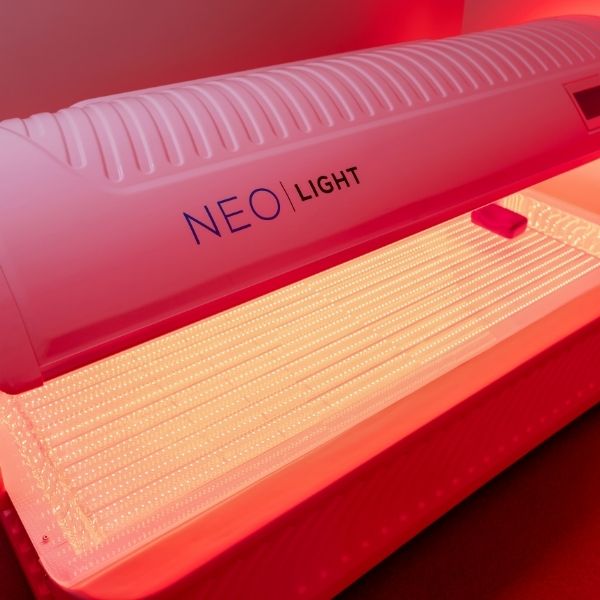
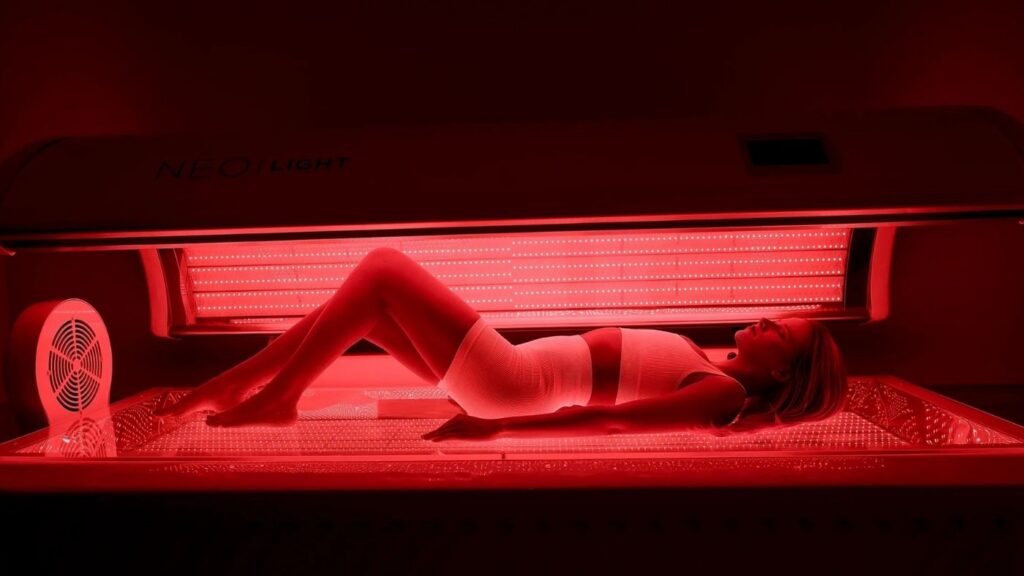
For systemic or widespread pain, you may use a full-body red light therapy bed or stand in front of a larger device with panels covering multiple body areas. For targeted work-a sore knee, stiff shoulder, or aching lower back-localized pads or focused light therapy device arrays are positioned directly over the problem area. Most devices combine both red and near-infrared LEDs.
The physical experience:
You lie or sit comfortably while the light does its work. Some users report mild itching or warmth during treatment, which is normal. There is no burning, no needles, and no incisions. You will wear protective goggles or shields to protect your eyes from the bright light. A typical session for focused pain work runs about 10–20 minutes depending on the area and severity.
Staff adjust distance, intensity, and duration based on your skin tone, pain severity, and whether you are dealing with an acute injury or a chronic condition.
Aftercare:
Drink water, move gently, and pay attention to how your pain and mobility feel over the next 24–48 hours. Some people notice changes same-day; others track gradual shifts over sessions.
Session Frequency, Timelines, and Realistic Results
Chronic pain rarely disappears after a single red light session. Most people need consistent light therapy over weeks to see meaningful, lasting changes.
Typical starter protocols:
For chronic pain (arthritis, low back, neuropathy), the common approach is 2–3 red light therapy sessions per week for 4–6 weeks, then reassessment. Some people taper to weekly or biweekly maintenance visits. A 15-minute session twice daily can help with joint pain for those using home devices as a supplement to professional care.
Acute vs chronic:
Acute pain-a fresh muscle strain, a post-workout flare-can respond within 1–3 sessions. Long-standing arthritis or back pain present for years typically takes longer to shift. In knee osteoarthritis trials, peak pain reduction was observed 2–4 weeks after the end of the treatment course, suggesting cumulative biological effects that continue building even after active sessions pause.
Early improvements you might notice:
- Less morning stiffness
- Lower pain at rest
- Easier time climbing stairs, sitting through a meeting, or sleeping through the night
- Faster bounce-back after workouts
Setting realistic expectations:
Results are dose-dependent and cumulative. Combining red light therapy treatments with other modalities-compression therapy, infrared sauna, stretching, anti-inflammatory lifestyle changes-tends to produce better and more durable outcomes than light therapy alone.
Safety, Side Effects, and Who Should Be Cautious
Red light therapy is generally considered a safe treatment option when devices are used correctly, and sessions are supervised. It is fundamentally different from UV tanning or ionizing radiation-there is no cancer risk from the wavelengths used.
Common mild side effects:
- Red light therapy can cause temporary redness or swelling in the treated area
- Gentle warmth or tingling during and shortly after treatment
- These effects typically resolve within hours
Less common but possible issues:
- High levels of red light may cause blistering on the skin if devices are too powerful or held too close for too long
- Incorrect use of devices can lead to burns or skin damage, particularly with non-FDA-cleared equipment or unsupervised high-power lasers
- Red light therapy can damage your eyes without protective goggles-this is why any reputable provider will have you wear protective eyewear during every session
Who should talk to a doctor first:
- People with a history of skin cancer or active skin conditions in the treatment area
- Those on photosensitizing medications (certain antibiotics, psychiatric medications, retinoids)
- Pregnant individuals (limited safety data)
- Anyone with epilepsy triggered by light stimuli
- People with uncontrolled health conditions or eye disease
Professional supervision matters:
In a wellness center, staff assess your skin type, check contraindications, ensure you wear protective goggles, calibrate the light therapy device, and monitor your response. This dramatically reduces risk compared to unsupervised home use with unverified devices.
Red light therapy is meant to complement-not replace-care from a physician, chiropractor, or physical therapist. New, severe, or unexplained pain always warrants medical evaluation first.
Comparing In-Studio Red Light Therapy and At-Home Devices
Professional red light therapy devices for pain relief are typically higher power, offer larger coverage areas, and follow structured protocols. Home devices trade intensity for convenience.
Common home options:
Handheld devices, small panels, flexible LED pads, and caps or helmets are widely available. Many combine red and near-infrared LEDs for musculoskeletal use, skin conditions, and even hair growth applications. A red light therapy mask covers the entire face for skin or sinus-area discomfort. These other devices range from budget models to clinical-grade units.
When home devices make sense:
- Maintaining benefits between professional sessions
- Spot-treating mild chronic pain you already know responds to light
- Supporting ongoing joint comfort during travel or busy weeks
Advantages of in-studio care:
- Individualized assessment of your pain and skin type
- Correctly dosed treatment using calibrated, higher-output panels or a red light therapy bed
- Integration with other services in the same visit (cryotherapy, compression, IV hydration)
- Staff monitoring for progress and safety
Think of home and studio options as complementary: professional sessions to move the needle on stubborn chronic pain, and a home red light device to sustain improvements between visits. If you go the home route, choose FDA-cleared handheld devices when possible and follow manufacturer instructions to avoid overuse or skin damage.
Combining Red Light Therapy with Other Recovery and Longevity Services
Pain relief is more effective when you support multiple systems at once: circulation, inflammation control, muscle recovery, and overall cellular health.
Cryotherapy + red light therapy:
Cold exposure delivers rapid anti-inflammatory effects and numbs acute pain. Following cryotherapy with red light therapy adds a cellular repair layer-especially useful after intense training or joint pain flare-ups. The cold reduces swelling; the light supports the healing process underneath.
Infrared sauna + red light therapy:
An infrared sauna uses deeper heat penetration to relax muscles and improve circulation. Pairing this with red and near-infrared light therapy afterward targets tissue repair and pain relief while your tissues are warm and receptive. This is not the same as blue light or UV exposure-infrared heat and red light therapy operate in completely different wavelength ranges.
Compression therapy:
For legs, hips, and lower back, compression therapy can reduce swelling and soreness. People who stand all day, run regularly, or deal with lower-extremity joint pain often benefit from combining compression with targeted red light panels in the same visit.
Supportive modalities:
IV hydration and nutrient therapy, oxygen therapy, and anti-inflammatory lifestyle coaching create a recovery environment where light therapy can work more effectively. For people with chronic pain, stacking these services under one roof saves time and amplifies results.
Beyond Pain: Skin, Hair, and Other Health Benefits of Red Light
Many people discover red light therapy through cosmetic or performance goals and then notice pain relief as an unexpected bonus-or the other way around.
Skin health:
Red light therapy increases collagen production for skin health, supports wound healing, and can reduce redness from minor scars, acne scarring, or sun damage. It is effective for treating chronic skin conditions and can promote healing of damaged tissue in the dermis layer. For pain sufferers who also deal with aging skin or skin problems, this dual benefit makes consistent sessions more rewarding. Increased collagen production in the skin also supports the structural integrity of tendons and ligaments.
Hair growth and hair regrowth:
Caps and helmets using red and near-infrared light can support hair follicles in cases of hereditary thinning and hair loss. The mechanism involves improved blood circulation to the scalp and stimulation of cell production in follicular tissue, which may improve hair thickness over months of consistent use. Expectations should be realistic-hair regrowth takes time and varies by individual.
Cognitive and mood research:
Exploratory studies using near-infrared light for brain health suggest potential benefits for sleep quality, stress resilience, and mood-all of which directly influence how people experience chronic pain. Better sleep and more energy can shift pain perception significantly.
For pain sufferers, these potential benefits in skin healing, hair health, weight loss support through improved cell function, and mood improvements add up to a better quality of life and more motivation to stay consistent with movement and self-care.
How to Know If It’s Time to Try Red Light Therapy for Chronic Pain
Picture this: pain that limits your walks around North Andover’s downtown, stiffness that sets in 20 minutes into your commute, or soreness that lingers for days after what used to be an easy workout.
Signs you may benefit from adding light therapy:
- You rely on daily natural painkillers or OTC medications and want alternatives
- Recurring flare-ups after minor activity
- Slow recovery from exercise despite adequate rest
- Feeling stuck despite physical therapy or chiropractic care
- Pain caused by conditions that are managed but not resolved (arthritis, old injuries, neuropathy)
Rule out red flags first:
Before pursuing any wellness modality alone, get medical evaluation for sudden severe pain, numbness, weakness, unexplained weight loss, fever, or a history of cancer. A doctor’s office visit ensures nothing serious is being missed.
Try a trial mindset:
Commit to a short series of sessions-4 to 8 visits-with clear expectations. Track specific outcomes: sleep quality, pain scores on a 1–10 scale, walking distance, or ability to perform daily tasks. This gives you real data to evaluate whether red light therapy may work for your situation.
What to Ask Before Choosing a Red Light Therapy Provider
Not all light therapy providers use the same equipment, protocols, or safety standards. Asking good questions protects both your health and your budget.
Key questions to ask:
- What wavelengths and power levels do your devices use? (Look for 630–700 nm red and 800–850 nm near-infrared)
- Do you offer red light therapy protocols specifically for chronic pain, joint pain, or sports recovery?
- How many sessions are typically recommended for my type of pain?
- Who evaluates my pain history, and how do you coordinate with my existing providers?
- What does red light therapy cost per session, and do you offer packages or memberships?
- Can I combine red light with compression, cryotherapy, or infrared sauna in the same visit?
- Are your devices FDA-cleared?
Choose a location convenient to the Merrimack Valley area with hours that make it easy to maintain consistent sessions around work and family obligations. Consistency is more important than intensity when it comes to chronic pain.
FAQs About Red Light Therapy for Pain
Below are answers to the most common questions about using red light therapy for pain relief, safety, timing, and practical details like red light therapy cost.
How quickly will I feel pain relief from red light therapy?
Some people notice changes after 1–3 sessions-less stiffness when getting out of bed, easier movement through the day. Others, especially those with long-standing chronic pain like knee arthritis present for years, need several weeks of consistent therapy before improvements become clear.
Acute pain from a mild muscle strain may respond faster than a degenerative joint condition. Track specific improvements-walking distance, sleep quality, ability to sit through a workday-rather than waiting for a dramatic overnight shift.
Can red light therapy replace my pain medications or physical therapy?
Red light therapy is a complementary pain management tool, not a substitute for prescribed medications, physical therapy, or medical care. Always involve your physician, chiropractor, or physical therapist before changing any medication regimen.
Some clients are able to reduce reliance on pain medications over time as their pain control improves, but this should always be supervised by a healthcare professional. Think of it as adding a tool to your toolbox, not throwing the others away.
Is red light therapy safe if I have arthritis or a history of joint surgery?
Arthritis and post-surgical joints are among the most common reasons people seek red light therapy, and low level light is generally considered safe for use over healed areas. Red light therapy is safe for most people when proper protocols are followed.
Recent surgeries need clearance from the surgeon-typical guidance is to wait until incisions are fully healed. Light therapy cannot reverse severe structural damage like advanced bone-on-bone arthritis, but it can relieve pain and stiffness around the joint, making daily activities more manageable.
How does red light therapy compare to an infrared sauna for pain relief?
An infrared sauna primarily uses infrared heat to warm tissues, relax muscles, and improve circulation. Red light therapy targets cellular energy and inflammation more specifically through photobiomodulation. They work through different mechanisms.
Many people use both: sauna for whole-body relaxation and deep warmth, red and near infrared light for focused pain relief and cellular repair. Those sensitive to heat may tolerate standalone light therapy better than extended sauna sessions. Neither involves photodynamic therapy or UV exposure.
Will a small at-home LED light be enough for chronic back or knee pain?
Small home LEDs and a red light therapy mask can help with targeted, mild pain or maintenance, but they often lack the power and coverage needed for deeper joints and larger body areas. A larger device with higher output panels delivers more consistent dosing for low back or hip pain.
Consider pairing home use with periodic in-studio sessions using higher-output panels or beds. Choose FDA-cleared devices when possible and follow manufacturer instructions to avoid overuse or skin irritation. Using red light therapy at home works best for people who already know they respond well and want to maintain gains.
Is red light therapy covered by insurance for pain management?
In the United States, red light therapy for pain is generally not covered by health insurance as of the mid-2020s. Most wellness centers that offer red light therapy operate on a self-pay basis.
Ask about package pricing, memberships, and introductory offers to make regular visits more affordable. Some health savings accounts (HSAs) or flexible spending accounts (FSAs) may reimburse certain wellness services if accompanied by appropriate documentation-check with your plan administrator.
Why Choose Our North Andover Wellness Center for Red Light Therapy
If you live or work in the Merrimack Valley-Andover, Lawrence, Haverhill, or surrounding communities-our North Andover location makes consistent red light therapy sessions practical rather than aspirational.
Our staff works daily with athletes recovering from training, professionals dealing with desk-related pain, and adults managing arthritis, neuropathy, and long-term joint issues. This is not a one-size-fits-all light panel experience. We perform wellness assessments, map your pain, and build individualized plans that may combine red light therapy with cryotherapy, infrared halo sauna, compression therapy, oxygen therapy, IV hydration, facials, or anti-inflammatory lifestyle support-all under one roof.
That means you can address your sore knees with compression and red light, follow a joint flare-up with cryotherapy and photobiomodulation, or build a monthly membership that keeps your cellular health and pain management on track without juggling multiple providers. Our treatment spaces are private or semi-private; first-timers get clear instructions, and the focus is always on your comfort and safety.
Flexible membership and package options make ongoing care affordable for people who want real, lasting changes-not just a single session and a hope for the best.
Ready to Explore Red Light Therapy for Your Pain?
Red light therapy offers a noninvasive way to support pain relief, reduce inflammation, and help your body recover more efficiently-without adding another prescription to your routine. Whether your pain is from years of arthritis, a recent injury, or the cumulative toll of daily life, the right protocol can make a measurable difference.
If you live or work near North Andover, MA, schedule a consultation to discuss your chronic pain, mobility goals, and which combination of red light therapy and other services makes sense for you. Call the center, use the online booking tool, or stop by to talk with our team about starting a personalized pain management plan.
Not sure yet? Start with a single trial session. Bring your current medications and diagnoses. Set one or two concrete goals-“walk for 20 minutes without pain” or “sleep through the night without back pain”-and let the results speak for themselves.