Table of Contents
- What Is Red Light Therapy and Why Are People Using It in 2026?
- How Red Light Therapy Works at the Cellular Level
- Core Health Benefits of Red Light Therapy
- Red Light Therapy for Hair Growth and Hair Loss
- Red Light Therapy for Chronic Pain, Recovery, and Medical Conditions
- Skin of Color, Darker Skin Tones, and How Light Therapy Behaves on Different Skin
- Safety, Risks, and Choosing an FDA-Cleared or Professional Red Light Device
- How a Typical Red Light Therapy Session Works (And When to Consider It)
- FAQs About Red Light Therapy
- Why Choose a Local Wellness Center for Red Light Therapy
- How to Get Started with Red Light Therapy
What Is Red Light Therapy and Why Are People Using It in 2026?
Red light therapy – also called photobiomodulation or low-level light therapy – uses specific wavelengths of red and near-infrared light to stimulate cellular repair and reduce inflammation. Unlike ultraviolet light from tanning beds or tanning booths, this is non-invasive, non-UV light delivered through light-emitting diodes or low-level laser devices. It does not burn, cut, or tan.
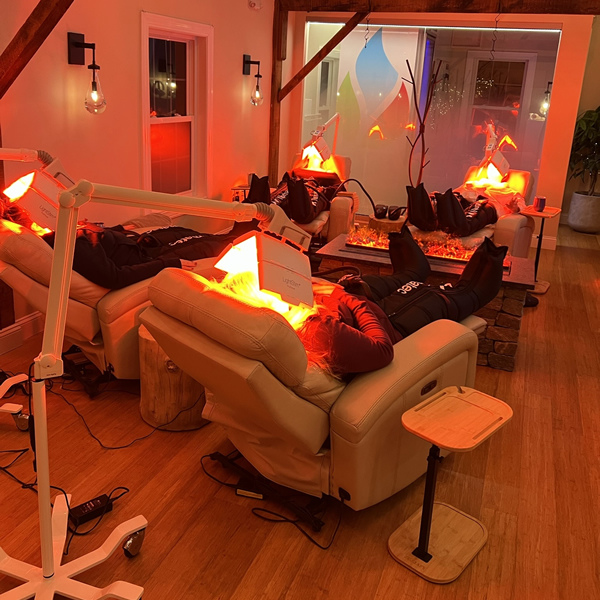
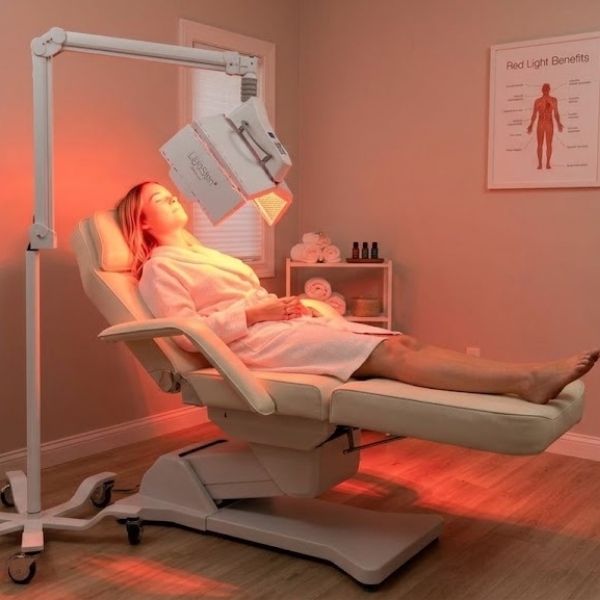
The biggest evidence-backed red light therapy benefits center on skin rejuvenation, hair regrowth, and support for chronic pain and recovery. Interest has surged since 2020, with randomized controlled trials from 2024 through 2026 sharpening the picture on skin aging, hair loss, exercise recovery, and even cognitive support. In a clinical setting or wellness center, sessions typically involve lying or sitting near a red light panel or bed for about 10 to 20 minutes, a few times per week. Results vary by condition, consistency, and device quality, but the ongoing research is encouraging.
How Red Light Therapy Works at the Cellular Level
Red light therapy stimulates mitochondria to promote healing. When red light (roughly 630–660 nm) and near-infrared light (roughly 800–850 nm) reach your cells, they are absorbed by a protein called cytochrome c oxidase inside mitochondria. This interaction can increase the production of adenosine triphosphate (ATP), the molecule your cells use as fuel. More ATP means more energy available for tissue repair, cell growth, and managing inflammation at the cellular level.
Blue light, by contrast, acts on the top layers of skin and is mainly useful for killing acne-causing bacteria. Red light penetrates deeper – into the dermis – where it influences blood circulation, collagen production, and inflammatory signaling. Near infrared light goes deeper still, reaching muscles and joints.
Light dose matters. Distance from the red light device, session length, frequency, and total energy delivered all influence outcomes. Practical ranges for most goals are 10 to 20 minutes per area, three to five times weekly for eight to twelve or more weeks. Professional setups in wellness centers typically deliver more consistent, controlled doses than smaller at-home devices, which is especially helpful for stubborn concerns like thinning hair or aging skin.
Core Health Benefits of Red Light Therapy
Red light therapy appears in marketing for almost everything, but evidence supporting its effectiveness varies, with some conditions better supported than others. Red light therapy affects various health conditions, including skin rejuvenation and pain management, and those are where the science is strongest.
Skin anti-aging and rejuvenation. Red light therapy promotes collagen and elastin production in dermal fibroblasts. Consistent red light treatment reduces wrinkles and improves skin appearance, firms loose skin, fades dark spots, and smooths texture. FDA-cleared devices treat aging skin with specific wavelengths. A study showed improved skin quality after three months of therapy, and a separate 90-patient trial reported over 90 percent of participants experiencing smoother skin and less redness after just four weeks of sessions. This is not a one-time treatment – maintenance matters for treating wrinkles and sagging skin.
Acne and inflammation. Red light therapy minimizes acne by reducing inflammation and calming irritated skin. Combining red light with blue light or dermatologist-recommended skin care can enhance results for active breakouts and help treat acne more effectively.
Wound and scar healing. Red light therapy may help in wound healing and tissue repair by increasing blood flow to the treatment area. Meta-analyses show a significant decrease in wound size – roughly 14 to 38 percent greater reduction compared to controls – and faster complete skin healing. Post-surgical scars and post-acne marks also respond to consistent sessions, though these remain an emerging treatment area.
Systemic wellness. Early 2026 studies are exploring mood, sleep quality, and cognitive function. These results are promising, but not definitive, so red light should complement – not replace – medical care for serious health conditions.

Red Light Therapy for Hair Growth and Hair Loss
Hair growth is one of the most researched uses of red light therapy. The FDA has cleared devices for hair regrowth using red light, specifically for androgenetic alopecia (pattern hair loss) in both men and women. Low-level laser therapy and LED-based devices – caps, helmets, combs – use red and near-infrared wavelengths to energize hair follicles and shift more of them into the growth (anagen) phase.
Red light therapy can encourage hair regrowth by improving blood flow to the scalp, and repeated red light treatments can increase hair thickness and density. Most clinical trials show measurable improvements after around 12 to 24 weeks of consistent use. One study suggests red light therapy may match minoxidil’s effectiveness for pattern hair loss, though outcomes tend to be better when treatment begins early, before follicles are fully inactive. Treatment results may vary based on device quality, wavelength, and individual response.
Set realistic expectations: red light therapy is not a miracle for completely bald areas where hair follicles are gone. It works best as part of a broader treatment plan that may include nutrition, stress management, and dermatology consults. If investing in an at-home device, look for one that is FDA-cleared for hair growth – not just “FDA registered” – as several red light devices now carry that designation.
Red Light Therapy for Chronic Pain, Recovery, and Medical Conditions
Red and near-infrared light have been used for decades in pain management for joints, muscles, and soft tissue. Red light therapy may reduce chronic pain and inflammation by lowering inflammatory markers, increasing local blood circulation, and supporting tissue repair at the injury site. It can also release endorphins, which are natural painkillers, contributing to pain relief after sessions.
The scientific evidence is solid for several conditions. A review found significant improvements in pain with red light therapy for knee osteoarthritis (reduced disability), and a meta-analysis of injured athletes showed a standardized mean difference of roughly 1.03 versus control groups. The therapy can enhance recovery from muscle soreness and improve joint function, which is why it shows up in sports medicine and post-workout recovery protocols. A 2024 CrossFit trial demonstrated that photobiomodulation improved functional performance and lowered markers of muscle damage at 24 to 48 hours post-workout.
Relief is often cumulative. People may notice easier movement or less chronic pain after several sessions per week over a few weeks, with benefits fading if sessions stop entirely. This is not a one-and-done treatment. Other medical conditions under study include nerve pain, oral mucositis, and cognitive decline – but those uses should always involve a medical professional.
Skin of Color, Darker Skin Tones, and How Light Therapy Behaves on Different Skin
Most early red light research focused on lighter skin types, but recent guidance addresses how light therapy behaves on darker skin tones. Higher melanin content absorbs more light energy near the skin surface, increasing the risk of overheating, temporary mild pain, prolonged redness, hyperpigmentation, or blistering if intensity is too high. Safety trials showed that skin of color tolerated up to approximately 320 J/cm² before dose-limiting effects appeared, compared to roughly 480 J/cm² for lighter skin types.
Practical guidance for people with darker skin tones:
- Start with shorter sessions and lower intensity settings
- Increase time slowly only if skin tolerates it well
- Avoid stacking aggressive treatments (chemical peels plus intense light) without professional supervision
- Use sunscreen and gentle skin care between sessions
Red light therapy is appropriate and beneficial across skin tones when protocols are adjusted. Its non-UV nature keeps the low risk profile intact. If you have a history of post-inflammatory hyperpigmentation, keloids, or skin conditions like melasma, consult a dermatologist before beginning frequent sessions.
Safety, Risks, and Choosing an FDA-Cleared or Professional Red Light Device
Red light therapy is generally considered safe with few side effects. It does not use ultraviolet light, so red light therapy does not cause skin cancer as UV light can. You will not get a tan from a red light panel – this is fundamentally different from tanning beds.
Common mild side effects include temporary redness, warmth, tightness, or slight irritation, usually resolving quickly. Improper use of red light therapy can cause skin irritation or, in rare cases, blistering from overly powerful equipment used incorrectly. Long-term effects of red light therapy are still unknown, which is worth acknowledging even as more research emerges.
The FDA has cleared several red light devices for home use, covering indications like wrinkle reduction and hair growth. “FDA cleared” means the device was reviewed for safety and a specific intended use – it is not a blanket guarantee of every marketing claim. Many red light therapy products and red light therapy masks use the phrase “FDA registered,” which is a much lower bar. When evaluating a home device, verify:
- Wavelength range (red and near infrared spectrum)
- Actual FDA clearance language for your intended use
- Instructions on distance, session time, and whether to wear protective goggles
Professional services in a wellness center offer consistent dosing, larger treatment areas like full-body panels, integration with other therapies (infrared sauna, compression, cryotherapy), and guidance from trained staff – advantages that many at-home devices simply cannot match.
How a Typical Red Light Therapy Session Works (And When to Consider It)
In a wellness center, a new client starts with a consultation covering goals, medical history, current medications, and any photosensitivity risks. The session itself is straightforward: change into comfortable clothing, receive protective goggles if light is near the face, and sit or lie near the device for 10 to 20 minutes while receiving treatment. Afterward, staff checks in on how you feel and schedules follow-ups.
Typical treatment plans by goal:
- Skin rejuvenation or acne: 2–3 sessions per week for 6–12 weeks, then maintenance
- Hair regrowth: several months of consistent sessions, potentially combining in-office and at-home device use
- Chronic pain or recovery: frequent sessions initially, tapered as symptoms improve
Signs it might be time to explore red light therapy: persistent low-grade joint or muscle pain, early thinning hair, slow skin healing, or interest in non-invasive support for aging skin when creams alone are not enough.
FAQs About Red Light Therapy
Does red light therapy really work, or is it just a trend?
Research dating back to the 1960s supports red light therapy for specific uses – wrinkle reduction, certain types of hair loss, and pain relief for conditions like rheumatoid arthritis and osteoarthritis. Not every bold claim online holds up, but clinical trials consistently show modest, gradual improvements when sessions are regular and device quality is adequate. This is not photodynamic therapy or low-power laser therapy used in surgery – it is a gentler, supportive modality.
How long does it take to see results from red light therapy?
Subtle skin changes often appear in four to six weeks of consistent use. Hair thickening typically takes three to six months. Pain relief can begin within a few sessions, but more stable improvements develop over several weeks. Maintenance sessions help sustain results, especially for chronic issues. Red light therapy is not a one-time treatment for any condition.
Is red light therapy safe for the eyes and face?
Red light itself is gentler than many clinical lasers, but looking directly into intense LEDs can irritate or harm the eyes. Reputable wellness centers provide protective goggles during facial treatments. If using red light therapy masks or panels at home, always follow the manufacturer’s instructions and wear protective goggles when recommended.
Can I combine red light therapy with retinol, microneedling, or other skincare treatments?
Many dermatology protocols pair red light with microneedling, chemical peels, or retinoids to support healing and boost cell production and collagen. Timing matters – space aggressive treatments apart and consult a professional to avoid over-irritation, especially for sensitive or darker skin tones prone to hyperpigmentation.
What’s the difference between red light therapy and an infrared sauna?
Red light therapy uses targeted wavelengths at controlled intensities with minimal heat, aiming at specific tissues for skin health, hair follicle stimulation, or pain reduction. Infrared saunas focus on whole-body heating, sweating, and cardiovascular and relaxation benefits. Some facilities offer both for complementary effects – one targets cellular signaling, the other promotes systemic detox and relaxation.
Is red light therapy safe if I have medical conditions or take medications?
If you have photosensitive skin conditions, a history of skin cancer, active rashes, or take light-sensitizing medications (certain antibiotics, retinoids, or acne drugs), get medical clearance first. Red light therapy is low risk for most adults, but coordinating with a healthcare provider is essential in complex situations. Pregnant individuals should also consult their provider, as data remains limited.
Why Choose a Local Wellness Center for Red Light Therapy
Many people in 2026 prefer professional red light therapy over going it alone with an at-home device, especially for chronic pain, hair loss, or stubborn skin concerns. A dedicated wellness center like Bonfire Wellness in North Andover offers staff trained across multiple modalities – red light, infrared sauna, cryotherapy, facials, compression, IV therapy – so your treatment plan reflects your whole health picture, not just one device.
Local expertise matters. Understanding regional lifestyles, harsh New England winters, and common joint or skin concerns in the Merrimack Valley community allows providers to adjust protocols in ways a generic app or product manual cannot. Membership and package options make frequent sessions – often necessary for hair regrowth or pain management – more affordable than buying several red light devices for home use.
How to Get Started with Red Light Therapy
Clarify your goals: are you focused on skin care and anti-aging, hair regrowth efforts, chronic pain, or post-workout recovery? Gather your medical information, think about your schedule and budget, and then book an initial consultation at a reputable wellness center.
During that consultation, ask:
- Which wavelengths and devices do you use?
- How many sessions do you typically recommend for my goal?
- How will we track progress (photos, measurements, pain scores)?
Schedule a consultation at Bonfire Wellness to design a treatment plan that fits your goals, skin type, and lifestyle. Try a short series of sessions and reassess how your skin, hair, or pain levels respond over four to eight weeks. The best results come from consistency and a plan – not guesswork.