Table of Contents
- What Is Red Light Therapy for the Face?
- How Does Red Light Therapy Work on Facial Skin?
- Key Red Light Therapy Facial Benefits
- Red Light Therapy for Common Facial Skin Concerns
- Collagen Production and Anti-Aging Effects
- Is Red Light Therapy Safe for Facial Skin?
- At-Home Red Light Devices vs. Professional Facial Treatments
- What to Expect During a Red Light Therapy Facial
- How Often Should You Get Red Light Therapy Facials?
- What the Science and Clinical Trials Say
- Common Myths, Mistakes, and How to Get Better Results
- FAQs About Red Light Therapy Facials
- Why Choose a Local Wellness Center for Red Light Therapy Facials
- Taking the Next Step: Is Red Light Therapy Facial Right for You?
Your skin replaces itself roughly every 27 days. Red light therapy facials work by making each new cycle a little better than the last: more collagen, less inflammation, firmer structure. But separating real red light therapy facial benefits from marketing noise takes some digging. This guide covers the mechanism, the clinical data, the safety profile, realistic timelines, and how to decide whether red light treatment belongs in your skin care routine.
What Is Red Light Therapy for the Face?
Red light therapy for facials is a non-invasive treatment that uses low-level wavelengths of red and near-infrared light to improve skin health and appearance. Red light wavelengths range from 630 to 690 nanometers, while near-infrared light treatment operates in the 810–850 nm range. These specific wavelengths fall within the visible light and near-infrared spectrum, which means the therapy does not include UV radiation, making it safer for skin health compared to UV-based treatments. You will not tan, burn, or accumulate UV light damage during a session.
The treatment goes by several names: photobiomodulation, low-level light therapy, and low-level laser therapy all describe the same core concept of using light waves at non-thermal intensities to stimulate skin cells. Most professional systems use light-emitting diodes (LED panels or full-face masks) that deliver consistent, calibrated doses across the entire face. Smaller at-home red light devices (masks, wands, handhelds) use the same light wavelengths but at lower power and narrower coverage.
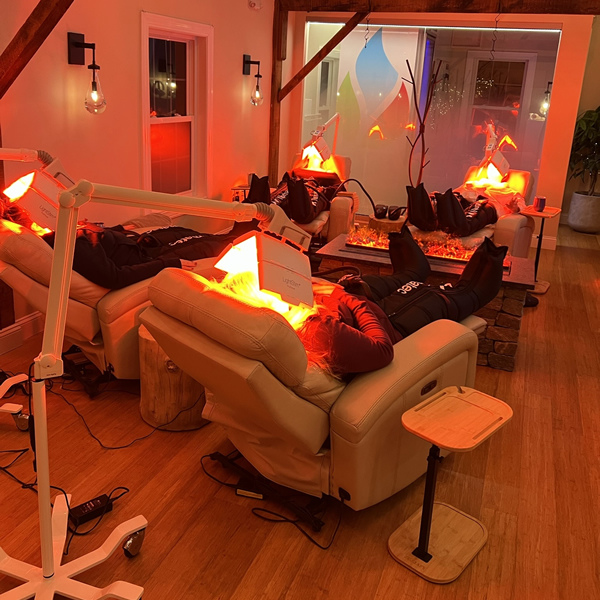
In a spa or wellness center setting, facial red light therapy is often layered into a broader session that includes cleansing, gentle exfoliation, the light therapy itself, and finishing products like hydrating masks or serums. This combination approach can make each step more effective; red light therapy may enhance the absorption of skincare products applied afterward.
How Does Red Light Therapy Work on Facial Skin?
The mechanism centers on mitochondria. A protein called cytochrome c oxidase (CCO) inside your mitochondria absorbs photons at red and near-infrared wavelengths. Red light therapy enhances mitochondrial function in cells, which triggers increased cellular energy production in the form of ATP. Photobiomodulation increases ATP production in cells, and that extra energy fuels repair, regeneration, and defense processes that skin cells need to maintain healthy tissue.
What does more cellular energy actually do for your face? Three things happen in parallel. First, red light therapy stimulates collagen production through fibroblast activation. Fibroblasts are the cells responsible for building collagen and elastin, the structural proteins that keep skin firm. Second, red light therapy reduces inflammation by modulating immune response; it lowers pro-inflammatory cytokines and decreases MMP-1, a matrix metalloproteinase that breaks down collagen. Third, it improves skin tone by encouraging healthy cell turnover, helping the skin shed damaged cells faster and replace them with healthier ones.
These cellular changes translate into visible facial improvements over time: smoother texture, more even tone, and softening of fine lines. The catch is that a single session won’t produce these results. Dosing matters; the combination of wavelength, intensity (measured in mW/cm²), and session length determines whether the treatment reaches the threshold needed to trigger these responses. Consistency over weeks matters more than one long session.
Key Red Light Therapy Facial Benefits
Benefits from red light facials build gradually over 4 to 12 weeks of regular sessions. Red light therapy can lead to gradual improvements in skin appearance, and the rate of change depends on age, baseline skin condition, and treatment consistency. Here are the primary benefits supported by clinical trials and spa-level observation.
Wrinkle and fine-line reduction. Red light therapy can reduce fine lines and wrinkles by supporting both collagen and elastin synthesis. In a controlled trial of 60 participants aged 30–65, a mask combining 630 nm red LED and 850 nm near-infrared light produced at least a one-grade improvement in crow’s feet wrinkles in 69.2% of subjects by week 16. Forehead lines and smile lines respond through the same mechanism.
Firmer, more elastic skin. Red light therapy boosts collagen production for firmer skin, particularly in areas like the cheeks and jawline that lose tone with age. A 12-week study of 36 volunteers measured a 21.7% increase in firmness and a 22.0% increase in elasticity. These are not dramatic overnight changes, but they are measurable and progressive.
Brighter, more even tone. Dullness fades as red light enhances blood flow to the skin surface and accelerates the replacement of damaged cells. The same 12-week study showed a 39.9% improvement in skin tone and an 8.0% increase in brightness, along with a 17.0% reduction in erythema (redness). For people in their 30s through 60s dealing with uneven complexion, these numbers represent a meaningful shift.
Hydration and “glow.” When facials pair red light therapy with hydrating masks and barrier-supporting products, clients often notice improved hydration within the first two weeks. The study data backs this up: hydration increased by 33.7% over 12 weeks of consistent use. Red light therapy’s effects on skin conditions may vary among individuals, but the hydration response tends to be one of the earliest visible changes.
Red Light Therapy for Common Facial Skin Concerns

Red light therapy is versatile, but it is not a cure-all. It works best for mild to moderate cosmetic concerns and as a complement to other treatments for more complex skin conditions.
Acne and breakouts. Red light therapy may help with acne-related inflammation by calming the immune response around active lesions. When combined with blue light (which targets acne-causing bacteria), the approach covers both bacterial and inflammatory components. A randomized controlled trial using red LED at 633 nm and 80 mW/cm², applied three times weekly for eight weeks, produced clinically meaningful reductions in acne lesions. Red light therapy also enhances tissue repair and fading of acne scars over time. Severe cystic acne, however, requires medical dermatology care.
Redness and sensitivity. Red light therapy calms inflammation and redness in the skin, which makes it relevant for rosacea-prone or easily irritated skin. The calming effect on blood vessels and pro-inflammatory cytokines can reduce flare frequency and visible flushing. Clinical data for redness conditions is thinner than for wrinkles, but the mechanism is consistent with published findings on inflammation modulation.
Sun damage and uneven texture. Consistent light therapy sessions, combined with daily SPF, can gradually soften rough patches, reduce the appearance of enlarged pores, and fade mild pigment irregularities. Red light therapy reduces inflammation in skin conditions related to UV damage, helping the skin’s repair processes work more efficiently.
Post-procedure recovery. Red light therapy supports skin recovery after cosmetic procedures like microneedling, chemical peels, and laser treatments. It reduces swelling and inflammation while promoting faster healing of micro-wounds, which translates to less downtime between procedures.
Collagen Production and Anti-Aging Effects
After roughly age 25, collagen production declines by about 1% per year. Over a decade, that adds up to visible wrinkle formation, sagging skin, and loss of the structural firmness that defines a youthful appearance. Red light therapy improves collagen production for tissue repair by activating the fibroblasts responsible for building new collagen and elastin fibers.
Laboratory research on human dermal fibroblasts treated with a combination of 640 nm red and 830 nm near-infrared light for 10 minutes daily showed increased expression of COL1A1, COL3A1, and ELN genes. These are the blueprints for type I collagen, type III collagen, and elastin. The result is not just more connective tissue, but better-organized connective tissue with improved crosslinking between fibers, contributing to an intradermal collagen density increase.
Where do people see changes first? Finer lines around the eyes tend to soften earliest because the skin there is thin and responds quickly to increased collagen. Smoother texture on the cheeks and better “bounce” when you pinch the skin along the jawline follow within a few more weeks.
Realistic expectations matter. Regular use of red light therapy requires several weeks for noticeable improvements, and consistency is important for visible results in red light therapy. Improvements are subtle and cumulative. This is skin rejuvenation, not a surgical facelift. Most clinical trials show measurable wrinkle reduction after 8 to 12 weeks of treatment, with continued improvement through week 16 and beyond.
Is Red Light Therapy Safe for Facial Skin?
Red light therapy is generally non-invasive and painless. Multiple clinical trials report that it is safe, well-tolerated, and produces minimal discomfort; one study recorded average pain scores of 1.9 out of 10 across all participants, with no serious adverse events like blisters or lasting pigmentation changes. Red light therapy is FDA-approved and considered safe for cosmetic applications, and several LED devices have received FDA clearance for indications including wrinkles, pigmentation, and vascular lesions.
Red light therapy is distinct from UV light in a critical way: it does not cause DNA damage, sunburn, or increase skin cancer risk under normal usage conditions. There is no mechanism by which red or near-infrared light wavelengths cause the photochemical reactions that make UV light carcinogenic.
That said, red light therapy may cause temporary skin redness as a side effect. Some people experience mild warmth, slight flushing, or a feeling of tightness, particularly those with sensitive skin. Dose-dependent adverse effects include erythema and blistering if devices are used improperly or at excessive power for too long. Misuse of red light therapy can damage skin or eyes, which is why you should always wear eye protection (protective goggles or closed-eye shields) during sessions. The long-term safety of red light therapy is not yet known due to limited multi-year studies, and optimal treatment duration for red light therapy is still unclear across different skin types and conditions.
Who should get medical clearance first:
- People with photosensitive medical conditions (lupus, porphyria)
- Those taking light-sensitive medications (certain antibiotics, isotretinoin)
- Anyone with a history of skin cancer or active facial infections
- Higher Fitzpatrick skin types may require careful parameter selection to avoid irritation
- People with eye conditions should confirm it is safe to wear protective goggles rather than skip protection
At-Home Red Light Devices vs. Professional Facial Treatments
The gap between at-home and professional red light devices comes down to four variables:
| Factor | At-Home Devices | Professional Systems |
|---|---|---|
| Power (irradiance) | ~10–65 mW/cm² | ~50–200+ mW/cm² |
| Coverage | Partial face or spot treatment | Full face, uniform exposure |
| Session guidance | Self-directed | Trained esthetician adjusts for skin type |
| Consistency | Depends on user discipline | Scheduled appointments, tracked progress |
Most clinical trials use professional-grade systems or research-calibrated devices. At-home red light devices can produce results, but they typically require more frequent sessions (daily use vs. 2–3 times weekly in a clinic) to approach similar outcomes. A 12-week study using a home-use device with 630 nm and 850 nm wavelengths did show measurable improvements in hydration, firmness, and wrinkle reduction, which demonstrates that quality at-home tools can work. Most studies show red light therapy has potential benefits regardless of device class, provided specifications are adequate.
When choosing an at-home device, look for specified wavelengths (around 630–660 nm and/or 810–850 nm), built-in eye safety measures, and ideally an FDA-cleared device designation for cosmetic use. Red light therapy devices should be FDA-cleared for safety to ensure they meet non-clinical and clinical testing standards.
Professional red light facials add value through expert skin assessment, customized product selection, precise control of exposure time and intensity, and the ability to combine red and near-infrared wavelengths based on your specific goals. An esthetician can also catch signs of overuse or adjust protocols if your skin reacts unexpectedly.
What to Expect During a Red Light Therapy Facial
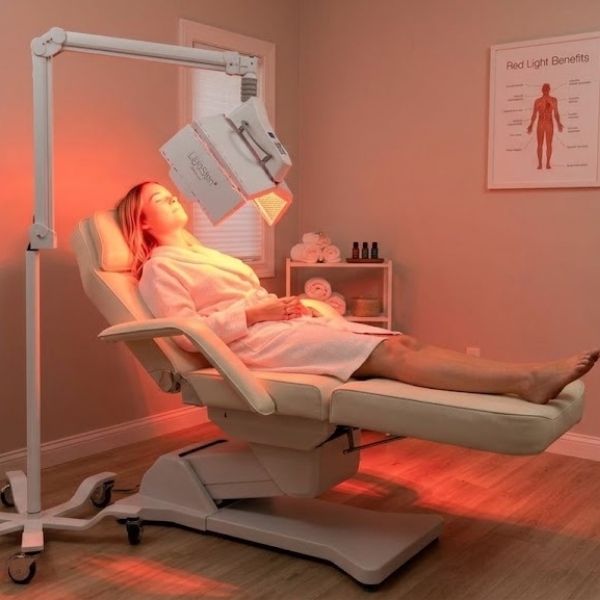
A typical red light therapy facial session runs 30 to 45 minutes and follows a structured sequence:
- Consultation. Your provider reviews your skin type, goals (wrinkle reduction, acne management, general glow), current skincare routine, and any medications or conditions that might affect treatment.
- Cleansing and prep. Skin is cleaned and gently exfoliated to remove makeup, sunscreen, and surface debris so light waves can penetrate without obstruction.
- Red light exposure. You lie comfortably under an LED panel or wear a full-face mask for 10 to 20 minutes. You’ll feel gentle warmth but minimal sensation otherwise. This is a non-invasive treatment with no downtime.
- Finishing products. The esthetician applies hydrating serums, moisturizers, or barrier-repair products while your skin is still primed to absorb them.
You should wear eye protection throughout the light exposure phase. Most providers supply fitted goggles or padded eye shields. The experience is relaxing; many clients compare it to a warm, quiet rest. You can stop at any time if anything feels uncomfortable.
Estheticians may adjust session length or combine red and near-infrared light based on whether your primary goal is wrinkle reduction, acne calming, or redness management. Receiving treatment in a professional setting means someone is monitoring your response in real time.
How Often Should You Get Red Light Therapy Facials?
Clinical trials and spa protocols converge on a similar schedule:
- Loading phase (weeks 1–6): 2 to 3 sessions per week to build cellular momentum and kickstart collagen remodeling
- Maintenance phase (ongoing): Weekly or biweekly sessions to sustain results
Goals affect frequency. Active acne or redness flares benefit from more frequent initial sessions. General anti-aging and glow maintenance can taper sooner. The underlying principle is that cell growth and collagen synthesis are slow biological processes. Sporadic visits every few weeks won’t accumulate enough cellular stimulation to produce visible change.
Red light therapy promotes faster muscle recovery after workouts and reduces inflammation in joints, so clients who use red light therapy for both facial skin and athletic recovery often find that a regular schedule serves double duty. Discuss a personalized plan with your provider based on your age, skin condition, and whether you’re also doing chemical peels, microneedling, or injectables.
What the Science and Clinical Trials Say
The scientific evidence for red light therapy facial benefits comes from randomized controlled trials, controlled laboratory studies, and device-specific clinical testing. Here is a summary of key findings:
- Crow’s feet trial (60 participants, 16 weeks): 630 nm + 850 nm LED mask; 69.2% of subjects achieved at least one-grade wrinkle improvement vs. sham control
- 12-week home device trial (36 participants): hydration +33.7%, firmness +21.7%, elasticity +22.0%, tone +39.9%, sebum reduced 49.6%, melanin reduced 22.0%; patient satisfaction 94.1%
- Acne controlled trial (8 weeks): red LED at 633 nm, 80 mW/cm², three times weekly; clinically meaningful reduction in inflammatory lesions
- Fibroblast lab study: 640 nm + 830 nm for 10 minutes daily increased COL1A1, COL3A1, and ELN gene expression; improved collagen and elastin fiber crosslinking
Two randomized controlled trials on periocular wrinkles (one with 52 women over 12 weeks using 660 nm LED) confirmed that red light photobiomodulation produces measurable wrinkle reduction when used consistently at validated parameters. Evidence is strongest for anti-aging, wound healing support, and inflammatory skin conditions. Red light therapy speeds up wound healing processes and enhances blood flow to healing tissues, which is why it also appears in post-surgical and wound healing research published in journals like Lasers Med Sci, Lasers Surg Med, Cosmet Laser Ther, Laser Ther, and Skin Res Technol.
Claims for weight loss, mental health improvement, or systemic disease treatment through facial red light remain unproven. More research is needed, particularly for long-term outcomes, effects on darker skin tones regarding melasma, and precise dose optimization. View red light as an evidence-informed tool for skin health, not a miracle cure.
Common Myths, Mistakes, and How to Get Better Results
Myth: Red light therapy tans your skin or acts like a tanning bed. Red light and near-infrared light operate outside the UV spectrum. They cannot trigger melanin production in the way that UV light does. No tan, no burn.
Myth: One session produces dramatic, facelift-like results. Red light therapy works through cumulative biological changes. A single session may leave you with a temporary glow, but wrinkle reduction, firmer connective tissue, and improved skin roughness require weeks of consistent treatment.
Myth: Red light therapy replaces low-power laser therapy or ablative laser procedures. LED-based red light treatment operates at much lower energy than surgical or ablative lasers. It complements rather than replaces procedures that physically resurface the skin.
Common mistakes to avoid:
- Overusing an at-home device (too often or too long per session), which can cause irritation or the same dose-dependent adverse effects seen with any light-emitting device
- Skipping eye protection; always wear protective goggles or shields during sessions
- Abandoning treatment after two or three weeks because changes aren’t visible yet
- Relying on light therapy alone while ignoring SPF and basic skin care
- Using red light devices that lack safety certifications or specified wavelengths
Tips for better results:
- Pair red light therapy with daily SPF 30+, gentle cleansers, and barrier-supporting moisturizers as part of your skincare routine
- If you use retinoids, consider pausing them on treatment days to minimize irritation (consult your provider)
- Track progress with photos taken in similar lighting every 4 to 6 weeks so you can see subtle but real changes in dark spots, skin roughness, and overall tone
- Red light therapy speeds up wound healing by increasing blood flow and blood circulation, so scheduling sessions around other treatments (peels, microneedling) can reduce recovery time
FAQs About Red Light Therapy Facials
How long does it take to see results from red light therapy facials?
Some people notice a subtle glow and improved hydration after the first few sessions. Visible changes in fine lines, texture, and redness typically take 4 to 8 weeks of consistent treatment at 2 to 3 sessions per week. Maximal benefits in collagen production and firmness often appear after 12 or more weeks. Maintenance visits are needed to sustain those results because collagen remodeling slows when stimulation stops.
Is red light therapy safe for darker skin tones?
Red light therapy is considered safe for all Fitzpatrick skin types (I through VI) because it does not rely on melanin absorption the way some lasers or UV-based treatments do. Human participants across skin types have been included in clinical trials without elevated risk. People with deeper skin tones can benefit from improved texture, acne healing support, and a more youthful appearance. That said, higher Fitzpatrick skin types may require careful parameter selection, so choose devices with documented safety data and work with trained providers.
Can I combine red light facials with Botox, fillers, or microneedling?
Many aesthetic providers safely combine red light therapy with injectables and procedures. The typical approach is to space light sessions a few days before or after injectables. Red light can actually support recovery by reducing swelling after microneedling or peels. Disclose all treatments to your provider so they can design a coordinated plan. Hair growth and hair regrowth treatments using red light for thinning hair or stimulating hair follicles can also run alongside facial protocols without conflict.
Does red light therapy help with melasma or dark spots?
Red light therapy may improve overall tone and reduce inflammation, but it is not a primary treatment for melasma. In some cases, light or heat exposure can aggravate pigment disorders. Consult a dermatologist for melasma management and use red light therapy only as an approved add-on alongside strict sun protection. For mild dark spots from sun damage, consistent red light sessions combined with SPF and targeted serums can help reverse skin aging signs over time.
Is red light therapy safe during pregnancy or breastfeeding?
Limited high-quality research exists on red light therapy during pregnancy. The safest course is to check with your OB-GYN or primary care provider before starting. If permitted, stick to conservative settings, avoid abdominal exposure, and wear eye protection as usual. Red light therapy is generally non-invasive and painless, but the lack of pregnancy-specific data means caution is warranted.
Will I need to change my skin care routine for red light facials?
Most people can keep their existing skin care regimen. Providers may recommend pausing harsh exfoliants or strong retinoids on treatment days to minimize irritation. Core practices that enhance results: daily SPF 30+, gentle cleansing, and barrier-supporting moisturizers tailored to your skin type. If you use red light therapy to reduce wrinkles or address sagging skin, pairing it with peptide-based serums or hyaluronic acid can amplify hydration and repair effects.
Why Choose a Local Wellness Center for Red Light Therapy Facials
Working with a dedicated wellness center rather than relying solely on at-home devices provides three distinct advantages. First, professional consultation ensures your treatment plan accounts for your specific skin conditions, medications, and goals. A trained provider can identify when to adjust session frequency, swap wavelength combinations, or recommend complementary treatments. Second, professional-grade equipment delivers higher irradiance and more uniform coverage, which is what most clinical trials validate.
At Bonfire Wellness in North Andover, red light therapy facials fit into a broader ecosystem of recovery and longevity services. Clients can combine red light with infrared sauna sessions (which increase blood circulation and support detoxification), cryotherapy (which reduces inflammation and supports muscle recovery), or IV vitamin therapy. This integrated approach addresses skin health from multiple angles rather than treating the face in isolation.
Continuity matters. Regular visits allow professionals to monitor progress, adjust protocols, and catch early signs of irritation or overuse. Local providers also understand regional factors; cold New England winters and dry indoor heat stress the skin barrier, making treatments that boost hydration and blood flow to facial tissues especially relevant in the Merrimack Valley area.
Taking the Next Step: Is Red Light Therapy Facial Right for You?
The best candidates for red light therapy facials are adults noticing early skin aging signs (fine lines, dullness, mild sagging skin), mild acne or post-acne marks, or persistent redness. You should be willing to commit to a series of sessions over 8 to 12 weeks and maintain realistic expectations about gradual, cumulative improvement. Red light therapy is not a replacement for medical care when you have serious medical conditions, but it is one of the most accessible, low-risk ways to use red light therapy as part of a long-term skin health strategy.
If you’re in North Andover or the Merrimack Valley region, schedule a skin consultation at Bonfire Wellness to discuss your goals, review any medications or conditions, and design a red light therapy plan tailored to your skin. Ask about membership and package options that make consistent treatment practical and affordable.
Consistent red light facials become part of a long-term strategy for healthier, more resilient skin. Not a one-time fix, but a compounding investment in how your skin looks, feels, and functions for years to come.