
Table of Contents
- Introduction: Why Localized Cryotherapy Is Gaining Attention for Pain Relief
- How Localized Cryotherapy Works (In Plain English)
- Localized vs. Whole Body Cryotherapy: Which Is Right for You?
- Key Localized Cryotherapy Benefits
- Conditions Localized Cryotherapy Can Help Support
- What to Expect During Your Localized Cryotherapy Session
- Safety, Risks & Who Should Avoid Localized Cryotherapy
- Localized Cryotherapy FAQs
- Why Choose Our North Andover Wellness Center
- Next Steps: How to Try Localized Cryotherapy for Yourself
Introduction: Why Localized Cryotherapy Is Gaining Attention for Pain Relief
Localized cryotherapy directs a pressurized stream of supercooled nitrogen gas at a single body region: a sore knee, a stiff low back, an inflamed shoulder, or even the face. Unlike a whole-body cryotherapy session, which exposes the entire body to extremely cold temperatures inside a cryotherapy chamber, local cryotherapy zeroes in on one affected area. That precision is why more people in 2026 are adding it alongside (or instead of) daily pain medication and repeated cortisone shots.
The research base is growing. Studies show localized cryotherapy can reduce acute and chronic pain, lower localized inflammation, support recovery in rheumatoid arthritis, and improve symptoms of atopic dermatitis. The evidence is not yet complete for every condition, but the trajectory is promising; more randomized trials are underway now than at any point in the last decade.
If you are an active adult in the Merrimack Valley dealing with a nagging injury, a busy professional whose chronic low back pain makes the workday miserable, or an older adult with arthritic joints, localized cryotherapy offers a fast, non-invasive option with minimal downtime worth exploring.
How Localized Cryotherapy Works (In Plain English)
Localized cryotherapy targets a specific area of the body using controlled sub-zero temperatures delivered by a handheld cryotherapy device or localized cryo wand. Treatment durations run 5 to 10 minutes per area. Here is what happens inside your tissues during and after that window:
During treatment (the cooling phase):
- Cold exposure causes blood vessels to constrict (vasoconstriction), which decreases local swelling by limiting fluid accumulation in the tissue.
- Nerve conduction velocity drops. One study measured a ~32.8% reduction in tibial nerve conduction speed when skin temperature reached ~10°C. Slower nerve signals mean pain messages reach the brain at reduced intensity, producing rapid pain relief effects.
- Metabolic activity in the treated tissue slows, limiting the release of inflammatory mediators like cytokines.
After treatment (the rewarming phase):
- Blood vessels reopen (vasodilation), and cryotherapy can increase blood flow after treatment, bringing oxygen-rich, nutrient-dense blood to the area. This accelerates healing by promoting microcirculation during the rewarming phase.
- Pain threshold and pain tolerance rise. Research shows increases of ~70–90% in pressure pain tolerance after localized cooling, effects that persist even as the skin warms.
Modern local cryotherapy devices allow precise temperature and distance control, reaching tissues more deeply and uniformly than a basic ice pack sitting on the skin’s surface. This is non-invasive cold therapy for wellness and recovery, not the surgical cryosurgery used to destroy cancer cells or tumors.
Localized vs. Whole Body Cryotherapy: Which Is Right for You?
Whole-body cryotherapy exposes almost the entire body to extremely cold air, often below −148°F (−100°C), inside a cryotherapy chamber for 2 to 3 minutes. Cryotherapy sessions at this duration aim for systemic benefits: whole-body cryotherapy can reduce muscle soreness across multiple muscle groups, decrease inflammatory markers after treatment, and trigger physiological hormonal responses that may enhance mood by releasing endorphins. Whole-body cryotherapy can also reduce symptoms of anxiety and depression, and regular sessions may improve sleep quality.
Localized cryotherapy focuses on a defined region without systemic exposure. A sore knee, an arthritic hand, a tight neck, or an area of atopic dermatitis gets 5–10 minutes of concentrated cold rather than a brief full-body blast. When the problem is one or two joints, a recent sports injury, stubborn chronic pain in a specific spot, or focused skin health goals like facial puffiness, local cryotherapy is usually the better starting point.
Many clients combine both: periodic whole-body cryotherapy treatment for overall recovery, immune system support, and stress levels, plus localized sessions on stubborn hotspots that need extra attention. The two modalities offer complementary, not identical, benefits.
Key Localized Cryotherapy Benefits
Results vary by person and condition. But research and clinical use point to several consistent localized cryotherapy benefits:
- Pain relief. Cold applications numb irritated nerves fast. A single cryotherapy session can treat muscle pain effectively. In an emergency department trial, targeted cryotherapy produced a pain score drop of ~2.7 points at 60 minutes versus ~1.2 in a control group, with a number-needed-to-treat of ~3.2 for meaningful pain relief. People with sore muscles, tendonitis, even acute injuries feel relief within minutes.
- Reduced inflammation and swelling. Vasoconstriction limits fluid accumulation. Localized cryotherapy manages inflammation in acute soft tissue injuries like ankle sprains, knee injuries, and post-workout muscle soreness. Cryotherapy boosts anti-inflammatory markers in the body, and cryotherapy improves antioxidant levels in the blood.
- Rheumatoid arthritis support. Cryotherapy reduces inflammation in rheumatoid arthritis patients. In a meta-analysis of RA patients, VAS pain scores dropped from ~56 mm to ~32 mm after 10–20 localized applications, and disease activity scores (DAS28) fell from ~5.47 to ~4.56. Cryotherapy can improve exercise capacity in arthritis patients, making physical therapy and daily movement more tolerable.
- Chronic pain management. For chronic pain in the low back, neck, or shoulder, repeat sessions can help calm hyperactive pain pathways. This makes it easier to move, exercise, and sleep, which may reduce reliance on daily pain medication. Cryotherapy can lower cortisol levels, reducing stress that often amplifies chronic pain cycles.
- Skin health. Localized cryotherapy can enhance skin appearance by promoting collagen production. Cryotherapy can treat atopic dermatitis effectively; a pilot study found improved skin hydration and reduced itch severity after cryotherapy sessions. Cryotherapy reduces inflammation associated with skin conditions, and whole-body cryotherapy minimizes symptoms of chronic skin diseases. Localized facial cryotherapy temporarily reduces puffiness and redness through blood circulation changes at the skin’s surface.
- Broader well-being. Cryotherapy may enhance mood by releasing endorphins. By improving pain, sleep, and movement, localized cryotherapy has a positive effect on overall wellness and well-being. Cryotherapy can boost metabolism after treatment sessions; research shows daily cold exposure can decrease body fat by 2 percent in six weeks, and participants lost weight after four weeks of cryotherapy treatment. Cryotherapy may lower cholesterol and inflammation markers as well.
Conditions Localized Cryotherapy Can Help Support
Localized cryotherapy is an adjunct, not a replacement for medical care. It is commonly applied in sports medicine and physical therapy as an effective treatment for a range of conditions:
- Acute sports injuries: Sprains, muscle strains, and contusions respond well to targeted cold. Cryotherapy can enhance recovery from injuries in athletes, and it can treat injuries ranging from rolled ankles to pulled hamstrings.
- Tendonitis: Tennis elbow, golfer’s elbow, Achilles tendinitis. Localized cryotherapy is often used for specific injuries and conditions such as tendinitis and joint pain.
- Knee and hip pain: A 2024 trial (100 participants) found that combining localized cryotherapy with manual therapy produced greater improvements in pain and daily activities than manual therapy alone over 10 sessions.
- Migraines and tension headaches: Cooling the neck and upper back can calm overactive nerves and reduce throbbing, similar in principle to placing an ice pack at the base of the skull. Professional devices deliver more uniform cold than ice baths or coolant sprays can achieve at home. Localized cryotherapy may help treat migraines through this nerve-calming mechanism.
- Skin conditions: Atopic dermatitis, eczema, and post-treatment redness all benefit from short, controlled cold applications. Coordinate with your dermatologist if you are under medical care for these conditions.
- Active adults in Merrimack Valley: Runners training along the Merrimack River, high school athletes between games, and recreational pickleball or golf players use localized cryotherapy for faster recovery and to reduce discomfort between training sessions. You do not need to be among professional athletes to benefit.
What to Expect During Your Localized Cryotherapy Session
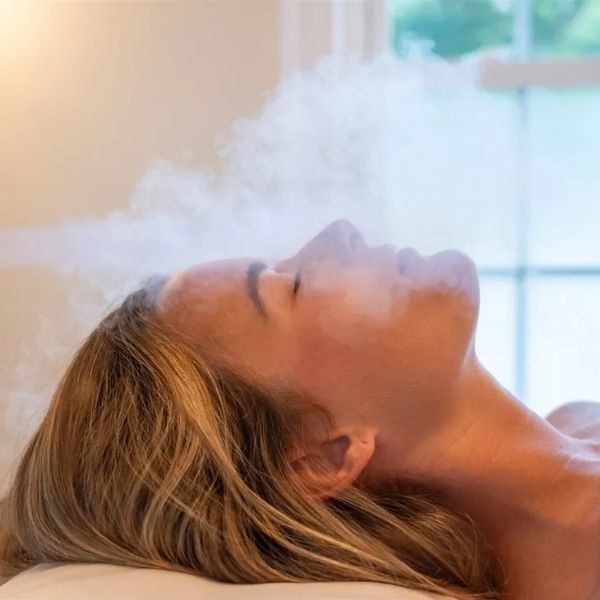
Sessions are quick; most people spend 10–20 minutes total in the treatment room. A trained staff member stays with you throughout.
Before treatment: Brief intake covering medical history, contraindications, and the specific body area to treat. If you want to combine localized cryotherapy with compression therapy or other services, the team sequences them for best results.
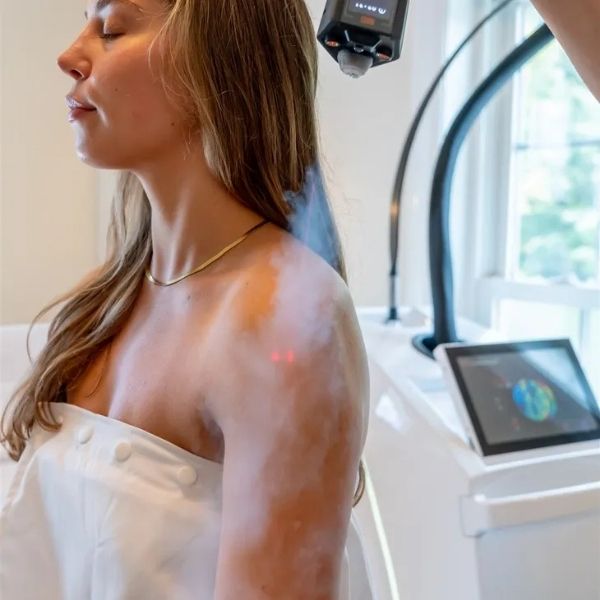
During treatment: You keep most clothing on, exposing only the targeted area. The practitioner holds a handheld cryotherapy device several inches from the skin, moving it steadily over the area while monitoring time, skin response, and your feedback. You will feel intense cold, tingling, and possible numbness. The device never sits motionless on one spot.
After treatment: Skin may look pink, feel tingly, then gradually warm. Many clients feel looser or less sore shortly after, while others notice improvements later that day. For chronic pain or athletic performance recovery, typical frequency starts at 1–3 times per week, then tapers. Some people feel a difference after just one session; final recommendations depend on your individual cryotherapy experience and goals.
Safety, Risks & Who Should Avoid Localized Cryotherapy
Localized cryotherapy is well-tolerated when performed by trained professionals. Common side effects include temporary redness, numbness, tingling, and tightness, all resolving within minutes to a few hours.
Less common risks include cold burns or frostbite if performed incorrectly or for too long, and worsening of circulatory disorders like Raynaud’s phenomenon. Professional protocols (time limits, constant device motion, distance control) prevent these outcomes.
Talk to your doctor or avoid treatment if you have:
- Uncontrolled high blood pressure or cardiovascular disease
- Peripheral vascular disease or pinched nerves with numbness
- Uncontrolled diabetes with neuropathy
- Open wounds or severe skin infections on the treatment area
- Pregnancy
- Cold sensitivities such as cryoglobulinemia
- Active oncology care (unless cleared by your physician)
Bring up diagnoses like rheumatoid arthritis, anxiety disorders, chronic low back pain, or atopic dermatitis during your consultation so the team can coordinate with your medical providers. Report any unusual pain, blistering, or prolonged numbness after any cold therapy session immediately.
Localized Cryotherapy FAQs
These address the most common questions clients ask before their first localized cryotherapy session.
How is localized cryotherapy different from an ice pack?
Localized cryotherapy uses extremely cold, dry air or liquid nitrogen vapor delivered by a device that keeps moving over the skin, reaching lower tissue temperatures more quickly than a static ice pack. Sessions are carefully timed and monitored. Ice packs are useful for home care, but professional localized cryotherapy is shorter in total time and designed for deeper, more uniform cooling of the targeted area.
How many sessions will I need before I notice pain relief?
Some people feel immediate relief after just one session, especially for sore muscles or recent overuse. Chronic conditions like chronic low back pain or rheumatoid arthritis often respond best to a series; plan on 4–8 sessions to fairly judge results. The wellness team reassesses progress and adjusts the plan as needed.
How long do the benefits of localized cryotherapy last?
Short-term effects (numbness, reduced soreness, easier movement) may last from a few hours to a couple of days. For chronic pain or inflammatory conditions, repeated sessions create longer-lasting improvements in comfort, function, and sleep, especially when paired with physical therapy, strength work, and anti-inflammatory lifestyle changes.
Can localized cryotherapy help with skin conditions like atopic dermatitis or acne?
Yes, with caution. Localized cryotherapy can reduce redness, itching, and inflammation by influencing blood flow and inflammatory mediators at the skin’s surface. Anyone with atopic dermatitis, psoriasis, or active acne should consult their dermatologist first and inform the cryotherapy provider about prescription creams or recent procedures like chemical peels or laser treatments.
Is localized cryotherapy safe if I have rheumatoid arthritis or another autoimmune condition?
Research suggests both localized and whole body cryotherapy can reduce pain and improve function in some people with rheumatoid arthritis. The approach must be individualized. Coordinate with your rheumatologist, avoid cryotherapy treatment during severe flares unless cleared, and start with conservative session times while monitoring how joints respond over 24–48 hours.
Can I combine localized cryotherapy with other wellness services?
Many people combine local cryotherapy with body cryotherapy, compression therapy, infrared sauna, or red light therapy to support recovery, blood circulation, and skin health. The order and timing should be planned with staff based on your goals. For example, using localized cryotherapy after a workout calms inflammation, while pairing it with compression addresses swelling in the legs.
Why Choose Our North Andover Wellness Center
Bonfire Wellness is a dedicated recovery and longevity center in North Andover, Massachusetts, built around safe, science-informed cold therapy rather than generic spa add-ons. Staff are trained in localized cryotherapy protocols and understand how to adapt sessions for conditions like chronic pain, rheumatoid arthritis, and atopic dermatitis.
Localized cryotherapy is offered alongside whole body cryotherapy, IV hydration and vitamin therapy, red light therapy, infrared sauna, oxygen therapy, compression therapy, and facials. Clients build a plan rather than relying on a single modality. The center serves residents of North Andover, Lawrence, Andover, Haverhill, and nearby Merrimack Valley communities, with hours designed to fit around work, school, and family.
Every new client starts with a wellness consultation: clarify your goals (pain relief, weight loss support, skin health, athletic performance, immune system support), review your health history, and receive personalized recommendations for frequency and therapy combinations.
Next Steps: How to Try Localized Cryotherapy for Yourself
If persistent joint pain, chronic low back pain, sports injuries, or skin issues have not fully responded to standard care, localized cryotherapy is worth exploring. Schedule an initial consultation by phone or online. Discuss your current symptoms and goals, review your health history and medications, and design a trial plan of localized cryotherapy sessions, with or without whole body cryotherapy and other services.
You do not need to be a high-level athlete. Office workers, parents, older adults, and weekend warriors are all appropriate clients. Contact Bonfire Wellness, book your first localized cryotherapy session, or schedule a wellness consultation to find out whether targeted cold therapy fits your pain relief, skin health, and long-term wellness goals.