
If you train hard, you already know the pattern: heavy legs the morning after intervals, lingering soreness two days after a tournament, or that low-grade stiffness that makes the first few minutes of every workout feel like a negotiation. Compression therapy for athletic recovery has become one of the most talked-about recovery methods in sports and fitness, but the conversation is often clouded by hype or vague promises. This guide breaks down exactly how compression therapy works, what the research actually says, who benefits most, and how to use it without wasting time or money.
Table of Contents
- What Is Compression Therapy?
- How Compression Therapy Helps Athletes Recover Faster
- Types of Compression Therapy (Garments, Sleeves, Boots)
- Is Compression Therapy Safe?
- What to Expect in a Session
- How to Add Compression Therapy to Your Routine
- Common Mistakes and Safety
- FAQs About Compression Therapy for Athletes
- Why Choose Our North Andover Recovery Studio?
- Ready to Book Your Compression Therapy Session?
What Is Compression Therapy? (Clear Definition Without Jargon)
Compression therapy is the application of controlled external pressure to the limbs-through compression garments, sleeves, or intermittent pneumatic compression boots-to improve circulation, support the lymphatic system, and accelerate the recovery process. In an athletic recovery setting, most people experience this as leg compression boots that inflate and deflate in rhythmic waves from feet toward hips, creating a massage-like sensation that flushes fluid upward.
The technique has deep roots in medicine. For decades, physicians have used compression stockings and pneumatic compression devices to manage chronic venous insufficiency, prevent deep vein thrombosis DVT, and control post-surgical swelling. The athletic adaptation borrows the same principles but focuses on healthy, active bodies dealing with training-induced soreness, swelling, and fatigue.
Here is the core mechanism: compression therapy helps the body’s natural recovery processes by mimicking and amplifying the “muscle pump.” Applying external pressure pushes blood and lymph back toward the heart, reducing blood pooling in the lower extremities and clearing metabolic waste products from fatigued tissues. Enhanced circulation from this process aids muscle tissue repair after exertion, improving venous return and supporting oxygen-rich blood delivery back into healing tissues.
How Compression Therapy Helps Athletes Recover Faster
The real-world problem is straightforward. After intense exercise-whether it is a long run, a double-header, or a heavy squat session-delayed onset muscle soreness, swelling, and muscle fatigue limit what you can do the next day. Athletes recovering from hard efforts need tools that shorten that window and let them maintain peak performance across a full training week.
Research studies support several concrete benefits of compression therapy:
- Compression therapy can reduce delayed onset muscle soreness by 20% to 40% within the 24–72 hours post-exercise window, making the difference between a sluggish follow-up session and a productive one.
- A meta-analysis of compression garments across 23 studies found a small but meaningful effect size (approximately 0.38) for recovery of muscle strength, power, and endurance after resistance and running exercise.
- Compression garments enhance lymphatic drainage in fatigued limbs, and intermittent pneumatic compression can boost lymphatic fluid flow by up to 400%, dramatically accelerating fluid clearance.
- Athletes report feeling lighter and less fatigued after compression therapy sessions, with improvements in perceived muscle recovery after intense workouts.
Compression therapy helps faster recovery through three pathways: enhancing venous return and lymphatic drainage, speeding removal of metabolic byproducts like lactic acid after intense efforts, and supporting oxygen and nutrient delivery back into muscle fibers. Regular use of compression may preserve muscle strength between workouts, helping you arrive at the next session closer to baseline.
That said, evidence on the effectiveness of compression therapy varies among athletes. Effect sizes are often small to moderate, and compression therapy supports-but does not replace-fundamentals like sleep, hydration, nutrition, and smart programming. Think of it as a way to train consistently with less downtime, not a shortcut around recovery basics.
Types of Compression Therapy: Garments, Sleeves, and Boots
Compression therapy covers a spectrum from everyday lower limb compression garments you can wear to work to clinic-grade pneumatic compression boots used in recovery studios. Understanding the difference helps you choose the right tool for the right situation.
Some athletes layer strategies: wearing compression socks during the day to manage swelling and muscle blood flow, then using compression boots in the evening for a deeper flush. Each type serves a distinct purpose.
Static Compression Garments (Socks, Sleeves, Tights)
Static compression garments-socks, sleeves, and tights-apply graduated gentle pressure that is snugger at the ankle and gradually decreases up the leg. This design supports veins and capillaries to improve circulation and reduce blood pooling.
Common use cases include:
- Runners who wear compression socks or calf sleeves during long runs to reduce soreness and manage fatigue
- People on their feet all day using compression socks to reduce swelling and heaviness
- Athletes wearing tights on travel days to cut down fluid build-up during long flights or drives
Static compression garments provide constant pressure for support and are effective for managing everyday soreness. They modestly assist recovery of muscle strength and power, especially 2–8 hours post-exercise. They are convenient and relatively inexpensive, but they do not deliver the same wave-like flushing effect as dynamic devices. Note that compression socks rated 20 mmHg or higher require a prescription in most settings.
Intermittent Pneumatic Compression Boots
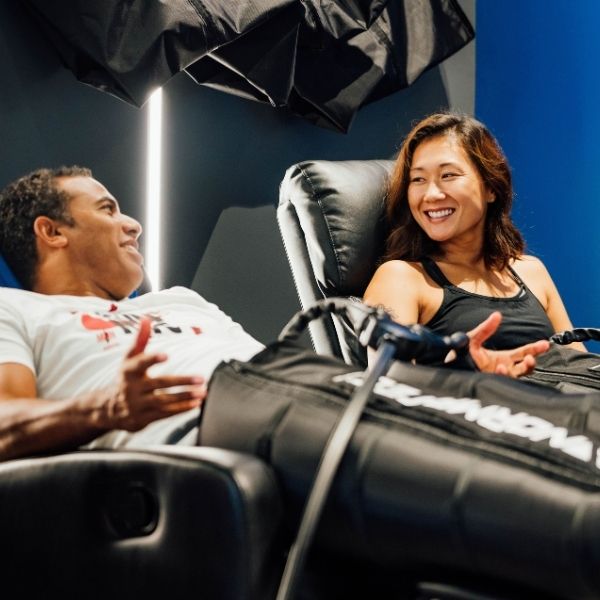
Pneumatic compression boots are full-leg sleeves that zip from foot to thigh and connect to a console controlling inflation, pressure, and sequence. Dynamic intermittent pneumatic compression uses air to create a pulsing effect-chambers inflate sequentially from the foot upward in a massage-like wave, hold briefly, then release. This cycle repeats for 15–30 minutes, mimicking and amplifying the muscle pump far beyond what static garments achieve.
For athletic recovery, the practical benefits are significant:
- Strong flushing of metabolic waste products after intense intervals, heavy lifts, or games
- Noticeable reduction in leg heaviness and stiffness by the next day
- Faster return to baseline between training sessions in heavy weeks
Sessions lasting 20 to 30 minutes at approximately 80 mmHg are effective for most athletes. Pneumatic compression can boost lymphatic fluid flow by up to 400%, which is why many athletes describe the sensation as feeling like their legs have been “reset.” Pressure and timing are adjustable-lower settings for a light recovery flush, higher pressures (within safe limits) for deeper work after intense training.
Medical vs. Athletic Uses: When Compression Therapy Does More Than Recovery
Compression therapy originated in medical care and remains a frontline tool for serious circulation issues. Physicians use it under clinical guidance for chronic venous insufficiency, deep vein thrombosis risk management, post-surgical swelling, and lymphedema. These protocols involve individualized pressure levels, durations, and monitoring.
In a wellness and recovery setting, the context is different. You are typically working with generally healthy, active people focused on post-exercise recovery, soreness reduction, and faster recovery between sessions-not acute medical treatment. Compression therapy can reduce swelling and improve circulation in this population with minimal risk.
Anyone with a history of deep vein thrombosis, blood clots, advanced heart disease, or severe vascular disease should consult a healthcare professional and get explicit medical clearance before using intermittent pneumatic compression or higher-pressure compression garments. For most active adults without these conditions, compression therapy is a low-risk, non-invasive way to enhance recovery and improve blood flow-but honest screening questions are essential before starting.
What a Compression Therapy Session Feels Like (Step-by-Step)
Walking into a recovery studio for your first session can feel unfamiliar, so here is exactly what to expect:
- A short intake or consultation where staff review your health history, current training load, and any red flags such as prior DVT, uncontrolled hypertension, or active infections
- Selecting the right boot size and settling into a recliner or lounge chair with legs elevated
- The boots begin applying gentle pressure at the feet, building upward in rhythmic compression waves toward the hips
Most clients describe the sensation as deeply relaxing-a cyclical squeezing that alternates between snug and released, similar to a slow, thorough leg massage. Common session lengths for athletic recovery are 15–20 minutes for a quick post-workout flush and 25–30 minutes for deeper work after especially intense sessions or competitions.
Staff can adjust controlled pressure and stop the session at any time. Mild pinkness in the skin afterward is normal. Pain, numbness, tingling, coldness in the feet, or shortness of breath are not normal- those warrant an immediate stop and staff notification.
How to Use Compression Therapy in Your Training Week

Think of compression therapy as a planned part of your weekly recovery routine, not an emergency measure for when you are already wrecked. Here is how different athletes incorporate compression therapy:
- Endurance athletes (runners, cyclists, triathletes): 20–30 minute compression boot sessions after long runs or hard interval days to enhance athletic performance the next day
- Team sport athletes (soccer, basketball, hockey): sessions between games or after tournament days to manage swelling, reduce muscle soreness, and maintain muscle function
- Combat sports athletes: higher-pressure sessions after sparring to preserve muscle elasticity, supported by research showing 100 mmHg protocols maintained mechanical properties up to 48 hours post-exercise
Practical timing guidance:
- Best window is within a few hours post-workout to limit swelling and speed fluid clearance
- Light sessions on easy days maintain increased blood circulation without adding fatigue
- 2–4 sessions per week during heavy training blocks is a sustainable, evidence-supported rhythm
Beginners should start with 15–20 minutes at moderate pressure after tough sessions, monitoring how legs feel the next morning. Experienced athletes can extend to 30 minutes and add occasional short pre-session flushes. Compression therapy works best when combined with sleep, hydration, adequate protein, and smart periodization-it amplifies the healing process, not replaces it.
Common Mistakes and Safety Considerations
Compression therapy is generally safe for healthy adults, but misuse diminishes results and can create unnecessary discomfort.
Frequent mistakes athletes make:
- Cranking pressure too high on first visits, leading to discomfort and avoiding future sessions
- Using compression boots as a band-aid while ignoring overtraining, injury rehabilitation needs, or poor technique
- Assuming more minutes are always better instead of following researched 15–30 minute protocols
- Treating compression as a substitute for physical therapy when dealing with actual injuries
Clear safety considerations:
- People with current or recent deep vein thrombosis DVT, known blood clots, severe arterial disease, uncontrolled heart failure, or active infections in the legs should not use compression boots without explicit medical clearance
- Open wounds, fresh surgical incisions, or severe skin conditions under the garment area require guidance from a healthcare professional first
Stop a session immediately and alert staff if you feel sharp pain, numbness or coldness in the feet, or shortness of breath. Screening, conservative starting pressures, and professional supervision make compression therapy a low-risk, high-benefit recovery tool for most active adults focused on injury prevention and long-term performance.
FAQs About Compression Therapy for Athletic Recovery
Below are rapid answers to the questions athletes and active adults ask most before their first session.
How often should I use compression therapy for athletic recovery?
Two to four sessions per week is a common sweet spot during hard training blocks. Some athletes use daily sessions in short, intense phases like taper weeks or tournaments. Start at one to two sessions per week for two to three weeks, tracking how soreness, heaviness, and performance between sessions change before increasing frequency. More is not automatically better if basics like sleep and nutrition are neglected.
Can compression therapy improve my actual athletic performance, or just recovery?
Most research shows compression therapy helps reduce soreness and preserve muscle function during recovery, but does not consistently make athletes faster or stronger in a single race or event. The real performance benefit is indirect: by helping you recover better, you can train more consistently and arrive at key training sessions feeling fresher. Think of it as a support tool for long-term progression, not a shortcut for instant PRs. Physical therapists and coaches increasingly recommend compression therapy as part of a broader recovery strategy.
Is compression therapy safe if I’m worried about blood clots or have had DVT before?
Anyone with a history of deep vein thrombosis, pulmonary embolism, or significant clotting disorders must get explicit clearance from their physician before using intermittent pneumatic compression or high-pressure compression garments. In medical settings, compression is often used to prevent DVT, but those protocols are individualized and physician-directed. Share any vascular or cardiac history during your consultation so staff can adapt protocols or recommend medical follow-up before proceeding.
What should I wear and bring to a compression boots session?
Wear lightweight, flexible clothing-athletic shorts, leggings, or joggers that allow easy access from feet to mid-thigh. Clean socks improve comfort and hygiene inside the boots. Many people bring headphones, a book, or simply use the time to relax while the rhythmic compression does the work.
Can compression therapy replace massage, foam rolling, or stretching?
Compression therapy and manual techniques work through different mechanisms. Compression targets blood circulation and fluid movement, while massage and foam rolling focus on soft-tissue tension and local restrictions. Most athletes benefit from a mix: compression for deep, passive flushing; stretching and mobility work for joint range of motion; massage for specific tight spots. Compression is a powerful addition to your recovery tools, not a replacement for a complete approach.
Will compression therapy help with shin splints, plantar fasciitis, or knee pain?
Compression therapy can reduce pain, swelling, and discomfort around the lower legs and feet, which may temporarily ease symptoms of issues like shin splints or plantar fasciitis. However, it does not correct underlying causes such as biomechanical imbalances, training errors, or footwear problems-those require assessment and targeted rehab. Use compression therapy alongside professional guidance, corrective exercises, and load management for overuse injuries. It supports healing tissues but does not fix structural problems on its own.
Why Choose a Local Recovery Studio for Compression Therapy?
Using a staffed, local wellness and recovery studio offers advantages that at-home devices alone cannot match. Professional oversight means proper screening for issues like chronic venous insufficiency or prior deep vein thrombosis, tailored compression settings based on body size, sport type, and training cycle, and education on integrating compression therapy with other recovery methods like cryotherapy, red light therapy, infrared sauna, and IV hydration.
The experience matters too. A calm, dedicated environment encourages true relaxation during sessions. High-quality intermittent pneumatic compression systems are maintained, cleaned, and calibrated regularly. Staff understand regional training patterns-New England race seasons, school and collegiate sports calendars, endurance sports events-and can tailor recovery plans around those demands.
At Bonfire Wellness in North Andover, we offer membership and package options including discounted session bundles, athlete recovery memberships, and special rates for students and first responders. Our team helps you build a recovery routine that matches your season, sport, and schedule-not a one-size-fits-all approach.
Ready to Experience Compression Therapy for Athletic Recovery?
Less soreness, faster turnaround, and more consistent training weeks start with the right recovery tools used at the right time. Compression therapy supports blood circulation and lymphatic drainage, helps manage delayed onset muscle soreness DOMS and leg heaviness, and fits into even a packed schedule as a passive 15–30 minute recovery block. It is one of the most practical ways to improve muscle recovery between intense workouts and maintain peak performance across your season.
If you are in the North Andover or broader Merrimack Valley area, take the next step:
- Schedule a consultation to discuss your sport, training load, and any health flags
- Book your first compression therapy session and pay attention to how your legs feel over the next 24–48 hours
- Ask about pairing compression therapy with other science-based services like cryotherapy, red light therapy, and IV hydration for comprehensive recovery support
Call our wellness team to find the best recovery plan for your season, or reserve a spot in our recovery lounge before your next big race or tournament. The most effective recovery tools are the ones you can use consistently and safely-and we are here to help you get started.