
If your legs still feel heavy and stiff two days after a hard workout, your recovery strategy might be missing a key tool. Compression boots for leg recovery have moved from professional sports locker rooms into wellness centers and living rooms, and for good reason. They offer a targeted, hands-free way to support muscle recovery, reduce muscle soreness, and get you back to training or daily life faster. This guide covers how air compression technology actually works, who benefits most, what to look for in a device, and how to fit compression therapy into a complete recovery and longevity plan.
Table of Contents
This guide walks through everything you need to know about compression boots, how air compression can support muscle recovery, and practical steps to reduce soreness and improve circulation.
- What Are Compression Boots and How Do They Work?
- Key Benefits: How Compression Boots Support Muscle Recovery
- Compression Boots vs. Compression Socks and Other Recovery Tools
- Who Can Benefit Most from Compression Boots?
- Types of Compression Boots: Corded vs. Cordless, Full-Leg vs. Targeted
- How to Use Compression Boots Safely and Effectively
- What to Look for in the Best Compression Boots for Leg Recovery
- In-Studio Compression Therapy vs. Owning Compression Boots at Home
- How Compression Boots Fit into a Complete Recovery and Longevity Plan
- Signs It May Be Time to Try Compression Boots for Leg Recovery
- Common Mistakes and Misconceptions About Compression Boots
- FAQs About Compression Boots for Leg Recovery
- Why Choose a Local Wellness Center for Compression Boot Sessions
What Are Compression Boots and How Do They Work?
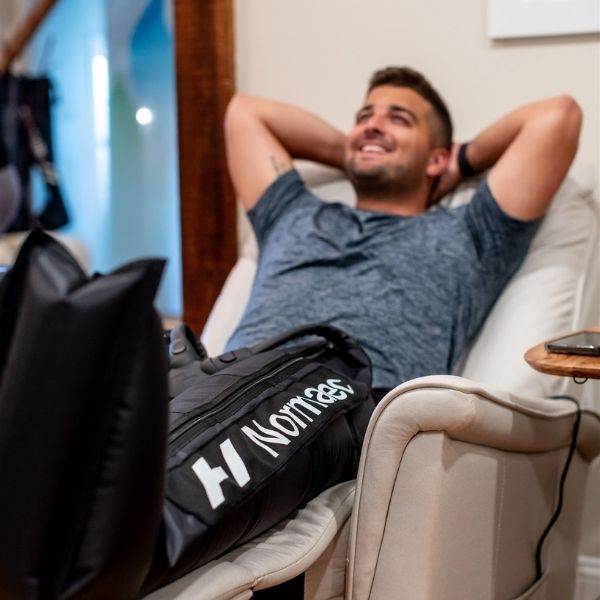
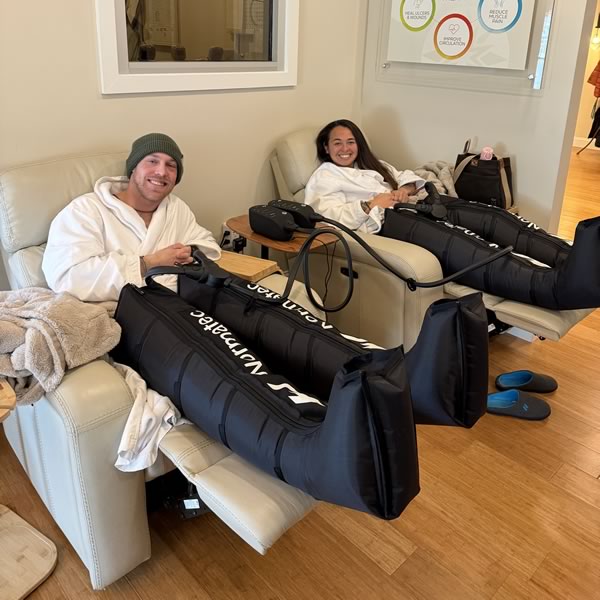
Compression boots are wearable devices that wrap around your legs, typically covering your feet, calves, and thighs, and use air-filled chambers to apply dynamic pressure in a controlled sequence. They use intermittent pneumatic compression technology, which means the chambers inflate and deflate to create pressure on the legs in a rhythmic, wave-like pattern that moves from your feet upward toward your hips.
This sequential inflation mimics the body’s natural muscle pump to improve circulation. When you walk or run, your calf and thigh muscles squeeze veins and push blood back toward your heart. Compression boots replicate that process while you sit or lie down, making them especially useful when your leg muscles are too fatigued or sore for active movement. Intermittent pneumatic compression is used to stimulate blood and fluid movement in the legs, clearing out metabolic waste and excess fluid that contribute to swelling and stiffness.
Think of it as an automated sports massage that works across the entire leg, chamber by chamber. Modern devices in 2026 typically offer multiple intensity levels and zones, with pressures ranging from about 20 to 100 mmHg in most consumer units (some clinical-grade boots can apply pressure up to 210 mmHg). Compression boots improve blood flow to the lower body, but they do not build fitness, strength, or endurance on their own. They are a recovery optimization tool that helps you bounce back between training days, not a replacement for regular exercise, nutrition, or rest.
Key Benefits: How Compression Boots Support Muscle Recovery
The benefits of compression boots go beyond simply feeling good during a session. Research and real-world use point to several specific, evidence-informed outcomes that matter for active adults and anyone dealing with leg fatigue.
Improved circulation and venous return. Air compression helps move deoxygenated blood and metabolic waste away from your calves, shins, and quads. Compression boots improve circulation and muscle recovery by accelerating the return of blood to the heart, which means fresh, oxygenated blood reaches fatigued tissue faster. Enhanced blood circulation delivers oxygen and nutrients to fatigued muscle tissue, supporting the repair process. A 2018 study showed increased limb blood flow with compression, reinforcing what athletes and practitioners have observed for years.
Reduced swelling and fluid retention. After a long run, heavy squat session, or eight-hour shift on your feet, ankles and calves often puff up. They reduce swelling and ease water retention by pushing excess interstitial fluid back into the lymphatic and venous systems. Compression boots can reduce swelling after intense workouts, and improved lymphatic drainage helps clear cellular debris and reduces heavy feelings in the legs. If you notice your shoes feeling tight at the end of a workday, that is a classic sign of fluid retention that boots can address.
Less muscle soreness and faster recovery. Compression boots can shorten recovery time from muscle soreness, and compression therapy leads to faster recovery times between training sessions. They can reduce swelling and muscle soreness post-exercise, and compression boots may help alleviate symptoms of delayed onset muscle soreness (DOMS). Compression therapy offers benefits similar to post-exercise massage, making it a practical option when you cannot get to a therapist. They help flush metabolic waste from the legs, which is one of the drivers behind that deep, achy feeling after hard exercise.
Perceived benefits that matter. Many users report legs feeling lighter, less post-exercise heaviness, and an easier time with back-to-back training days. These perceptual outcomes are consistently supported across studies, even when objective strength measures show smaller effects. For desk workers and frequent flyers, the feeling of relief after a session can be a game changer for daily comfort and energy.
Compression Boots vs. Compression Socks and Other Recovery Tools
Many people confuse compression boots with compression socks or assume a massage gun does the same thing. Understanding the difference between these tools helps you choose the right one for the right moment.
Compression boots deliver dynamic pressure through sequential air compression across the entire leg. Compression socks provide static, passive pressure, typically graduated from the ankle upward, and cover only the lower leg. Boots actively squeeze and release to boost circulation and flush fluid, while socks maintain a baseline level of support throughout the day. Both have value, but they serve different roles. Boots are a treatment you use for a session; socks are something you wear during walking, travel, or long shifts.
Other recovery tools fit into the picture as complements, not replacements:
- Foam rolling and massage guns target specific trigger points and tight spots. Great for focal relief, not for whole-leg fluid flushing.
- Stretching and mobility work improve range of motion and address tightness. Essential for a routine but do not actively move blood and lymph.
- Cryotherapy reduces acute inflammation through cool exposure.
- Infrared sauna and red light therapy support circulation and cellular health through heat and light energy.
Practical guidance: Use compression boots after intense leg days or long shifts for whole-leg recovery. Wear compression socks on travel days or during extended standing. Reach for a massage gun when a specific spot in your calf or quad needs attention. Pair boots with cryotherapy or infrared sauna on different days for a layered approach to recovery and self-care.
Who Can Benefit Most from Compression Boots?
Compression boots are not just for elite athletes. Here is a look at who stands to gain the most.
- Recreational and competitive runners. Whether you are training for a 5K or stacking marathon weekends, compression boots help reduce recovery time between runs. Runners dealing with calf tightness or heavy legs after long miles often notice the biggest difference.
- Team-sport athletes. Soccer, basketball, hockey, and lacrosse players accumulate massive leg stress from sprinting, cutting, and jumping. Boots help clear metabolic waste and reduce stiffness between games or practices.
- Strength athletes and gym-goers. Heavy squats, deadlifts, and lunges produce significant eccentric damage in the thighs and hamstrings. Using boots after leg day can take the edge off DOMS that otherwise lingers for days.
- Workers on their feet. Nurses, retail staff, hospitality workers, and anyone standing 8 to 12 hours deal with lower-leg fatigue, mild edema, and achiness. The boots should be used after intense workouts or long periods of standing to address these symptoms.
- People returning from a layoff or injury. When you are easing back into exercise, soreness tends to be worse and recovery slower. Boots offer gentle, passive relief while your body adapts, though clearance from a physical therapist or physician is important first.
Who should be cautious: Consultation with a healthcare professional is recommended for individuals with circulatory issues before using compression therapy. People with a history of deep vein thrombosis, unmanaged blood pressure, cardiovascular disease, or pregnancy should not use compression boots without medical clearance. If you experience one-sided swelling, unexplained pain, or sudden shortness of breath, those are signals to see a doctor, not self-treat with a recovery device.
Types of Compression Boots: Corded vs. Cordless, Full-Leg vs. Targeted
Different designs exist on the market, and each affects price, convenience, and coverage. Knowing the categories helps you match a device to your actual needs.
Full-leg systems cover the feet, calves, and thighs with multiple air chambers and a central control unit or integrated controller. These are ideal for global leg recovery after full-body exercise days. Normatec Elites offer sequential inflation for recovery across five chambers and seven intensity levels, ranging from 40 to 110 mmHg. Therabody JetBoots Prime provide hands-free compression therapy with a wireless design suitable for use at home or in a recovery lounge. Hyperice’s Full Body system treats arms and legs simultaneously, which is useful for athletes who load both upper and lower body.
Targeted systems focus on specific areas. Normatec Go boots only cover the calves for targeted relief, making them more portable and affordable. Calf-only sleeves weigh significantly less than full-leg boots and fit into a gym bag or travel case more easily.
Hybrid and advanced devices are pushing boundaries. The PRO Plus system integrates vibration and red light therapy alongside compression, combining multiple recovery modalities in a single device. Hyperboots feature three compression settings up to 210 mmHg, which is on the high end of available consumer pressure and approaches clinical-grade force. Boots can apply pressure up to 210 mmHg in certain models, though most users do not need to go anywhere near that level.
Corded vs. cordless: Corded units plug into the wall and can deliver more consistent pressure over longer sessions. Cordless models rely on rechargeable batteries, with battery life typically ranging from two to four hours per charge in 2026 devices. Choose based on whether you primarily use boots at home on the couch or need a portable option for competition travel or between meetings.
Common features in 2026 models: Three to seven compression modes, multiple intensity levels, preset recovery programs, quiet operation, foldable designs, and emergency pressure-release buttons. Some newer devices include app-based control and AI-driven pressure adjustment, though the core technology remains air compression in sequential chambers.
How to Use Compression Boots Safely and Effectively
Proper use maximizes the benefits and keeps the experience comfortable. Here are the protocols that align with current research and practitioner guidance.
When to use them: A typical session with compression boots lasts between 15 to 30 minutes. Most protocols in clinical studies use 20 to 30 minutes immediately after hard runs, heavy leg days, or demanding work shifts. Using them 3 to 4 times a week is recommended for recovery during periods of high training volume. Daily use of compression boots can reduce recovery time from DOMS, but moderate pressure and shorter sessions are advisable for frequent users.
How to choose pressure: Start at low-to-moderate levels, around 20 to 40 mmHg, especially if you are new to compression therapy. Increase gradually over several sessions. High pressure settings can cause discomfort and numbness, and more pressure does not automatically mean faster recovery. Research suggests that around 80 mmHg is an effective range for most adults; higher pressures should only be used if comfortable and under guidance.
Body position: Recline or lie on a couch, bed, or recovery chair with legs slightly elevated. A pillow under the ankles helps. Keep breathing relaxed, avoid tight waistbands, and let the boots do the work. This is your rest period.
Safety rules:
- Stop immediately if you feel sharp pain, pins-and-needles, tingling, or numbness that does not resolve when pressure drops.
- Never use on open wounds, fractures, active infections, or skin conditions.
- If you have a history of blood clots or cardiovascular issues, get clearance from your doctor.
Stacking therapies: A solid post-workout sequence might look like: cool-down walk, hydration, compression boot session, light stretching, and a protein-rich meal. On rest days, consider pairing boots with infrared sauna or red light therapy for compounded circulation and cellular health benefits.
What to Look for in the Best Compression Boots for Leg Recovery
Whether you are shopping for a home device or evaluating what your local wellness center uses, this checklist covers the essentials.
| Feature | What to Look For |
|---|---|
| Compression range | Clear mmHg specifications (e.g., 20–110 mmHg), adjustable in increments |
| Chambers/zones | 4–5 zones minimum for full-leg; sequential inflation from feet to thighs |
| Fit and sizing | Multiple sizes, adjustable zippers or Velcro, specs for calf and thigh circumference |
| Modes and programs | At least 3 compression programs, ability to isolate feet, calves, or thighs |
| Power | Corded for home consistency; cordless with 2–4 hour battery for travel |
| Noise | Quiet pump operation, especially for use while watching TV or in shared spaces |
| Cleaning | Removable, washable interior liners |
| Warranty | 1–3 year coverage on motor, hoses, and controller |
Compression boots can cost around $1,000 or more for premium wireless full-leg systems. Entry-level models and calf-only sleeves start lower, but the best compression boots for serious recovery tend to land in the $600 to $1,200 range. Users may find compression boot settings not intuitive on some devices, so look for clear LED displays, app-based guides, or preset programs that simplify the experience. A device that is frustrating to set up will collect dust instead of helping your legs. Before you purchase, consider trying a pair at a wellness center to see what pressure levels and coverage feel right for your body.
In-Studio Compression Therapy vs. Owning Compression Boots at Home
For local readers in the North Andover and Merrimack Valley area, the decision between booking sessions and buying a device comes down to frequency, budget, and how much guidance you want.
In-studio advantages: A trained staff member can screen your health history, set initial pressure levels, and suggest session timing based on your workout schedule and recovery goals. Studios often invest in clinic-grade devices that deliver more consistent compression cycles and higher chamber counts than entry-level consumer units. You also get the option to pair compression therapy with other modalities in the same visit: cryotherapy for inflammation, IV hydration for replenishment, red light therapy for cellular repair, or infrared sauna for deep circulation support.
Cost comparison: Studio sessions typically range from $30 to $80 per visit, with membership and package options that lower the per-session price. A home device runs $300 to $1,200 or more depending on brand and features. If you use boots three times per week, a home device may pay for itself in three to four months. For less frequent users, a studio visit once or twice a week offers the same benefits without the upfront cost or storage hassle. Some devices may qualify under a flexible spending account depending on your plan, which is worth checking.
Who favors which: Athletes with daily recovery needs and unpredictable schedules often prefer owning a device. People who enjoy a spa-like environment, want professional guidance, or want to combine compression with other services in one visit tend to get more from in-studio sessions.
How Compression Boots Fit into a Complete Recovery and Longevity Plan
Compression boots are one pillar in a broader recovery and anti-inflammatory lifestyle. They work best when surrounded by the fundamentals.
Compression therapy should be combined with proper hydration and sleep for best recovery outcomes. No amount of air compression can override chronic sleep deprivation, dehydration, or poor nutrition. Adequate protein intake supports muscle repair at the cellular level, and smart training periodization ensures you are not constantly overloading your legs without enough rest.
The real power of compression boots shows up when they are part of a layered system. At an integrative recovery center, you can pair a compression session with whole-body cryotherapy for inflammation control, IV hydration for faster replenishment, red light therapy for mitochondrial support and cellular health, and infrared sauna for deep heat-driven circulation. Each modality addresses a different aspect of recovery, and together they create a system greater than any single treatment.
A practical weekly schedule for an active adult in Massachusetts might look like this: compression boots after the two hardest training days, one red light therapy session, one infrared sauna session, and one full rest day with no modalities at all. Over four to six weeks, track how your legs feel the morning after training, your perceived muscle soreness, and whether your performance is holding steady or improving. Consistency over weeks matters far more than any single session.
Signs It May Be Time to Try Compression Boots for Leg Recovery
If your legs are telling you something, it is worth listening. Here are the signals that suggest compression therapy could make a meaningful difference in your routine.
- You need two to three days (or more) to bounce back from long runs or heavy leg workouts.
- Calf tightness and thigh soreness linger into your next training session despite foam rolling and stretching.
- Your legs feel heavy after long commutes, flights, or desk-bound days.
- You notice visible sock indentations around your ankles at the end of the day, or mild swelling after air travel.
- Traditional recovery tools like massage guns and stretching provide short-term relief but do not fully resolve the stiffness.
When to see a doctor instead: One-sided swelling, unexplained leg pain, redness or warmth in one leg, a history of blood clots, or sudden shortness of breath are all medical red flags. These situations require professional evaluation, not a recovery device. If you are unable to determine whether your symptoms are exercise-related or something more serious, err on the side of caution.
For most people, starting with a guided session at a wellness center is the smartest first step. You can test how your body responds, experience different pressure levels, and get professional input before committing to a device.
Common Mistakes and Misconceptions About Compression Boots
Avoiding these mistakes makes compression therapy safer and more effective.
Cranking the pressure too high. The assumption that harder compression equals faster recovery is false. Optimal pressure for most people sits around 60 to 80 mmHg. Going above what is comfortable can cause numbness, bruising, or a counterproductive nervous system stress response. Let comfort guide your settings.
Treating boots as a cure-all. Compression boots cannot substitute for proper warm-ups, cool-downs, strength work, sleep, or medical care for injuries. They are one tool in a larger system. Overreliance on any single recovery method leads to diminishing returns.
Expecting immediate elimination of soreness. Boots reduce the severity of muscle soreness and accelerate normal recovery processes, but they do not erase DOMS on the spot. Effects typically mature over 24 to 48 hours and become more noticeable with consistent use over weeks.
Ignoring the research limitations. Most studies on compression boots involve small participant groups, often 15 to 30 people, and some studies show compression boots offer no significant benefits for certain objective measures like strength retention. This does not mean the boots are useless; it means the evidence is strongest for perceived recovery and soreness reduction, and weaker for hard performance metrics. Set expectations accordingly.
Hygiene neglect. Not wiping interior liners, sharing boots without cleaning, and ignoring manufacturer care instructions lead to bacterial buildup and faster material degradation. Clean liners after every session, especially in shared environments.
FAQs About Compression Boots for Leg Recovery
Here are answers to the most common questions about using compression boots, drawn from current evidence and practical experience with compression therapy.
Are compression boots safe for everyday use?
For generally healthy adults, daily or near-daily use is typically safe when pressure stays at moderate levels and sessions last 20 to 30 minutes. The key is listening to your body: if a session causes any discomfort, numbness, or unusual feeling, reduce the pressure or frequency. People with cardiovascular conditions, clotting history, unmanaged blood pressure, or vascular disorders must get medical clearance before starting any compression treatment. When in doubt, a quick conversation with your doctor protects you far more than any device manual.
How often should I use compression boots to support muscle recovery?
Three to five sessions per week after harder training days or long shifts is a suitable starting point for most active adults. On lighter weeks, one to two sessions may be enough to maintain the benefits without overdoing it. Pay attention to how quickly your legs recover and how they feel the next day. If soreness and heaviness are resolving faster, your current frequency is working.
Do compression boots actually reduce muscle soreness, or just feel good?
Research leans toward modest improvements in perceived soreness, recovery, and next-day readiness. Objective performance measures like strength and power sometimes improve, but effects are often small and mixed across studies. The consistent finding is that users report legs feeling lighter and more comfortable. Even when measurable performance gains are subtle, that perceptual relief translates into better training consistency and quality of life.
What do compression boots feel like during a session?
The sensation is a firm but comfortable squeeze that starts at your feet and moves up through the calves and thighs in waves, similar to a rhythmic massage. You should feel noticeable pressure without sharp pain, tingling, or breathlessness. If any chamber feels too tight, most devices let you reduce intensity immediately or skip a zone entirely.
Can I use compression boots before a workout, or only after?
You can use boots at a low-to-moderate setting before exercise to reduce stiffness and help your legs feel more ready, but they do not replace an active warm-up that includes walking, mobility drills, and light cardio. Most of the research and practical protocols focus on post-workout use, which is where the strongest evidence for recovery and soreness reduction exists.
How long before I notice benefits from compression boots?
Some people feel immediate relief and lighter legs after their first session. More consistent changes in recovery patterns and muscle soreness are usually noticed after two to three weeks of regular use, especially when sessions happen three or more times per week. Performance metrics may take longer to shift, but the day-to-day feeling in your legs is typically the first thing that improves.
Why Choose a Local Wellness Center for Compression Boot Sessions
Figuring out the right pressure, duration, and frequency on your own can be frustrating, especially when device manuals read like engineering textbooks. Working with a dedicated recovery and wellness center puts expert guidance between you and guesswork.
At a center staffed by trained recovery professionals, you get an initial wellness assessment that factors in your training volume, age, injury history, and recovery goals. Staff can screen for contraindications, set appropriate pressure levels, and adjust protocols as your fitness changes over time. That level of personalized care is something no app or device manual can replicate.
Walking into a North Andover-area center like Bonfire Wellness means you can relax in a quiet recovery lounge and pair your compression boot session with complementary services. Add whole-body cryotherapy to protect against inflammation, IV hydration for rapid replenishment, red light therapy for cellular health, or infrared sauna to further boost circulation. Everything is under one roof, tailored to your body.
The delivery of results improves when your recovery plan is built around your life, not a generic protocol. Whether you are a runner training through a New England winter, a nurse finishing back-to-back shifts, or someone exploring what the world of recovery technology can do for your performance and longevity, experiencing compression boots firsthand is the essential first step.
Schedule a consultation or book a leg recovery session at Bonfire Wellness to try compression boots with professional guidance. Feel the difference in your legs before you decide on long-term use, and discover how compression therapy fits into a recovery plan designed around you.