Table of Contents
- What is red light therapy, and how does it affect human muscle tissue?
- How red light therapy works for muscle recovery at the cellular level
- Key benefits of red light therapy for muscle recovery and performance
- Red light therapy for delayed onset muscle soreness and muscle fatigue
- Can red light therapy help with pain management and chronic pain?
- When to use red light therapy: before, after, or between workouts?
- Professional red light therapy vs. at-home devices
- What to expect during an in-studio red light therapy session
- Safety, contraindications, and common mistakes to avoid
- How red light therapy fits into a complete recovery plan
- Frequently asked questions about red light therapy for muscle recovery
- Why choose a local wellness center for red light therapy
- Next steps: Is red light therapy right for your muscle recovery goals?
This article covers how light therapy targets muscle cells and human muscle tissue, what the research says about delayed onset muscle soreness and chronic pain, practical guidance on faster recovery for active adults, and how professional sessions compare with home devices.
Introduction: Why Muscle Recovery Matters More Than Your Workout
Picture this: you crushed a heavy leg day or logged a long run on the North Andover Rail Trail over the weekend. Two days later, you’re gripping the railing walking downstairs, wondering if your quads will ever feel normal again. If you’re an active adult in the Merrimack Valley juggling a career, a family, and a training schedule, that scenario is painfully familiar.
Here’s the thing most people overlook: the real progress from training happens during recovery, not during the workout itself. Skip or shortchange the recovery process, and you end up with persistent muscle fatigue, nagging aches, and eventually chronic pain or overuse injuries that sideline you for weeks.
Red light therapy has emerged as a noninvasive treatment that supports the body’s recovery systems at the level of muscle cells and human muscle tissue. It’s not a magic shortcut. But when layered with solid sleep, nutrition, and smart programming, it’s a science-backed way to support faster recovery, reduce soreness, and improve training consistency. Red light therapy is considered low-risk and safe, and the treatment itself is non-invasive and typically painless.
Let’s walk through exactly how it works, what the evidence actually says, and how to use it strategically.
What Is Red Light Therapy and How Does It Affect Human Muscle Tissue?
Red light therapy, also called photobiomodulation therapy or low-level light therapy, uses specific wavelengths of red and near-infrared light to produce therapeutic biological effects in muscle tissue without generating heat or causing damage. Think of it as delivering energy directly to your cells using a red light therapy device, whether that’s a professional panel or smaller handheld devices.
The specific wavelengths between 600 nm and 1100 nm are typically used for this kind of light-emitting diode therapy. In practice, red light wavelengths typically range from 630 to 850 nm, with red wavelengths (~630–660 nm) targeting superficial layers and near-infrared wavelengths (~810–850 nm) penetrating deeper into muscle tissue, tendons, and joint capsules.
When these photons reach your cells, they’re absorbed by mitochondrial enzymes, particularly cytochrome c oxidase (Complex IV of the electron transport chain). Red light therapy stimulates mitochondria to produce ATP more efficiently, and photobiomodulation enhances cellular respiration and ATP synthesis. That increased energy availability supports tissue repair, improved blood flow, and reduced inflammation, all critical elements of the body’s recovery after training or injury.
Because this is categorized as low-level laser therapy or low-level light therapy, the intensities involved do not heat or damage tissue the way surgical lasers or intense heat devices do.
How Red Light Therapy Works for Muscle Recovery at the Cellular Level
Understanding how red light therapy works at the cellular level, rather than just thinking about muscles as a whole, is what separates real insight from surface-level wellness marketing. Recovery happens cell by cell, fiber by fiber. Here’s what’s going on inside your muscle cells when red and near-infrared light reaches them.
The key mechanisms:
- Cytochrome c oxidase absorbs red and NIR photons, displacing nitric oxide that was inhibiting electron transport. With NO out of the way, cellular respiration accelerates.
- ATP synthesis increases, giving muscle cells more energy for ion pump function, protein synthesis, and fiber repair after tough workouts.
- Red light therapy enhances ATP production in muscle cells, which directly supports the recovery process after strenuous exercise or muscle damage.
- Moderate reactive oxygen species generation triggers signaling pathways (NF-κB, AP-1) that activate gene expression for growth factors and satellite cell proliferation, helping rebuild damaged fibers.
- Red light therapy reduces inflammation by shifting cytokine profiles, lowering pro-inflammatory markers like TNF-α, IL-1β, and IL-6 in early post-injury phases without completely shutting down the body’s natural healing processes.
- RLT promotes angiogenesis to improve blood flow and nutrient delivery to recovering tissue, and increased blood flow improves oxygen delivery and waste removal in tissues.
- Red light therapy reduces markers of muscle damage such as creatine kinase, a biomarker commonly elevated after intense exercise.
These mechanisms collectively translate into less muscle fatigue, reduced severity of delayed onset muscle soreness, improved oxidative stress reduction, and better readiness for your next training session.
Key Benefits of Red Light Therapy for Muscle Recovery and Performance
Clinical studies indicate modest benefits of red light therapy in muscle recovery and performance. The word “modest” matters here. This isn’t a miracle device, but when used consistently with proper dosing, the cumulative effect on recovery and sports performance is meaningful. Here’s what the evidence supports:
- Reduced delayed onset muscle soreness after strength training or endurance sessions, particularly when light therapy is applied post-exercise or pre-exercise.
- Shorter turnaround between hard workouts. Regular red light therapy sessions can improve recovery consistency, meaning you can train again sooner at a higher quality.
- Support for chronic pain conditions with a muscular or inflammatory component, offering pain relief without pharmaceuticals.
- Less post-exercise stiffness and improved range of motion thanks to better blood flow through blood vessels serving the treated area.
- Better training consistency and fewer missed sessions. Regular RLT sessions can lead to improved training consistency, which is where real training adaptation happens.
- Improved physical performance. Research on healthy males showed PBM therapy increased peak force by roughly 12–14% compared to placebo, supporting better fatigue resistance during intense exercise.
- Faster tissue repair. Red light therapy promotes faster muscle tissue repair, and RLT enhances ATP production for faster muscle recovery.
RLT improves circulation, aiding muscle repair and recovery. RLT reduces inflammation after intense exercise. These benefits are typically incremental, not instant. Improvements in muscle performance and recovery time tend to build over weeks of consistent red light therapy sessions.
The benefits of red light are greatest when combined with the fundamentals: quality sleep, hydration, anti-inflammatory nutrition, and appropriate training load.
Red Light Therapy for Delayed Onset Muscle Soreness and Muscle Fatigue
Delayed onset muscle soreness is the deep, achy stiffness that peaks 24–72 hours after unfamiliar or intense exercise, especially eccentric movements like downhill running, heavy negatives, or the first leg day after a long break. It’s driven by microdamage to muscle fibers, localized inflammation, and swelling within muscle tissue.
Red light therapy can reduce delayed onset muscle soreness. Using red light therapy post-exercise reduces delayed onset muscle soreness through several pathways: improved mitochondrial efficiency speeds repair, moderated inflammation keeps swelling from becoming excessive, and enhanced blood flow clears metabolic waste more quickly. In a dose-response study on soccer players performing eccentric quadriceps work, an 810 nm treatment at 50 J reduced creatine kinase levels and IL-6 compared to lower doses, indicating a significant improvement in objective recovery markers.
On the muscle fatigue side, pre-workout PBM therapy has shown promise for preserving power output and delaying the onset of fatigue during repeated efforts. One placebo-controlled trial demonstrated that both 660 nm and 830 nm wavelengths improved maximum voluntary contraction and average force during isometric elbow flexion, supporting better fatigue resistance.
An honest note: red light therapy will not completely eliminate DOMS or muscle soreness, and it should never be used to ignore pain that signals overtraining or injury. Some randomized controlled trials have found no statistically significant improvement in subjective soreness even when biomarkers improve. The evidence is real but nuanced.
Can Red Light Therapy Help With Pain Management and Chronic Pain?
There’s an important distinction between the acute soreness you feel after tough workouts and the persistent, low-grade ache that lingers for months or years. Chronic pain, lasting more than three months, often involves sensitized nerve pathways and long-standing inflammation that no single session will resolve.
That said, light therapy can reduce inflammation, support tissue repair, and modulate pain signaling, making it a useful adjunct for chronic muscle pain, tendon irritation, or joint-related discomfort. It’s a noninvasive treatment that fits well within a broader pain management strategy.
Practical examples where red light therapy helps:
- Office workers in North Andover dealing with chronic neck and shoulder tension from hours at a desk and a long commute.
- Runners with recurring calf or Achilles tightness that never fully resolves between training blocks.
- Active adults in their 40s and 50s managing low-grade lower-back pain aggravated by sitting or seasonal outdoor activities.
Red light therapy should not be used to mask severe or unexplained pain. Sudden weakness, unexplained weight loss, night pain, or rapidly worsening symptoms all warrant evaluation by a qualified healthcare provider. Think of red light as one component of a broader approach that can include physical therapy, strength training, mobility work, and medical treatment when needed. Institutions like the Cleveland Clinic have acknowledged the therapeutic potential of photobiomodulation for various conditions, while emphasizing that it works best as part of a comprehensive plan.
When to Use Red Light Therapy: Before, After, or Between Workouts?
Timing influences which benefits are most pronounced. Red light therapy is often applied before or after exercise to enhance recovery, but the reasoning differs depending on when you schedule it.
Pre-workout use: A brief session supports ATP availability and tissue readiness. Research suggests this can acutely improve muscle performance and fatigue resistance, making it helpful before heavy lifts, competition days, or high-intensity intervals.
Post-workout use: Sessions within a few hours after training target inflammation, muscle damage, and the early phases of muscle repair. Athletes often schedule red light therapy within 24 hours after training to reduce soreness and accelerate the recovery process. This is where most post-exercise recovery benefits concentrate.
Rest-day use: Gentle support for ongoing tissue repair, chronic pain management, and maintaining the body’s recovery momentum between training days.
Sample weekly patterns:
| Profile | Training Schedule | Suggested RLT Timing |
|---|---|---|
| Recreational lifter, 3x/week | Mon / Wed / Fri lifting | Post-session Mon and Fri; rest-day Wed or Sat |
| Marathon trainee | Weekday runs + weekend long run | Post long run Sunday; pre-speed session Tuesday |
| Pickup hockey player | One game per week + 2 gym sessions | Post-game; one rest-day session mid-week |
Ideal timing can differ by individual. Track your muscle soreness, energy levels, and physical performance over several weeks to fine-tune your recovery routine.
Professional Red Light Therapy vs. At-Home Devices
Both professional systems and home devices use similar wavelengths and principles, but they differ meaningfully in power density, coverage area, and dose control.
Professional setups feature higher irradiance (power per unit area), full-body or large-area coverage, carefully calibrated treatment times, and guidance from trained staff. For large muscle groups like quads and hamstrings, clinical recommendations suggest total energy delivery of 60–300 J, which professional panels can deliver efficiently.
Home devices include panels, wraps, pads, and smaller handheld devices. They can be convenient and cost-effective for maintenance and targeted areas, but often require longer exposures and more user education to achieve comparable doses. Red light devices designed for home use typically work well for small muscle groups at 20–60 J total energy.
Decision guide:
- Choose professional sessions if you want full-body coverage, have significant soreness from high training loads, or prefer expert guidance on dose and timing.
- At-home red light therapy device options work well for maintenance, targeted spots like knees or lower back, and daily consistency.
- Always follow manufacturer instructions and never stare directly into high-intensity LEDs without eye protection.
- Combining periodic in-center sessions with daily home use can offer a strong middle ground for serious active adults and busy professionals.
What to Expect During an In-Studio Red Light Therapy Session
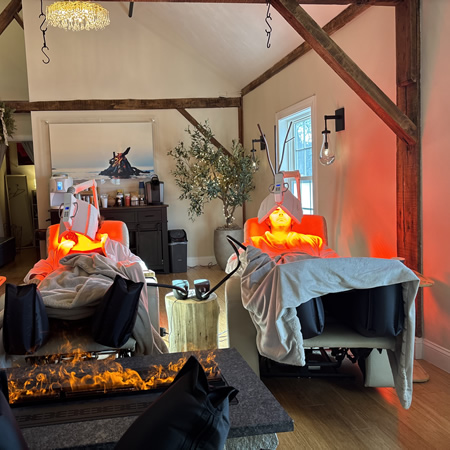
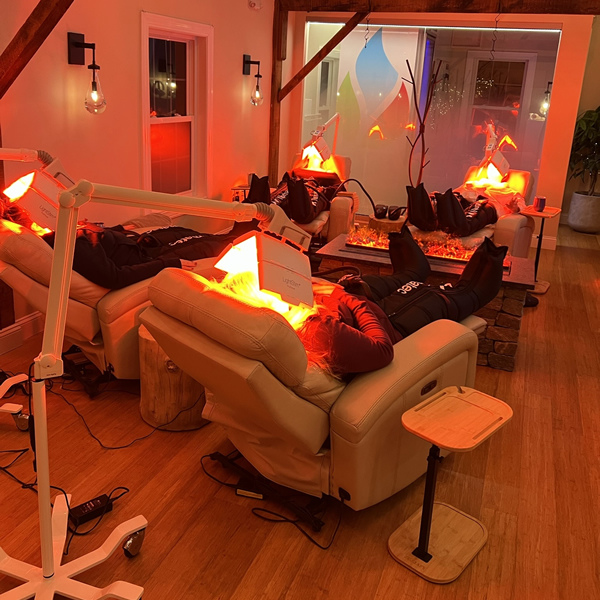
Walking into a modern recovery studio in 2026 for your first red light therapy session is straightforward. You’ll typically start with a brief intake where staff ask about your training, recovery goals, any medical concerns, and which areas you want to target.
Red light therapy sessions typically last 20 to 30 minutes, with localized treatments on the shorter end (10–20 minutes) and larger-area or full-body sessions closer to 30 minutes. The environment is designed for relaxation: low lighting, comfortable temperature, and privacy while target areas are exposed. Eye protection is provided, and staff adjust device distance and duration based on your skin type, body composition, and tolerance.
During the session, most people feel mild warmth and relaxation. Some notice a “looser” feeling in tight muscles immediately afterward. There’s no downtime. You can head to the gym, back to work, or run errands right after. Delayed, subtle improvements in stiffness and muscle soreness typically emerge 24–72 hours post-treatment.
For noticeable, durable results, expect to use red light therapy consistently over several weeks. Some people notice lighter DOMS after 1–3 sessions, but bigger changes in recovery and peak performance often require 3–6 weeks of regular red light therapy treatments.
Safety, Contraindications, and Common Mistakes to Avoid
Red light therapy is safe for most healthy adults when used at appropriate doses. The safety profile is well-established, and serious adverse effects are rare. That said, there are important considerations.
Safety considerations:
- Photosensitive conditions or medications (certain antibiotics like doxycycline, acne drugs like isotretinoin) require medical clearance before red light therapy treatments.
- Active cancers in the treatment area, unhealed surgical sites, or uninvestigated lumps should not be treated without physician approval.
- Eyes should always be protected from direct, high-intensity LED exposure using appropriate goggles or shields.
- Effectiveness of RLT can vary based on treatment parameters and protocols, including wavelength, fluence, and treatment duration.
Common mistakes to avoid:
- Overdoing it with excessively long sessions or stacking multiple home devices in one day. The biphasic dose response means more energy is not always better.
- Using red light therapy as a substitute for medical evaluation of serious pain, sudden weakness, or injury.
- Ignoring core recovery pillars like sleep, nutrition, and load management while relying solely on light therapy to decrease inflammation or reduce soreness.
- Inconsistent use, doing one or two sessions and expecting dramatic changes in muscle hypertrophy or pain relief.
- Failing to track response. Monitor how you feel 24–48 hours after sessions. Mild warmth or transient fatigue is normal; worsening pain warrants consultation.
How Red Light Therapy Fits Into a Complete Recovery Plan
Red light therapy is one pillar in a broader strategy focused on longevity, performance, and overall wellness. It’s not a stand-alone cure, and treating it as one will lead to disappointment.
For the best results, combine red light therapy with:
- Adequate sleep: 7–9 hours with consistent schedules to support muscle repair and hormone regulation.
- Anti-inflammatory nutrition: whole foods, lean proteins, omega-3s, and leafy greens to give your body the raw materials for recovery.
- Active recovery: walking, mobility work, or light cycling on non-training days to maintain blood flow without adding training stress.
- Periodic training assessments: adjusting volume and intensity to avoid overtraining, because no amount of light therapy fixes a bad program.
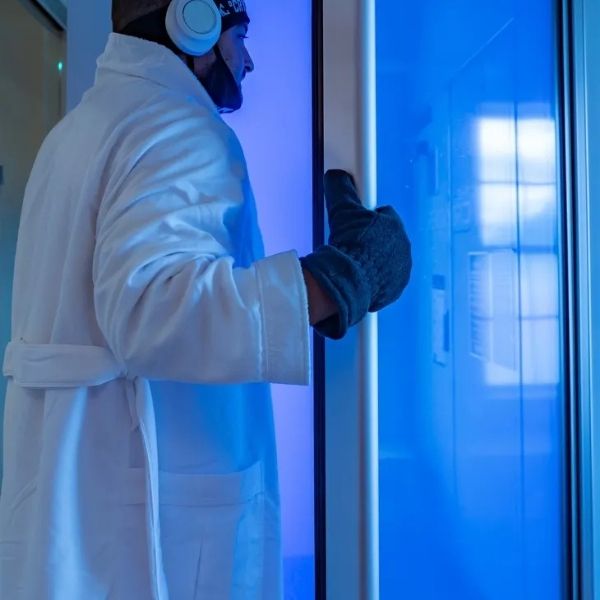
Red light therapy can be integrated with physical therapy for enhanced recovery, and pairing it with complementary modalities like cryotherapy, compression therapy, or infrared sauna can amplify results for the body’s recovery.
For adults balancing careers, families, and training, structured recovery tools can be the difference between steady progress and recurring setbacks. Define what “better recovery” means to you, whether that’s less next-day stiffness, more weekly training volume, or fewer pain flare-ups, and evaluate whether red light is helping you get there. The goal is to improve fitness and recover properly over the long haul, giving you more energy for both training and daily life.
Frequently Asked Questions About Red Light Therapy for Muscle Recovery
How quickly can I expect results from red light therapy for sore muscles?
Some people notice subtle relief after 1–3 sessions, such as lighter DOMS or an easier warm-up the next day. More durable changes in recovery time and chronic pain often take several weeks of consistent use. Factors like training load, age, sleep quality, and overall health strongly influence how fast your body responds.
Can red light therapy replace stretching, massage, or physical therapy?
No. Red light therapy is complementary, not a replacement. It supports the body’s natural healing processes at the cellular level but does not correct movement patterns, strength deficits, or structural issues on its own. Combine it with targeted exercise, stretching, or manual therapy prescribed by qualified professionals when needed.
Is red light therapy safe to use every day for muscle recovery?
At typical wellness doses, daily or near-daily use is generally considered safe and low risk for most healthy adults. However, more is not always better due to the biphasic dose response observed in a systematic review of PBM therapy research. Start with a moderate schedule of 2–4 sessions per week and adjust based on your response and professional guidance.
Will red light therapy help if I have chronic back or joint pain from old injuries?
Many people with long-standing back or joint discomfort report less stiffness, improved function, and meaningful pain relief when red light therapy is added to their routine alongside strength training and mobility work. Results vary, and underlying structural issues may still need evaluation and a comprehensive medical treatment plan.
Can I use red light therapy at home instead of going to a wellness studio?
Home devices can be effective for targeted areas and daily consistency, especially wraps or panels designed for muscle recovery. Sessions usually need to be longer and more frequent with home devices to match professional doses. Professional environments offer higher-powered systems, full-body coverage, and expert guidance. Many people find a combination of both approaches works best for their athletic performance goals.
Does red light therapy improve athletic performance, or just help with soreness?
By reducing muscle fatigue and DOMS and supporting faster tissue repair, light therapy can indirectly improve performance by allowing higher-quality, more frequent training. A placebo-controlled trial showed roughly 12–14% improvement in peak force with PBM, supporting better sports performance over time. It does not replace conditioning, skill work, or good coaching, but it can be a valuable tool for training adaptation and reaching peak performance when used strategically.
Why Choose a Local Wellness Center for Red Light Therapy
Working with an experienced, recovery-focused wellness center offers advantages that are difficult to replicate at home.
At Bonfire Wellness in North Andover, you get:
- Access to professional-grade red light systems with consistent dosing calibrated for human muscle tissue and varying body types.
- Staff who understand athletic performance, muscle recovery, and chronic pain and can tailor protocols to your individual goals rather than offering one-size-fits-all settings.
- The ability to bundle red light therapy with complementary services like cryotherapy, compression therapy, IV hydration, or infrared sauna for a more comprehensive approach to the body’s recovery.
- Local expertise for active adults, recreational athletes, and busy professionals in the Merrimack Valley who need realistic, time-efficient recovery strategies that actually fit their schedules.
Every protocol is adjusted based on how your body responds over time, because what works for a 25-year-old marathon runner is different from what a 50-year-old weekend hiker needs.
Next Steps: Is Red Light Therapy Right for Your Muscle Recovery Goals?
Red light therapy is a safe, evidence-informed way to support faster recovery, reduce delayed onset muscle soreness, and ease chronic muscle fatigue when used consistently and intelligently. It enhances ATP synthesis, supports tissue repair, and helps you recover properly between sessions so you can actually build on your training instead of constantly digging out of a recovery hole.
If persistent soreness, plateaued athletic performance, or chronic pain after work or workouts sounds familiar, structured light therapy may be worth exploring.
Schedule a consultation at Bonfire Wellness to discuss your goals, review any medical concerns, and experience a first red light therapy session. Investing in recovery today pays off in more enjoyable training, better day-to-day energy, and long-term joint and muscle health. Your next workout will thank you.