Table of Contents
- What peptide therapy is and how peptides differ from proteins and steroids
- How peptide therapy works in the body at a cellular level
- Why most peptides are injected and other routes of administration
- Common types of peptides used in wellness and longevity
- Key benefits backed by emerging evidence
- Safety: what we know and what’s still uncertain
- Who is (and isn’t) a good candidate
- How a medically supervised peptide therapy program typically runs
- Peptide therapy vs. peptide supplements and other recovery tools
- What to look for in a safe provider
- Frequently asked questions
- Why choose a local, integrated wellness center
- How to get started
Introduction: What Is Peptide Therapy and Why Are People Using It Now?
Peptide therapy involves the use of specific peptides to influence bodily functions like metabolism, recovery, body composition, and immune regulation. In simple terms, it’s the targeted use of short chains of amino acids-the building blocks of proteins-to send precise instructions to your cells. The field sits at the intersection of molecular sciences and practical wellness, and it’s growing fast.
So how does peptide therapy work? It delivers highly specific “messages” to cells via receptors, nudging biological processes like fat burning, tissue repair, or growth hormone release rather than overriding your body’s chemistry the way some drugs do. Peptide therapy uses synthetic peptides to regulate bodily functions that may slow down with age, stress, or injury.
There’s an important distinction between medically supervised peptide therapies prescribed by licensed clinicians and unregulated research peptides sold online without oversight. Not all peptides marketed for wellness have strong clinical evidence supporting their efficacy. In Massachusetts and the broader New England region, medically supervised peptide therapy is increasingly offered at integrative wellness centers that combine peptide protocols with recovery services like cryotherapy, IV therapy, and red light therapy.
This article covers how peptide therapy works at a cellular level, what different peptide therapies offer for muscle growth, recovery, and metabolic health, which peptides carry FDA-approved status, safety considerations, and what to realistically expect from a peptide therapy program.
What Are Peptides? (And How Are They Different from Proteins and Steroids?)
Peptides are short chains of amino acids consisting of 2 to 50 amino acids, naturally produced in the body as signaling molecules. They help cells communicate, regulate hormones, and coordinate everything from digestion to immune defense. Think of peptides as short “text messages” between cells: brief, targeted, and specific. Proteins, by contrast, are more like full books-long, complex chains of amino acids that serve structural, enzymatic, or transport roles. The key differences are size, complexity, and function.
Unlike steroids, peptides do not mimic steroid hormones or flood androgen receptors. When people confuse peptides and steroids, the misunderstanding usually comes from the fact that both are sometimes discussed in body composition and performance contexts. But structurally and functionally, they’re worlds apart. Peptides act as precision signaling molecules in the body, binding to surface receptors and triggering cascades. Steroids bind to intracellular receptors and alter gene expression broadly.
Many medications you already recognize are peptides. Insulin-one of the most essential drugs in human health-is a peptide. GLP-1 receptor agonists like semaglutide and tirzepatide are synthetic peptides. Even follicle-stimulating hormone is a peptide-based compound. These examples ground the concept: peptide therapy isn’t fringe science. It’s built on decades of research into how amino acids shape the body’s signaling.
How Does Peptide Therapy Work in the Body?
At the cellular level, peptides work by binding to specific receptors on cell surfaces- often G-protein-coupled receptors (GPCRs) or receptor tyrosine kinases. When a peptide docks onto its target receptor, it triggers an intracellular cascade that amplifies a particular biological process. This is how peptides stimulate everything from insulin secretion to collagen synthesis to growth hormone release from the pituitary gland.
Each specific peptide has a defined “job.” Some target growth hormone release, affecting muscle growth and body composition. Others regulate metabolic function-think appetite control and blood sugar management. Still others influence immune modulation, tissue repair, or hormonal balance. Different peptides target various biological pathways in the body, which is why peptide therapy is so customizable.
What makes peptide therapy distinct from many pharmaceuticals is that it mimics or amplifies the body’s natural processes rather than forcing an entirely foreign process. GLP-1 receptor agonists, for example, mimic a naturally occurring peptide hormone secreted by intestinal cells after meals-binding to GLP-1 receptors, increasing insulin release, delaying gastric emptying, and promoting satiety. Growth hormone secretagogues encourage natural growth hormone pulses from the pituitary gland, influencing muscle recovery and fat metabolism without flooding the system with exogenous growth hormone. Repair peptides support angiogenesis and tissue regeneration through inflammatory and vascular pathways.
Peptide therapy can influence metabolism and muscle recovery, but response varies. Baseline health, sleep quality, training load, nutrition, and the specific peptide or peptide stack used all affect outcomes. This individuality is why a cookie-cutter approach rarely works.
Why Are So Many Peptides Injected? (Routes of Administration Explained)
Therapeutic peptides can be administered via injections, nasal sprays, topical applications, or oral forms. But the route matters because it determines how much of the peptide actually reaches your bloodstream intact.
Peptide injections are typically given subcutaneously using thin needles-similar to insulin pens-in areas like the abdomen, thigh, or upper arm. Peptides are often administered through injections for better absorption because injectable peptides bypass digestive degradation, ensuring efficacy. Your digestive system is designed to break proteins and peptides into individual amino acids for absorption, which means oral peptides often lose their signaling structure before they can act. Peptide injections ensure direct absorption into the bloodstream without that breakdown.
Reconstitution of injectable peptides is required before administration. This means mixing a lyophilized (freeze-dried) powder with bacteriostatic water, then drawing the correct dose. In a medical or wellness setting, this process is done under sterile conditions with precisely measured doses-unlike “research-only” vials purchased from unverified sources online.
Some peptides can be administered orally or topically if small enough. Collagen peptides, for instance, are commonly taken as oral peptide supplements because they’re relatively digestion-tolerant. Copper peptides for skin health are applied topically. Nasal sprays exist for certain neuro-active peptides. But many therapeutic peptides-especially those targeting growth hormone release, tissue repair, or metabolic pathways-still rely on injectable delivery for reliable results.
Dosing, frequency, and route are chosen during a supervised peptide therapy program based on individual goals, health history, and safety considerations.
Common Types of Peptides Used in Wellness and Longevity
“Peptide therapy” is an umbrella term. Different peptides serve very different purposes, from muscle building to skin rejuvenation to immune defense. Here’s how the main functional groups break down:
Growth hormone–releasing peptides and secretagogues. Growth hormone secretagogues like CJC-1295 and Ipamorelin stimulate growth hormone release from the pituitary gland, encouraging natural pulses rather than forcing continuous elevation. They’re often used to support muscle growth, improve sleep quality, and shift body composition. Tesamorelin, an FDA-approved GHRH analogue, has clinical trial data showing meaningful reductions in visceral fat and increases in lean body mass. Certain peptides in this category remain off-label or compounded.
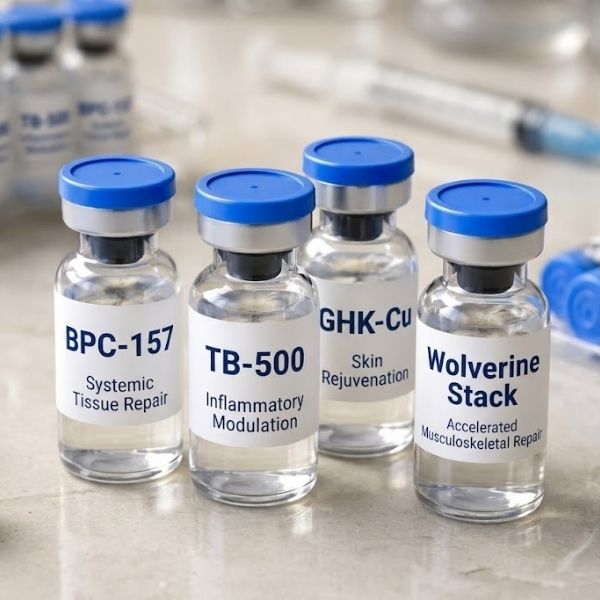
Repair and recovery peptides. BPC-157 supports tissue healing and gastrointestinal health based on strong preclinical animal data, though limited human data exists from formal clinical trials. Some peptides are studied for their potential to enhance healing and repair of tendons, ligaments, and soft tissue. These are positioned for joint comfort and exercise-related injury recovery.
Metabolic and weight-focused peptides. GLP-1 receptor agonists mimic natural gut hormones to regulate blood sugar and appetite-these are FDA approved medications for type 2 diabetes and obesity. AOD-9604 promotes fat metabolism without affecting blood sugar levels, though it lacks the same depth of clinical trials. Peptide therapy can influence metabolic regulation and weight management when combined with dietary and exercise changes.
Immune and longevity-focused peptides. Thymosin Alpha-1 enhances immune function by stimulating T-cells and is researched for immune modulation and cellular health. Delta sleep-inducing peptide has been explored for sleep architecture and stress resilience, though evidence remains early-stage. These peptides target the immune system and recovery from inflammation.
Skin and cosmetic peptides. Copper peptides and matrixyl-type compounds are used for skin firmness, skin rejuvenation, and supporting the skin barrier. They can help maintain skin elasticity, though objective results in randomized controlled trials have been mixed; patient satisfaction often outpaces what imaging or histology shows.
Common peptide therapy applications include hormone regulation, tissue repair, and immune support. Many names circulating on social media are not FDA approved for general wellness use. Research-grade peptides and compounded formulations should only be used under medical supervision.
What Can Peptide Therapy Help With? Key Benefits Backed by Emerging Evidence
Evidence for peptide therapy ranges from large clinical trials (for FDA-approved peptide medications) to small pilot studies and anecdotal reports for many wellness-focused compounds. Intellectual honesty about this spectrum matters. Here are the potential benefits organized by theme:
Muscle growth and muscle recovery. Peptides can stimulate muscle growth and fat breakdown by increasing natural growth hormone pulses. Peptide therapy can promote muscle growth and recovery in active adults, especially those over 35 whose growth hormone output has declined. In clinical research, tesamorelin increased lean body mass by approximately 1.42 kg over 6–12 months in trial populations-modest, but meaningful when combined with resistance training and adequate protein. These peptides support muscle growth and muscle repair by amplifying recovery signals, not by acting as anabolic steroids.
Metabolic health and weight management. GLP-1-based medications consistently produce greater than 10% body weight reduction in obesity trials. For people looking to lose fat, manage appetite, and improve blood sugar control, these FDA-approved medications represent the strongest evidence base. AOD-9604 promotes fat metabolism without affecting blood sugar, though its clinical data is thinner. Fat loss and weight management outcomes improve significantly when peptide treatment is layered with nutrition and movement.
Body composition and performance. Incremental shifts in fat breakdown and muscle mass can meaningfully affect everyday energy, joint comfort, and athletic performance. A practical example: a mid-40s recreational athlete using a supervised peptide therapy program alongside cryotherapy, red light therapy, and structured strength training may notice faster recovery between workouts and gradual improvements in body composition over 8–12 weeks.
Skin, joint, and connective tissue health. Peptides can enhance skin health by supporting collagen production. Some peptides are potentially effective for improving skin texture and appearance. Repair peptides may promote formation of new blood vessels (angiogenesis) and support blood vessels involved in tissue repair. These effects are relevant for aging skin and overuse injuries.
Sleep, cognition, and general wellness. Peptide therapy can enhance sleep quality and mental clarity according to clinical observations and early-stage research. Peptide therapy may improve immune function and hormone regulation, and may support immune function and enhance recovery from inflammation. These benefits tend to be gradual and are best measured over months, not days.
Results are not instant. Timelines typically run weeks to months, and outcomes depend heavily on nutrition, movement, stress management, and sleep. Peptide therapy amplifies what you’re already doing right.
Is Peptide Therapy Safe? What We Know (and Don’t Yet Know)
Is peptide therapy safe? The answer depends on the specific peptide, dose, source, and medical oversight involved.
FDA-approved peptide medications like insulin, GLP-1 receptor agonists, and tesamorelin undergo rigorous clinical trials. FDA-approved peptide medications undergo studies for safety and effectiveness, and their risk profiles are well characterized. Side effects for GLP-1 drugs include nausea, GI upset, and in rare cases, pancreatitis. Tesamorelin may cause injection site reactions, arthralgia, and mild IGF-1 elevations.
Compounded peptides prescribed off-label from accredited pharmacies occupy a middle ground-prescribed by a clinician but without the same depth of safety data as FDA-approved drugs. Many peptide treatments are experimental; medically supervised therapy is recommended.
Research peptides sold online without regulatory oversight represent the highest risk tier. Reports from the FDA and international regulators document contamination, mislabeling, inaccurate dosing, and serious adverse events including liver damage and allergic reactions. Research-grade peptides from unverified sellers should be avoided entirely.
Peptide therapy is generally considered safe when supervised by professionals. Mild side effects include redness at the injection site and headaches. Injection site reactions, temporary water retention, changes in appetite, and fatigue are also common. Serious side effects from peptide therapy are rare but possible. Immunogenicity can occur, causing the body to reject synthetic peptides. Some peptides may be contraindicated for individuals with active cancer or hormone-sensitive conditions.
Long-term data for many performance and longevity-focused peptide therapies remain limited. Clinical research continues, but honest providers will tell you what the evidence supports and what remains uncertain. Avoid self-sourcing injectable peptides online. Work with a qualified medical provider who understands peptide pharmacology, lab monitoring, and drug–supplement interactions.
Who Is (and Isn’t) a Good Candidate for Peptide Therapies?
Candidacy for peptide therapy is determined case-by-case using medical history, current medications, lab work, and goals. There’s no universal “ideal patient,” but patterns exist.
Typical good candidates:
- Adults with stable health seeking support for muscle recovery, metabolic health, or body composition when lifestyle alone has plateaued
- Active individuals recovering from recurrent soft-tissue strain or overtraining who are committed to rehab, sleep, and nutrition
- People over 35 experiencing age-related decline in energy, recovery capacity, or hormonal balance
Who should generally avoid or delay peptide therapy:
- Pregnant or breastfeeding individuals
- Those with uncontrolled chronic disease (advanced heart failure, uncontrolled diabetes without specialist management)
- Individuals with active cancer or a strong history of hormone-sensitive cancers, unless directed by an oncology or endocrine team
- People unwilling to have labs drawn, share their health history, or modify lifestyle factors
An in-depth consultation-often 45–60 minutes-is typically needed to decide whether peptide therapy is appropriate or whether other options like nutrition coaching, structured training, IV therapy, or red light therapy should come first.

How a Medically Supervised Peptide Therapy Program Typically Works
A responsible peptide therapy program follows a structured sequence, not a one-off injection:
- Initial assessment: Detailed health history review, current symptoms, medications, dietary supplements, and baseline labs (metabolic panel, fasting glucose/insulin, lipids, hormone markers).
- Goal setting: Clarify whether the priority is fat loss, muscle mass, recovery, metabolic health, or healthy aging.
- Protocol design: Selection of 1–2 core peptides (not excessive stacking), dose titration schedule, injection training if applicable, and integration with supportive services like cryotherapy, infrared sauna, or anti-inflammatory lifestyle coaching. A clear treatment plan is established.
- Active phase (typically 8–16 weeks): Weekly or biweekly check-ins, symptom tracking for sleep, appetite, soreness, energy, and body composition trends. Each specific peptide is monitored for efficacy and side effects.
- Reassessment: Follow-up labs, body composition measures, and functional outcomes (strength, endurance, recovery time).
- Maintenance or off-cycle plan: Whether to continue, pause, or rotate peptides, and how to maintain gains through training and nutrition.
Education around self-administering peptide injections safely is part of any responsible program: needle hygiene, proper storage, sharps disposal, and recognizing adverse reactions. A transparent program clearly distinguishes which peptides are FDA-approved, which are compounded off-label, and what evidence exists for each peptide treatment.
Peptide Therapy vs. Peptide Supplements and Other Recovery Tools
It’s worth clarifying the differences between different peptide therapies and related products:
| Category | Examples | Delivery | Regulation | Typical Impact |
|---|---|---|---|---|
| Prescription peptide injections | GLP-1 agonists, tesamorelin | Injectable | FDA-approved or compounded | Targeted, measurable outcomes |
| OTC peptide supplements | Collagen peptides, creatine | Oral | Dietary supplements | Supportive, less specific |
| Topical cosmetic peptides | Copper peptides, matrixyl | Topical | Cosmetic | Mild, gradual skin effects |
Peptide supplements like collagen peptides support general connective tissue and skin health but lack the potency and specificity of injectable protocols targeting muscle building or metabolic shifts. Dietary supplements and topical products have their place, but they operate at a different level.
Peptide therapy complements-not replaces-foundational strategies: resistance training for muscle growth, adequate protein for metabolic health, and sleep and stress management for recovery. Think of peptide therapy as a higher-level tool layered on top of evidence-based recovery practices, not a shortcut.
What to Look for in a Safe Peptide Therapy Provider
When choosing a provider, prioritize safety and experience over marketing hype. Here’s a practical checklist:
- Medical oversight: A physician, nurse practitioner, or similarly qualified medical provider involved in evaluation and prescribing
- Peptide sourcing: Use of FDA-approved medications where available and accredited compounding pharmacies for others-not unverified “research-only” websites
- Transparency: Clear explanation of which therapies are FDA approved, which are off-label, and what data supports each
- Structured program: Baseline labs, follow-ups, dose adjustments, and a defined treatment plan
- Integration: Combination with other wellness services and lifestyle coaching rather than isolated quick-fix injections
- Willingness to say no: A provider who will decline to prescribe when peptides aren’t appropriate and refer out to specialists when needed
In Massachusetts and surrounding states, prioritize realistic, science-based clinics over those emphasizing extreme transformations or aggressive peptide stacks.
Frequently Asked Questions About Peptide Therapy
Below are direct answers to the questions people most commonly ask before starting peptide therapies.
How fast does peptide therapy work, and when will I feel a difference?
Timelines depend on the specific peptide and your goal. Some people notice sleep or recovery changes within 2–4 weeks. Body composition shifts-fat loss, muscle growth-often take 8–12 weeks or longer. Skin and joint improvements may be gradual over several months. Peptides are not stimulants. They work by nudging underlying biology over time, especially when combined with training and nutrition changes.
Are peptide injections painful or hard to do at home?
Subcutaneous peptide injections use small insulin-style needles and are generally quick, with only mild discomfort for most people. Reputable clinics provide hands-on training and written instructions on self-injection, site rotation, and sharps disposal. If you’re uncomfortable with needles, discuss alternatives like oral or topical peptides-but many of the most targeted therapeutic peptides still rely on injectable delivery.
Are any peptide therapies actually FDA approved?
The FDA has approved specific peptide-based drugs, not “peptide therapy” as a blanket category. Concrete examples include insulin for diabetes, GLP-1 receptor agonists like semaglutide and tirzepatide for type 2 diabetes and obesity, tesamorelin for HIV-associated lipodystrophy, and PT-141 (bremelanotide) for hypoactive sexual desire disorder in women. Many peptides used in wellness settings for recovery, anti-aging, or body composition are prescribed off-label or compounded-meaning they are not specifically FDA approved for those indications.
Can peptide therapy help me build muscle if I’m not an athlete?
Yes. Peptide therapy can support muscle growth and muscle recovery in everyday adults, especially those over 35 who naturally produce less growth hormone. But results depend on consistent resistance training, adequate protein intake (generally 1.6–2.2 g/kg for active people), and quality sleep. Peptides alone will not add significant muscle mass. A personalized peptide therapy program combining peptide protocols with structured strength training and recovery services is ideal for sustainable gains.
What are the most common side effects of peptide therapy?
Typical, usually mild side effects include redness or itching at injection sites, temporary water retention, changes in appetite, nausea, digestive upset, headaches, or fatigue. More serious reactions-severe allergic reactions, intense abdominal pain, signs of pancreatitis, or unusual swelling-require urgent medical attention. Proper screening and conservative dosing reduce risk, but no therapy is completely risk-free.
Is peptide therapy safe to combine with other supplements or medications?
It depends on the peptide and the specific medication or supplement. Some combinations are safe, while others may strain the liver, kidneys, or hormone systems. Bring a complete list of medications, OTC supplements, and performance enhancers to your consultation so the clinician can screen for interactions. Never stack multiple experimental peptides alongside stimulants, anabolic steroids, or unregulated research chemicals without medical oversight.
Can I stop peptide therapy once I reach my goal, or is it lifelong?
Many people use peptide therapy in focused blocks-typically 8–16 weeks-to break through a plateau or accelerate progress. Some medical indications (like diabetes treated with GLP-1 medications) may require longer or ongoing therapy directed by a physician. Maintaining results after stopping peptides depends on habits: training, nutrition, sleep, and other recovery and longevity practices.
Why Choose a Local, Integrated Wellness Center for Peptide Therapy?
There’s a meaningful difference between ordering peptides from an anonymous online seller and working with an in-person wellness center that knows your name, your goals, and your lab results.
At Bonfire Wellness in North Andover, Massachusetts, peptide therapy programs are designed around the individual. That means access to in-person consultations, physical assessments, and regular check-ins-not a generic protocol shipped in a box. It also means the ability to combine peptide therapy with complementary services like cryotherapy, IV vitamin therapy, red light therapy, infrared sauna, oxygen therapy, and compression therapy for synergistic recovery and metabolic benefits.
The team works with active, health-conscious adults across the Merrimack Valley who are balancing work, family, and fitness goals. Every protocol is built around personalized outcomes-whether that’s better metabolic health, improved body composition, or faster muscle recovery. Costs, membership options, and evidence boundaries are transparent. And when peptides aren’t the right fit, the recommendation will be honest: sometimes nutrition, physical therapy, or another modality is the better starting point.
Ready to Explore Whether Peptide Therapy Is Right for You?
If you’re curious about peptide therapy for muscle growth, body composition, metabolic health, or recovery, the next step is a conversation-not a commitment. Schedule a consultation at Bonfire Wellness to review your goals, medical history, current medications, and labs. You’ll get an honest assessment of whether peptide therapies fit your situation, which FDA-approved options and compounded peptides apply, and what results are realistic.
To make the most of your first visit:
- Book an in-person or virtual consultation
- Bring recent lab results and a current medication list
- Prepare questions about peptide injections, safety, and program structure
Peptide therapy is one tool in a larger system. The best outcomes come from layering targeted peptide protocols on top of smart training, solid nutrition, and consistent recovery habits. That combination-not any single injection-is what drives lasting results in human health and performance.